

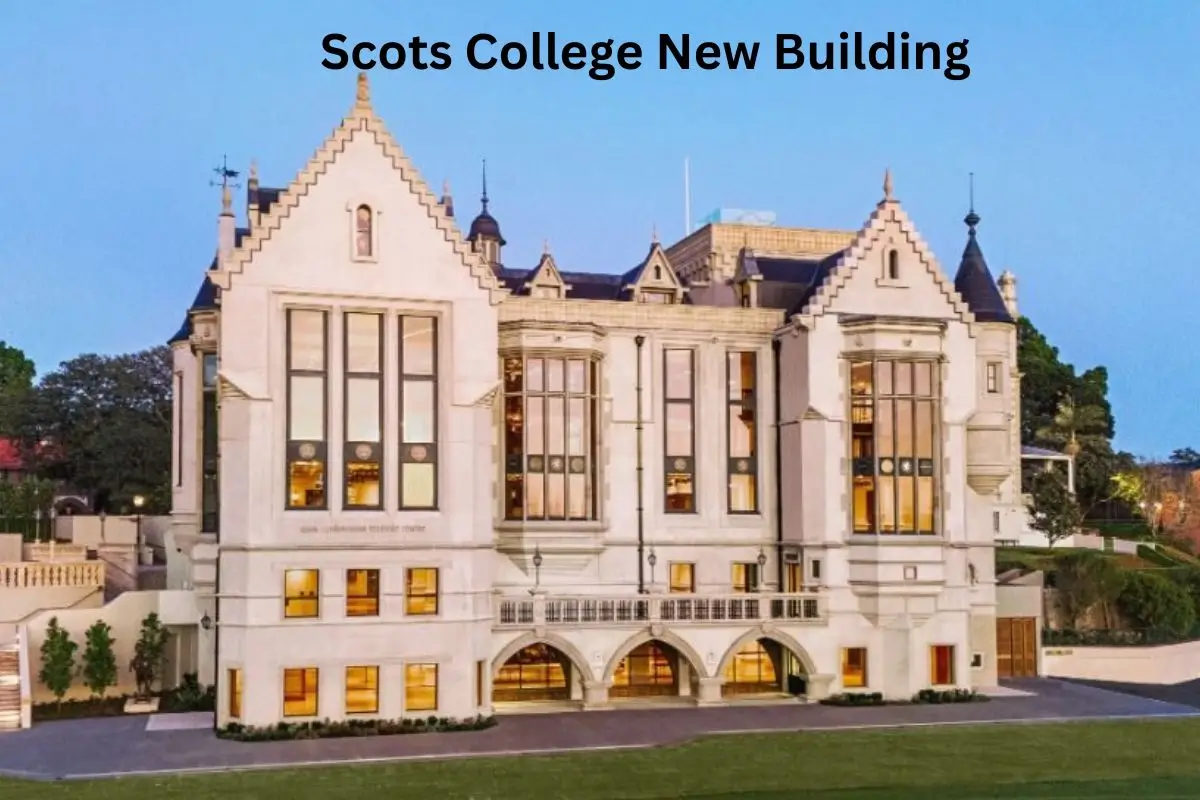
The Scots College new building, formally known as the John Cunningham Student Centre (JCSC), marks one of the most significant developments in the history of The Scots College at Bellevue Hill. Completed in 2024, this major redevelopment transformed the former Stevenson Library into a contemporary, multi-functional hub designed to support learning, wellbeing, research, and professional development, while remaining firmly connected to the College’s heritage and identity.
Far from being a simple upgrade, the project reflects a long-term vision for education that recognises the importance of integrated student support, campus connectivity, and purpose-built learning environments. Today, the John Cunningham Student Centre stands at the heart of the Senior School campus, both physically and symbolically.
Why the Stevenson Library was no longer suitable
The Stevenson Library was completed in 1988 and reflected the institutional design approach common at the time. It was a large, flat-roofed, block-like structure with minimal architectural articulation and no clearly defined main entrance. While imposing in scale, it lacked warmth, flexibility, and the qualities expected of a modern educational environment.
Internally, the building struggled to accommodate evolving teaching practices and student support services. Natural light was limited, accessibility fell short of contemporary standards, and the rigid layout made it difficult to adapt the space for different learning needs. Over time, it became clear that the building was no longer fit for purpose as a leading education facility.
Rather than demolishing the structure outright, The Scots College chose to comprehensively redevelop and expand it. This approach allowed the school to retain the building’s strategic position on campus while delivering a fundamentally new facility in terms of function, form, and performance.
Purpose and role of the Scots College new building
The John Cunningham Student Centre was designed to move beyond the idea of a traditional library. Instead, it functions as a centralised hub that brings together essential academic and wellbeing services under one roof.
The building supports learning support and enrichment programs, student counselling and pastoral care, academic research and study, and professional learning for staff. These functions reflect a broader understanding that student success depends not only on classroom teaching but also on access to support, guidance, and flexible learning environments.
Multiple contemporary learning spaces allow for a range of study modes, from individual focus to collaborative work. Dedicated areas for learning support provide targeted assistance in a setting that is visible, accessible, and normalised within daily school life. Counselling and pastoral care spaces are integrated in a way that balances accessibility with privacy, reinforcing the College’s commitment to student wellbeing.
Professional learning spaces are also a core component of the Centre. These areas support collaboration, training, and the ongoing development of teaching practice, recognising that educational excellence relies on continuous growth among staff.
Central campus location and improved circulation
One of the most transformative aspects of the Scots College new building is its impact on campus movement. Positioned in the heart of the Senior School precinct and overlooking the school oval, the John Cunningham Student Centre occupies a critical site within the campus layout.
Before redevelopment, the Stevenson Library interrupted north–south pedestrian movement. Students were required to leave the campus and walk along the Victoria Road footpath to move between buildings. This arrangement was inefficient and raised concerns around safety and supervision.
The new Centre restores continuity along the oval edge. Designed to be porous at ground level, it allows free-flowing movement between surrounding buildings, aligning it with neighbouring structures such as Aspinall House and the Lang Walker Business Centre. This change has significantly improved daily circulation, safety, and connectivity across the campus.
Architectural context and design intent
The buildings framing the oval at The Scots College share a relationship in scale, texture, and engagement with the landscape. Aspinall House features detailed architectural expression, while the Lang Walker Business Centre adopts a more restrained modern approach. Despite their differences, both buildings address the oval and support movement at ground level.
The former library stood apart, with flat elevations and a solid profile that disrupted this visual and functional rhythm. One of the primary design objectives of the redevelopment was to soften the building’s exterior, introduce depth and articulation, and allow substantially more natural light into the interior.
The roof form also needed careful consideration. It had to relate to existing campus buildings through ridges, gables, and hips, while still allowing for a functional roof terrace. These requirements shaped the architectural solution adopted for the project.
Why the Scottish Baronial style was selected
The decision to adopt an authentic Scottish Baronial architectural style was both practical and symbolic. Originating in the 16th century and revived in the 19th century, the style has been used across Scotland and internationally, including in Canada, Ireland, and New Zealand. Its longevity demonstrates its adaptability and enduring relevance.
From a design perspective, the Scottish Baronial style allowed the building to gain surface depth, vertical emphasis, and visual richness, addressing the shortcomings of the former flat-roofed structure. Large windows could be incorporated naturally, improving daylight penetration across all levels without appearing out of place.
Symbolically, the style reflects the College’s Scottish heritage and reinforces its identity. It provides an architectural language through which the purpose of the building can be read, connecting past traditions with contemporary educational needs.
Ensuring authenticity and expert oversight
To ensure the design remained true to the Scottish Baronial tradition, The Scots College engaged Dr Alistair Disley, a globally recognised expert in Scottish architecture. Dr Disley provided an extensive report and detailed recommendations, which were incorporated into the final design.
This process ensured that the building is not merely inspired by the style but represents a carefully researched and authentic interpretation. Proportions, detailing, and materials were all considered with architectural integrity in mind.
Historically, many buildings in this style were commissioned by enterprise leaders and innovators of their time. This association aligns with the College’s mission to prepare students for leadership and responsibility in a complex and evolving world.
Construction strategy and delivery
The redevelopment of the Scots College new building was delivered through a deliberately staged construction strategy. The project was divided into four separate tenders covering demolition and site establishment, piling and underground infrastructure, building construction, and internal fit-out.
This approach allowed the College to engage specialist contractors for each phase and maintain tighter control over cost, risk, and quality. Taylor Construction was appointed to deliver the main construction stage.
Works included major structural alterations to the existing building, extensions to floor slabs, the creation of an internal atrium void, the addition of a sixth storey within a new pitched roof, full internal fit-out works, and complete exterior re-cladding. The complexity of the design required careful coordination across trades, particularly as some construction techniques associated with the architectural detailing are now rarely used in modern projects.
Build cost and scale of investment
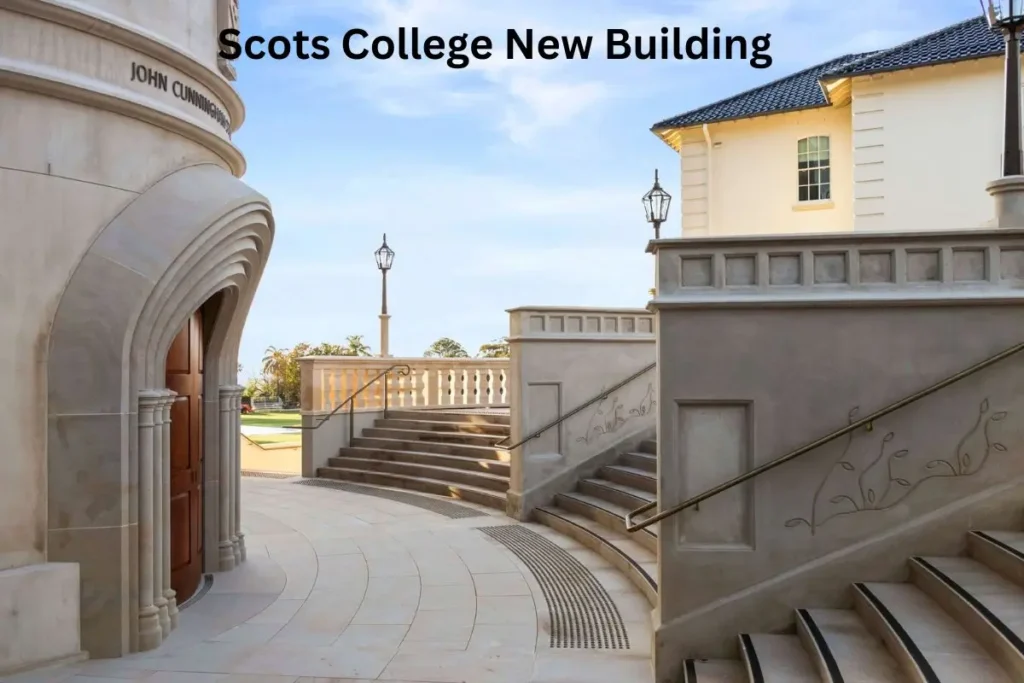
While the official project value has not been formally disclosed by The Scots College or the Presbyterian Church NSW Property Trust, public reporting and industry commentary have consistently estimated the build cost of the John Cunningham Student Centre at approximately AUD $60 million.
This level of investment reflects the complexity of the project rather than a standard school building. The cost accounts for extensive structural redevelopment of an existing building, specialist heritage-style construction techniques, a six-storey structure integrated within a pitched roof form, complete exterior re-cladding, high-quality internal fit-out for learning and wellbeing spaces, upgraded accessibility infrastructure, and the challenges of staged construction within an active school campus.
In the context of independent education in New South Wales, the reported investment positions the John Cunningham Student Centre as one of the most substantial school infrastructure projects undertaken in recent years.
Construction completion and operational readiness
Construction of the building was completed in September 2024. Following this, internal fit-out and commissioning works continued to ensure all spaces met functional and safety requirements. The Centre became fully operational by the end of 2024, allowing students and staff to begin using the facilities as intended.
This staged completion process ensured quality outcomes across both construction and interior environments.
Interior design and modern learning environments
While the exterior of the Scots College new building draws on historical architectural language, the interior is informed by contemporary research into effective learning environments. The layout supports flexibility, collaboration, and student choice, accommodating different learning styles and activities throughout the day.
Learning support and counselling spaces are designed to be accessible yet discreet, reinforcing the idea that seeking assistance is a normal and supported part of school life. Professional learning areas enable staff collaboration and ongoing development, supporting teaching quality across the College.
Accessibility and essential amenities
Improving accessibility was a key objective of the redevelopment. New lift access and clearly defined circulation routes ensure the building can be used comfortably by students, staff, and visitors of all abilities.
The Centre also includes increased toilet facilities and catering amenities, addressing capacity constraints and supporting daily student use. These practical improvements contribute significantly to the building’s overall functionality.
Symbolism and the idea of sanctuary
Scottish Baronial architecture was historically associated with fortified structures that offered protection and refuge. Within the context of The Scots College, this symbolism has been reinterpreted to reflect the building’s role as a place of support and care.
The John Cunningham Student Centre houses services that assist students academically, emotionally, and socially. Its prominent position overlooking the oval allows it to be seen from many parts of the campus, reinforcing its role as a central point of guidance and wellbeing. In this sense, the building functions as a sanctuary and a visible commitment to student support.
Addressing common questions
The Stevenson Library was redeveloped because it no longer met modern educational, accessibility, or wellbeing requirements. The project was prioritised ahead of parking or drop-off upgrades to address core learning and student support needs.
The redevelopment forms part of the College’s long-term campus planning strategy and is not linked to an increase in student numbers. Views across the oval were carefully considered, with the articulated façade and roof form designed to enhance the campus setting. Funding was managed through the Presbyterian Church NSW Property Trust, with the project value remaining confidential.
Conclusion
The Scots College new building, the John Cunningham Student Centre, represents a carefully planned investment in the future of education at The Scots College. By transforming an outdated institutional structure into a modern, integrated hub for learning and wellbeing, the College has addressed long-standing campus challenges while reinforcing its heritage and values.
Through its central location, authentic architectural expression, and contemporary interior environments, the Centre now plays a vital role in daily school life. It stands as a long-term commitment to students, staff, and the broader school community, supporting academic excellence, personal development, and wellbeing well into the future.
What is the new building at Scots College?
The new building at Scots College is the John Cunningham Student Centre, a major redevelopment of the former Stevenson Library designed to support modern learning, student wellbeing, research, and staff professional development.
When was the Scots College new building completed?
Construction of the John Cunningham Student Centre was completed in September 2024, with internal fit-out finalised and the building becoming fully operational by the end of 2024.
Why was the Stevenson Library replaced?
The Stevenson Library, completed in 1988, was no longer fit for purpose. It lacked flexibility, natural light, accessibility, and the facilities required for contemporary education, learning support, and student counselling.
What facilities does the Scots College new building include?
The building includes modern learning spaces, learning support and enrichment areas, student counselling and pastoral care facilities, academic research spaces, professional learning areas for staff, improved accessibility routes, increased amenities, and formal function rooms on upper levels.
Where is the John Cunningham Student Centre located on campus?
The Centre is located at the heart of the Senior School campus at Bellevue Hill, overlooking the school oval and reconnecting north–south pedestrian movement that was previously interrupted.
Why does the new building use a Scottish Baronial design?
The Scottish Baronial architectural style was chosen to reflect the College’s heritage while solving practical design challenges such as adding depth to flat façades, increasing natural light, and integrating roof forms that align with surrounding campus buildings.
How much did the Scots College new building cost?
While the official project value has not been formally disclosed, public reporting and industry estimates place the build cost at approximately AUD $60 million, reflecting the complexity, scale, and specialist construction involved.
Is the new building part of a wider campus plan?
Yes, the John Cunningham Student Centre forms part of The Scots College’s long-term campus planning strategy and is focused on improving facilities and student support rather than increasing student numbers.

