

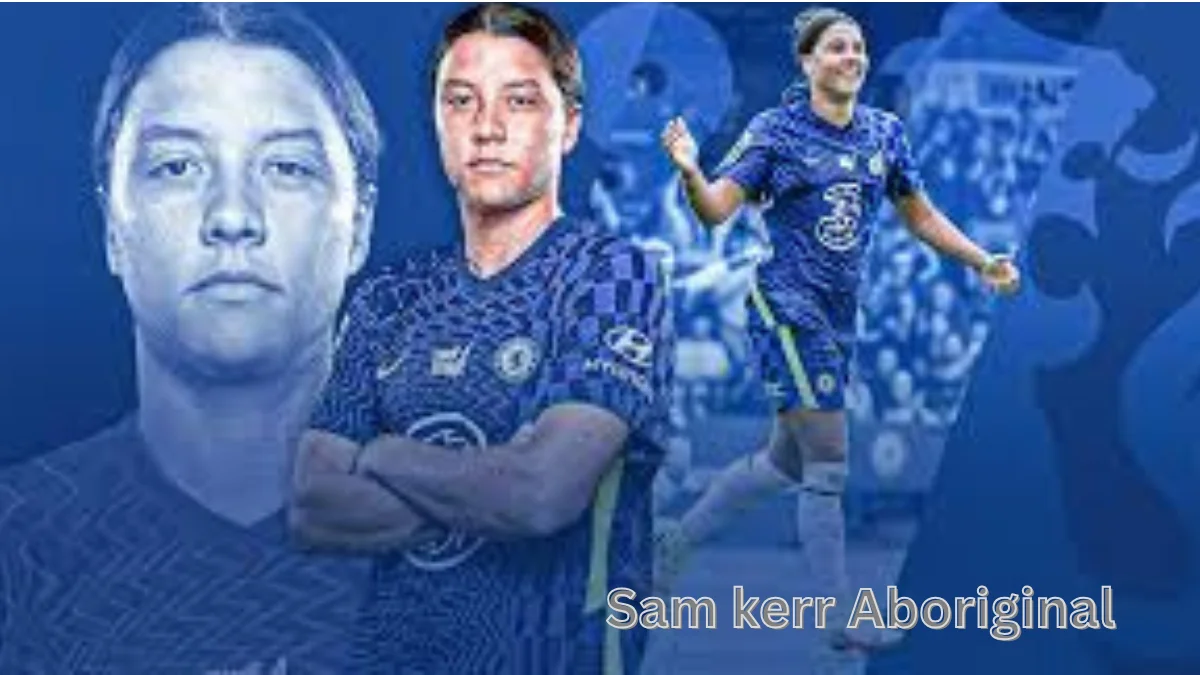
Australians everywhere feel a sense of national pride when they hear the name Sam Kerr. She is the captain of the Matildas and a star forward for Chelsea FC Women. Everyone knows how good she is at football. But her impact goes far beyond the stadium. Kerr is now a cultural icon and the face of modern Australian sport. As people celebrate her success, one question keeps coming up: Is Sam Kerr Aboriginal?
Sam Kerr identifies as an Australian but has no Torres Strait Islander or Aboriginal ancestry. We may investigate her genuine past and the need of appropriately discussing First Nations identity in Australia in light of this widespread misperception. Here’s some information to help you understand Sam Kerr’s past. Other themes explored include misinformation spreading and the impact of Aboriginal and Torres Strait Islander athletes on Australian sports.
What is Sam Kerr? A football star in the world
Samantha “Sam” Kerr, a world-renowned football player, has established several records. She played for the Perth Glory as a child and is currently the Matildas’ all-time leading scorer. This is the result of ability, hard work, and good leadership. As leader, she led the national team through very important games, and millions of young fans across the country look up to her.
The world knew her after she moved to Chelsea in the English Women’s Super League. She has won several Golden Boot awards and league titles, and she is always named one of the best female footballers in the world. Fans from London to Sydney know her famous backflip celebration. Sam Kerr is a modern and diverse Australian, but people often get her heritage wrong.
Understanding Sam Kerr’s heritage
Sam Kerr was born in East Fremantle, Western Australia, to a family that had a long history in sports. Roger Kerr, her father, was a professional Australian rules football player, and Daniel Kerr, her brother, was an AFL star for the West Coast Eagles.
Kerr’s family comes from both England and India. Her father was born in Calcutta, India, to an Indian mother and an English father. In the late 1960s, the family moved to Australia. Sam has talked about how her Indian heritage has affected her family and her sense of self. This diverse, rich background is one of the things that makes her story so Australian.
How and what happens when misleading information spreads
On social media and search engines, people frequently ask and answer the question “Is Sam Kerr Aboriginal?” This hypothesis is most likely incorrect for the following reasons:
- A desire for representation: Australians want First Nations players to succeed on the international scene, and they may be proud of a good athlete such as Kerr because he is Indigenous.
- Physical appearance: People commonly estimate someone’s origins based on their skin tone or other physical characteristics.This is not a smart or safe thing to do.
- Lack of clear information: There isn’t enough clear information about her Anglo-Indian background. If correct information isn’t easy to find, people will make up stories and believe them.
Even if you have good intentions, calling someone Aboriginal or Torres Strait Islander by mistake can be hurtful. As a result, the true history and achievements of First Nations people are lost. People who have overcome specific structural barriers to achieve success in their industries may find it more difficult if they are referred to be Indigenous. Accuracy recognizes the distinct cultures, histories, and identities of Australia’s First People.
Celebrating our First Nations sporting heroes
It’s not about making Sam Kerr less important to set the record straight about her heritage. Instead, it’s about making room to honor the Aboriginal and Torres Strait Islander athletes who have made Australian football and many other sports better. These athletes are great role models and represent the world’s oldest living cultures.
Trailblazers in Australian football
The Matildas team is a great example of multicultural Australia, and it proudly includes stars from First Nations.
- Kyah Simon: Kyah Simon is a proud Anaiwan and Biripi woman. She is one of the most decorated football players in Australian history. She has been an important part of the Matildas for more than ten years and was the first Indigenous Australian to score a goal in a FIFA World Cup. Her journey is one of strength and amazing talent.
- Lydia Williams: Lydia Williams is a Noongar woman and one of the best goalkeepers in the world. She has played for the Matildas more than 100 times and is a leader on and off the field. Williams is also a children’s book author and illustrator. She uses her platform to tell stories and give young Indigenous kids power.
These athletes, as well as many others in the A-Leagues and lower-level competitions, are very proud to represent their communities. Their presence on the national team shows how important Indigenous talent is to Australian football.
Beyond the football pitch
First Nations athletes have an effect on all Australian sports. Ash Barty, a proud Ngarigo woman and tennis legend, won three Grand Slam singles titles and wowed the world with her grace and skill. It is important to get her Ngarigo background right, because it is sometimes reported wrong. Cathy Freeman’s gold medal run at the Sydney 2000 Olympics is still one of the most famous moments in our country’s sports history.
These athletes, along with many others, have not only reached the top of their sport, but they have also used their fame to help their communities and inspire the next generation. Recognizing their unique heritage is an important part of honoring their whole story.
Using respectful language: a guide for fans and media
It’s important to be careful and respectful when talking about identity and heritage. It’s very important to use the right words when talking about Aboriginal and Torres Strait Islander people.
- Be specific: Whenever you can, use the phrase “Aboriginal and Torres Strait Islander peoples.” This shows that you know about the two different First Nations groups in Australia. Don’t use terms that are old or too general.
- Avoid assumptions: Don’t ever guess someone’s background based on how they look, their name, or who they hang out with. Identity is unique and complicated.
- Listen to Indigenous voices: Listen to the Elders of Indigenous Communities: The most effective method of learning about Aboriginal and Torres Strait Islander communities is to listen to the people who live there speak about their families and themselves.
- Capitalise “Indigenous”: “Indigenous” should be capitalized. It is respectful to uppercase “Indigenous” when discussing Australia’s First Peoples.
Journalists, content providers, and fans should all verify information before sharing or publishing it. Make a tremendous difference with this tiny step. It ensures that discussions regarding identity are genuine and handled with respect.
How to support Indigenous communities in football
One way to honor the talent of First Nations players is to watch them play. Australian football fans and friends can do their part to ensure that Indigenous people are included and valued in the sport.
One of the most obvious ways is to take part in events that are only for this purpose. Football is only one of several sports that celebrates NAIDOC Week or hosts an Indigenous Round. Among these happenings are Welcome to Country ceremonies, commemorative jersey designs, and educational initiatives devoted to First Nations culture.
Additionally, there are grassroots organizations that are working to remove barriers to entry for young Indigenous athletes. Plenty of groups and clubs in the community make it easy for people to join and help young players get better. You can give them money, help out, or just tell people about their work to make Australian football more fair and open.
To support variety in sports in the end, you have to accept each athlete for what they are. It means honoring Sam Kerr’s amazing journey as a proud Australian of Anglo-Indian descent and also lifting up and accurately recognizing the Aboriginal and Torres Strait Islander stars who shine with her.
Frequently asked questions
1. Is Sam Kerr an Aboriginal Australian?
Sam Kerr is not of Aboriginal or Torres Strait Islander descent. She is proud to be Australian and has Anglo-Indian roots. Her father was born in India to an English father and an Indian mother. He then moved to Australia.
2. Why do people think Sam Kerr is Aboriginal?
People often think this way because they are proud of her as a national hero, they make assumptions based on her looks, and they see false information online. It’s important to be correct when talking about heritage, even if you mean well.
3. Who are some Aboriginal players in the Matildas?
The Matildas have been proud to have some amazing First Nations players on their team. Lydia Williams (Noongar woman) and Kyah Simon (Anaiwan and Biripi woman) are two important people who have worked hard and long to serve Australia.
4. Why is it important to be accurate about Indigenous identity?
Being accurate is a way to show respect. Even if you don’t mean to, misidentifying Indigenous identity can erase the unique stories, struggles, and successes of Aboriginal and Torres Strait Islander peoples. Making sure that the unique accomplishments and cultural legacies of First Nations athletes are recognized in the right way means picking the right athletes.

