

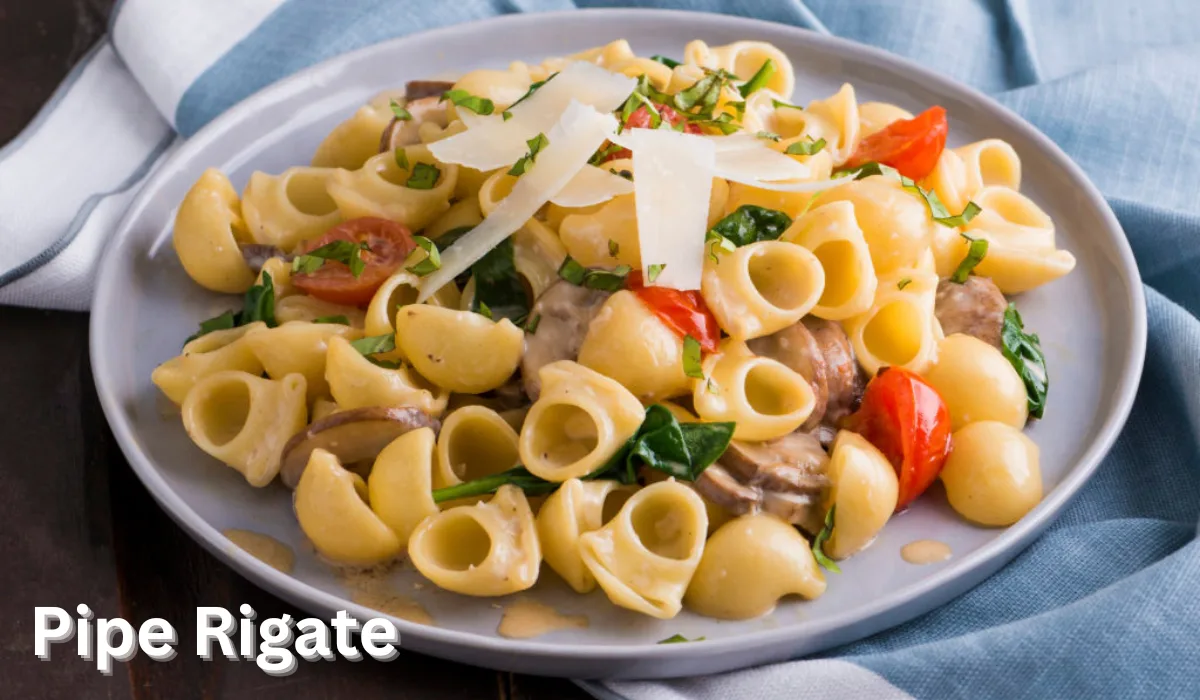
Many Australian families have pasta night every week. It’s a quick and easy meal for a weeknight or a comforting meal for a weekend. Pipe rigate is a shape that can change your sauces in a way that spaghetti, penne, and fettuccine often do. These hollow, curved tubes with deep ridges are great at getting every last drop of flavor, so they would be a great addition to your next pasta dish.
This guide will teach you everything you need to know about this pasta that can be used in many ways. We’ll talk about what makes it special, how to cook it just right, and give you some easy, tasty pasta recipes that are great for the Australian kitchen. Get ready to find out why pipe rigate should always be in your pantry.
What is pipe rigate, exactly?
Pipe rigate is a short, curved tube of pasta with big ridges on the outside. “Pipe” comes from the word “pipe,” which means “tube-like,” and “rigate” comes from the Italian word “ridged” or “lined.” They are like macaroni, but they have a stronger structure and a curve that is more like a half-circle than a tight bend.
Their unique design isn’t just for show. The big holes in the middle and deep grooves around the edges are meant to hold sauces, meat, and chopped veggies. This solves the age-old problem of sauce sliding off your pasta and pooling at the bottom of the bowl. Each bite is the right mix of pasta and flavor.
A short history of where it came from
The exact origin of pipe rigate is not clear, but it is usually linked to Central and Southern Italy, like many other pasta shapes. “Maccheroni” is a general term for tubular pasta, and it is part of that family. Adding ridges (rigate) to the pasta changed everything because it could hold on to the thicker, chunkier sauces that were famous in old-school Italian cooking. It was a favorite shape for hearty, rustic meals because it was useful.
What makes pipe rigate different from other types of pasta?
There are a lot of different kinds of pasta at Coles and Woolies. What’s unique about pipe rigate?
- Shape: The big, bent tube has holes in both ends, making a passageway for sauces to move through.
- Ridges: The outside has deep grooves that make it easier for sauces to stick. This is where it’s better than smooth pasta like macaroni.
- Mouthfeel: The curve, the hollow center, and the ridged texture all work together to make a bite that is chewy and filling.
Penne, rigatoni, and macaroni vs. pipe rigate
How does it compare to other well-known short pastas?
- Penne Rigate: Penne has a straight, narrow tube that is cut at an angle. Pipe rigate’s wider opening and curve often catch more of the chunky ingredients, though it’s great for a lot of sauces.
- Rigatoni: These are big, straight tubes with bumps on them. These are great for sauces that are very thick and meaty, but they can be too big at times. Pipe rigate has a smaller, easier-to-eat bite.
- Macaroni: Classic macaroni is a smooth, tightly curved tube. It’s great for making creamy, cheesy sauces like mac and cheese, but pipe rigate is better at holding onto thinner or chunkier sauces.
How to make pipe rigate perfectly
Getting that perfect “al dente” (to the tooth) texture is what makes a great pasta dish. It means that the pasta is fully cooked but still has a nice, firm bite. It’s easy to avoid mushy pasta, which is a common kitchen disaster.
Picking out a good pipe rigate
The quality of your dried pasta is very important. When you go shopping, look for:
- Bronze-cut (or trafilata al bronzo): This means that the pasta was pushed through bronze dies, which is how it was made. The surface texture becomes rougher and more porous, which makes sauces stick even better. You can usually find these at specialty grocery stores or the high-end section of your local supermarket.
- 100% Durum Wheat Semolina: This hard wheat is the best kind for pasta because it makes it firm and gives it a nice golden color.
- Retailers in Australia: You can get pipe rigate at big stores like Coles and Woolworths. The brands you might see are Barilla and De Cecco. Remember to look for artisanal options at independent delis and Italian grocery stores.
How to cook pasta perfectly al dente, step by step
Bring the water to a boil: Use a big pot so the pasta has room to move around. At least 1 liter of water is needed for every 100 grams of pasta.
- Add a lot of salt: Once the water is boiling hard, add the salt. A good rule of thumb is to add 7 to 10 grams of salt to every liter of water. It should taste like the ocean. This is the only time you can add flavor to the pasta itself.
- Add the pasta: Put the pipe rigate in the boiling water and stir it right away for the first minute to keep it from sticking.
- Set a timer: Look at the packet’s instructions for the suggested cooking time, but don’t just follow them. About two minutes before the suggested time, start testing the pasta.
- Check for Doneness: Take a piece of fish and bite into it. If you cut it open, there should be a small white spot in the middle that looks like a pin dot. It should be firm and chewy. This is what al dente is all about.
- Save Pasta Water: Before draining, scoop out a mugful of the starchy pasta water. This liquid gold is essential for finishing your sauce.
- Drain and Combine: Drain the pasta (but don’t rinse it!) and immediately add it to your pan of sauce. Cook together for a final minute, adding splashes of pasta water as needed to create a silky, emulsified sauce that clings beautifully to the pipe rigate.
Common mistakes to avoid
- Using a small pot: This causes the pasta to clump and cook unevenly.
- Not salting the water: Leads to bland, flavourless pasta.
- Adding oil to the water: This old myth is unnecessary and can prevent the sauce from sticking to the pasta.
- Overcooking: Overcooking is the most common mistake! Keep testing until you get it right.
- Washing the pasta: This gets rid of the starches that help the sauce stick.
Simple pipe rigate recipes for any event
Here are four easy but tasty recipe ideas that let pipe rigate shine.
1. Creamy tomato and sausage pasta that the whole family will love
A sure hit with everyone, this pasta dish is great for a weeknight dinner.
Ingredients:
- 400g of pipe rigate
- 4–5 good pork or beef sausages with the casings taken off
- 1 brown onion, cut into small pieces
- 2 cloves of garlic, chopped up
- 400g can of crushed Tomatoes from Australia
- Cream that has been thickened 100ml
- 1 tsp of dried oregano
- Salt, pepper, and olive oil
- To serve, grated Parmesan cheese
Method:
- Put a little olive oil in a big pan and heat it over medium-high heat. Add the sausage meat and cook it until it is brown, breaking it up with a spoon as you go.
- Add the garlic and onion and cook for 3 to 4 minutes, or until they are soft.
- Add the oregano and crushed tomatoes and mix well. Add salt and pepper, bring to a boil, then turn down the heat and let it bubble for 10 minutes.
- In the meantime, follow the package directions to cook the pipe rigate until it is al dente.
- Add the cream to the sauce and mix it in. Put the pasta in the pan after draining it, but save some of the pasta water.
- Mix everything together and add a little bit of pasta water to help the sauce stick to the pasta. Serve right away with a lot of grated Parmesan on top.
2. Pesto made with roasted capsicum and walnuts for vegetarians
A colorful, tasty, and cheap vegetarian choice.
Ingredients:
- 350g of pipe rigate
- Two big red peppers
- 1/2 cup of walnuts, toasted
- 1 clove of garlic
- 1/4 cup of grated Parmesan cheese
- 1/4 cup of extra virgin olive oil
- A few fresh basil leaves (optional)
- Add salt and pepper to taste.
Method:
- Preheat your oven grill to high. Put the capsicums on a tray and grill them, turning them every so often, until the skin is blackened and blistered. Put it in a bowl and cover it with plastic wrap for 10 minutes.
- Take off the skins and throw away the seeds.
- Put the roasted capsicum, toasted walnuts, garlic, Parmesan, and basil (if using) in a food processor. Pulse until the pieces are about the right size.
- While the processor is running, slowly pour in the olive oil until you have a rustic pesto. Add salt and pepper to taste.
- Cook the pipe rigate until it’s just right. Drain, but keep a cup of the pasta water.
- In a big bowl, mix the hot pasta with the pesto and enough pasta water to make a creamy sauce that coats the pipe rigate well.
3. Spicy pasta with Australian prawns and tomatoes
This simple, elegant dish will show off beautiful Australian prawns.
Ingredients:
- 350g of pipe rigate
- 300g of raw Australian prawns that have been peeled and deveined
- 250g of cherry tomatoes, cut in half
- Three cloves of garlic, cut into thin slices
- 1 long red chili, chopped very finely (or 1/2 tsp dried chili flakes)
- A little bit of white wine (optional)
- A big handful of fresh flat-leaf parsley, cut up
- Olive oil that is extra virgin
Method:
- Boil the pipe rigate until it is still firm.
- While the pasta cooks, heat a lot of olive oil in a big pan over medium heat. Add the chili and garlic and cook for a minute, or until they smell good.
- Increase the heat, add the shrimp, and cook for 1 to 2 minutes, or until they turn pink. If you’re using white wine, add it now and let it bubble for 30 seconds.
- Add the cherry tomatoes and cook for another two minutes, or until they start to get soft.
- Take the pasta out of the water and add it to the pan with the prawns.
- Add the chopped parsley, a last drizzle of olive oil, and toss everything together. Use the pasta water to make a light sauce. Add seasoning and serve right away.
4. Easy and cheap broccoli and anchovy pasta
This dish shows that you can make something really tasty with just a few simple ingredients.
The anchovies melt away, giving the dish a rich, savory taste.
Ingredients:
- 350g of pipe rigate
- One head of broccoli, cut into small pieces
- Finely chop 4–5 anchovy fillets in oil.
- 2 cloves of garlic, cut into thin slices
- 1/2 teaspoon of red chili flakes (optional)
- Olive oil that is extra virgin
- To serve, grated Parmesan or Pecorino cheese
Method:
- Get a big pot of salted water boiling. Add the broccoli florets and cook for 3 minutes, or until they are tender-crisp. Take out with a slotted spoon and put aside.
- Put the pipe rigate in the same water and cook until it is al dente.
- While the pasta cooks, heat a lot of olive oil in a pan over low to medium heat. Put in the chili flakes, garlic, and anchovies. Stir the anchovies into the oil and cook them slowly until they dissolve.
- Put the cooked broccoli in the pan and toss it around to coat it in the flavored oil.
- Drain the pasta, but keep a cup of the water. Put the broccoli and pasta in the same pan.
- Add splashes of pasta water to the sauce and stir it in until it lightly coats the pasta. Put a lot of grated cheese on top.
More ways to use pipe rigate
- Pairings with sauce: Sauces with texture are its best friends. Think of meat ragù, chunky vegetable sauces, creamy sauces with peas or mushrooms, and rustic pestos.
- Meal Prep and Storage: You can keep cooked pasta in the fridge for up to three days in an airtight container. To get the best results, keep the pasta and sauce separate and mix them when you heat them up. Pipe rigate also works well in baked pasta dishes, so it’s a good choice for a casserole that you can make ahead of time.
- Nutritional Considerations: Pasta is a good source of carbohydrates, which give you energy. If you choose whole wheat pipe rigate, it will have more fiber. What you eat with your meal will affect how healthy it is overall. For example, add a lot of vegetables, lean proteins, and healthy fats from olive oil.
A quick list of terms
- Al Dente: Italian for “to the tooth.” It talks about pasta that is cooked until it is firm but not hard.
- Bronze-Cut: Is a way to make pasta by using bronze dies to make a rough surface that holds sauce well.
- Extruded: The process of pushing pasta dough through a die to make certain shapes.
Frequently asked questions about pipe rigate
1. Is macaroni the same as pipe rigate?
No. Both are tubes, but pipe rigate is bigger, has a gentler curve, and has ridges on the outside that macaroni usually doesn’t have.
2. Is it okay to use pipe rigate in mac and cheese?
Of course! The ridges and hollow shape make it great for catching all the cheese sauce. It makes the classic dish stronger and more “grown-up.”
3. Why isn’t my sauce sticking to the pasta?
There are a few reasons this could be happening: you might be using smooth pasta, rinsing the pasta after cooking (which removes starch), or not finishing the pasta in the pan with the sauce and a little pasta water.
4. Where can I get pipe rigate in Australia?
Most big supermarkets, like Woolworths and Coles, have it, and it’s usually from international brands. If you want better bronze-cut kinds, go to a local Italian deli, specialty food store, or farmers’ market.
5. Is pipe rigate a good pasta salad?
Yes, that’s a great choice. The strong shape stays strong even when it’s cold, and the nooks and crannies are great for holding vinaigrette and small things like chopped herbs, olives, and feta.

