

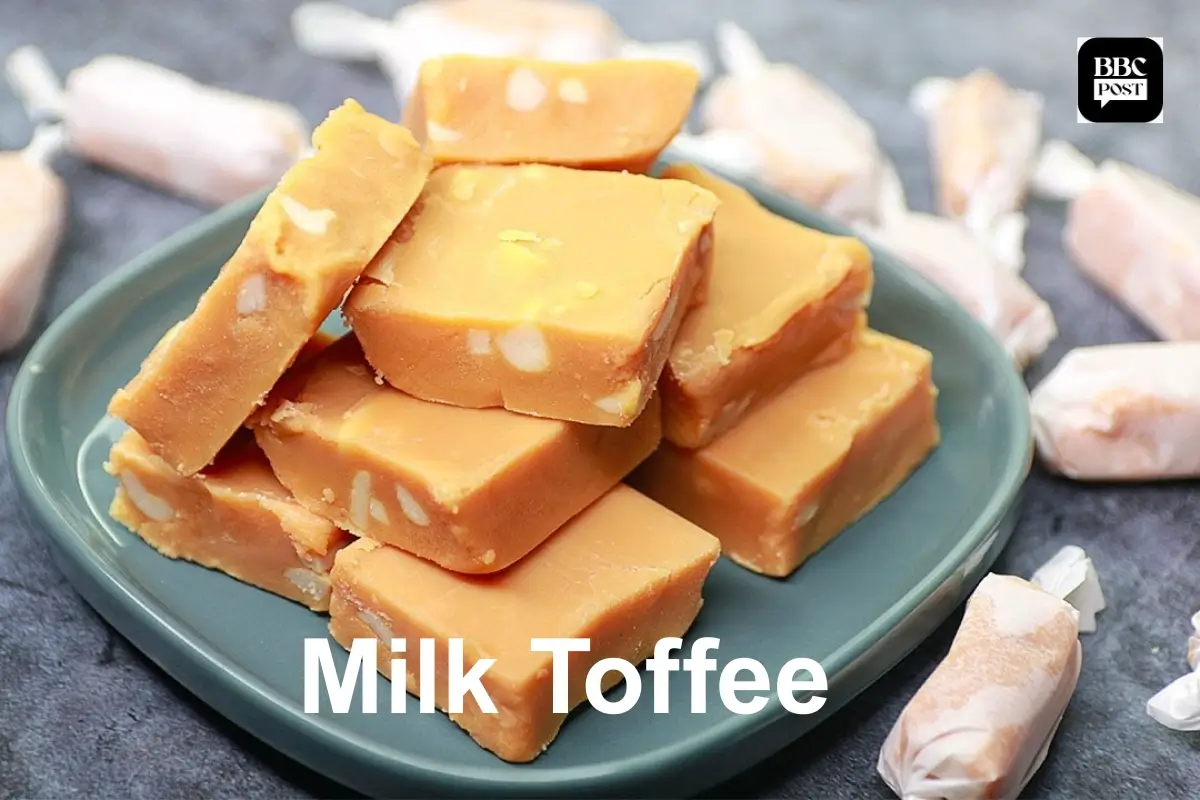
If you have ever struggled to make Sri Lankan milk toffee at home, this fool-proof recipe is for you. I am sharing this because I genuinely don’t want you ending up with chewy, sticky toffees or rock-hard pieces that threaten your teeth. When done correctly, milk toffee should set cleanly, break easily, and melt in your mouth.
This recipe always produces milk toffees with a rich milky flavour, gentle nutty sweetness, and an aroma that fills the kitchen. Please read through the method carefully before starting. Sugar-based sweets require attention and patience. If you are able to watch the video version of this recipe, I highly recommend it, as seeing the exact consistency makes a big difference.
Jump to Recipe
Print Recipe
Spread the Love
About This Sri Lankan Milk Toffee Recipe
This recipe uses only a handful of ingredients, and the process itself is not complicated. However, like all traditional sugar sweets, success depends on getting the process right rather than rushing it.
Perfectly made Sri Lankan milk toffee:
- Sets firmly once cooled
- Holds its shape well
- Is easy to bite
- Does not stick to the teeth
- Crumbles slightly and melts as you chew
Anything softer becomes sticky and gummy. Anything harder becomes unpleasant to eat. This guide exists so you don’t end up with either.
Where Milk Toffee Usually Goes Wrong
Heat Control
Heat control is extremely important when working with sugar and condensed milk. This recipe must be cooked on medium to medium-low heat. High heat causes the mixture to bubble aggressively and rise too fast.
Because condensed milk is a dairy product, the mixture can boil over very quickly, especially if you use a small pan. If the mixture starts rising rapidly, lower the heat immediately. Milk toffee cannot be rushed.
Constant Stirring Is Essential
Making Sri Lankan milk toffee is a labour of love. From the moment condensed milk is added, you must stir constantly from start to finish.
Reaching the correct consistency can take 45 minutes to one hour, depending on heat level and pan size. If you stop stirring:
- The bottom layer can brown and harden
- It may stick to the pan
- The rest of the mixture remains liquid
Uneven texture is one of the main reasons milk toffee fails.
Stopping Too Early
This is the most common mistake.
If the mixture is removed too soon:
- The toffee will not set
- The texture becomes chewy and sticky
- It sticks firmly to the teeth
In Sri Lanka, this texture is often called “bulto toffee texture”, named after an old chewy toffee that many people disliked for this exact reason.
Cutting Too Late
Milk toffee hardens as it cools. For clean, sharp edges:
- Always cut while the mixture is still warm and soft
- Fully separate the pieces only after cooling
Waiting too long makes cutting difficult and messy.
How to Know When the Mixture Is Ready
Getting the consistency right is the most important part of this recipe.
Visual Flow Test
At different stages, the mixture behaves differently when dropped from a spoon:
- Early stage: flows continuously like a thin thread
- Mid stage: falls like a smooth ribbon
- Final stage: drops in thick, broken blobs, not a steady stream
The moment it stops flowing smoothly is the key point.
Spoon and Pan Test
You will also notice:
- The mixture feels heavy
- It clumps around the spoon instead of spreading
- When you drag a line through it, the gap takes 1–2 seconds to close
This is the exact moment to add the butter and prepare to transfer the mixture.
Milk Toffee Flavour Variations
I personally prefer milk toffee with a strong milky flavour and mild nutty sweetness, enhanced by vanilla and butter.
Some traditional variations include:
- Finely ground cardamom
- Finely ground fennel seeds
- A few drops of rose essence
If using rose extract, add it very sparingly, as it can overpower the milk flavour.
How Many Pieces Will This Make?
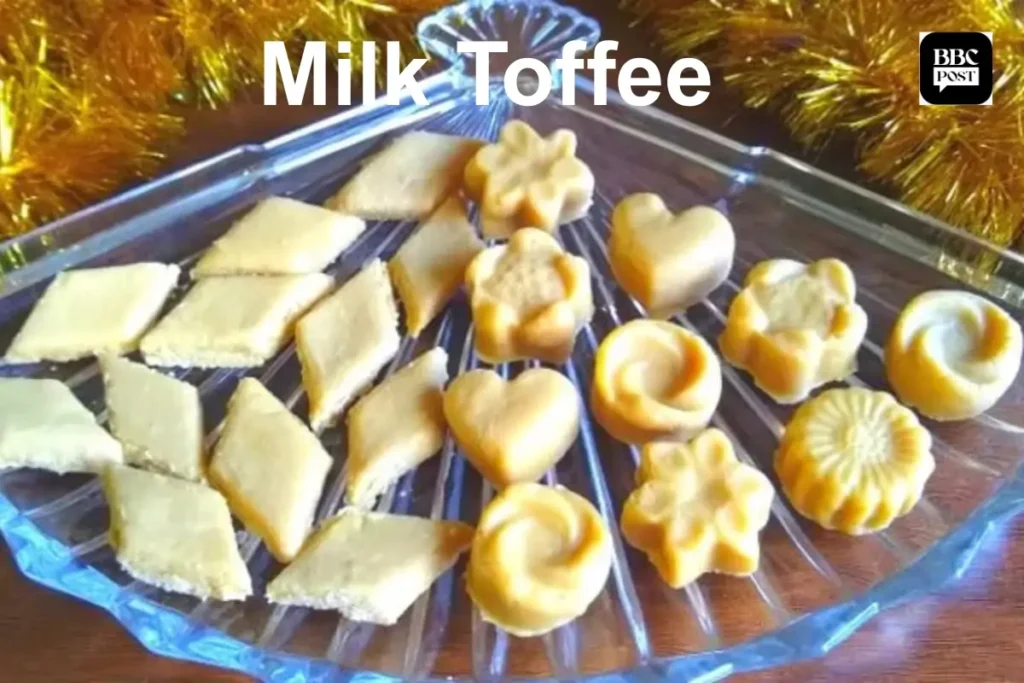
This recipe yields:
- About 30 larger pieces, or
- 40 to 50 smaller milk toffees, depending on how you cut them
Serving Sri Lankan Milk Toffee
Milk toffee is a classic Sri Lankan tea-time sweet. In many homes, especially in my family, it is enjoyed with:
- Black tea
- Sri Lankan milk tea
Milk toffee is also a regular feature on the Sri Lankan New Year (Avurudu) food table, served alongside:
- Kiribath (milk rice)
- Seeni sambol or lunu miris
- Kokis
- Butter cake
- Aluwa
Its firm texture and long keeping quality make it ideal for festive sharing.
Sri Lankan Milk Toffee Recipe
Prep Time
10 minutes
Cook Time
25 minutes
Cooling Time
15 minutes
Total Time
50 minutes
Servings
25 pieces
Ingredients
- 2 teaspoons butter (for greasing)
- 1½ cups white sugar
- 2 tablespoons water
- 1 (10 oz) can sweetened condensed milk
- ½ cup finely chopped cashew nuts
- 2 tablespoons butter
- 1 teaspoon vanilla extract
- 2 drops rose extract (optional, to taste)
Method
- Grease a 9-inch square baking pan with butter and set aside.
- Combine sugar and water in a large saucepan over medium heat and stir until the sugar dissolves.
- Add condensed milk and cook, stirring constantly, until the mixture starts bubbling.
- Reduce heat to low, add cashew nuts, and continue stirring as the mixture thickens.
- Add butter, vanilla, and rose extract.
- Continue cooking and stirring until the mixture becomes thick, heavy, and stiff.
- Immediately pour into the prepared pan and spread evenly.
- Allow to cool for 15 minutes, then cut into pieces while still soft.
- Once fully cooled, separate pieces and store in an airtight container.
Nutrition Facts (Per Serving – Approximate)
- Calories: 110
- Fat: 4 g
- Carbohydrates: 19 g
- Protein: 1 g
Final Thought
Sri Lankan milk toffee is a sweet that teaches patience. When the heat is controlled, the stirring is steady, and the mixture is taken off the stove at exactly the right moment, the reward is worth every minute. The result is a toffee that sets beautifully, breaks cleanly, and melts gently without sticking to your teeth. Once you understand the signs and trust the process, this traditional sweet stops being difficult and becomes something you can make with confidence, time after time.
FAQs
Is milk toffee Sri Lankan?
Milk toffee is strongly associated with Sri Lankan home cooking and celebrations. While milk-based toffees exist elsewhere, the crumbly, melt-in-the-mouth version made with condensed milk is a recognised Sri Lankan sweet.
What is milk toffee made of?
Milk toffee is made using white sugar, water, sweetened condensed milk, butter, and nuts such as cashews. Vanilla or rose extract is sometimes added for flavour.
How long does milk toffee last?
When stored in an airtight container at room temperature, milk toffee can last up to two weeks. In cooler conditions, it may keep slightly longer without losing texture.
Why is my milk toffee chewy?
Milk toffee becomes chewy when it is removed from the heat too early. Undercooking prevents proper setting, resulting in a sticky texture that can cling to the teeth.
Why is Gen Z not drinking milk?
Many Gen Z consumers reduce milk intake due to changing dietary preferences, lactose intolerance, environmental concerns, and the availability of plant-based alternatives. This trend varies by region and lifestyle.
Is milk candy healthy?
Milk candy is an occasional treat rather than an everyday food. It provides quick energy and small amounts of calcium but is high in sugar and should be enjoyed in moderation.
What’s the other 98% of milk?
Milk is made up of about 87% water. The remaining portion contains lactose (milk sugar), fat, proteins, vitamins, and minerals such as calcium and potassium.
Is toffee high in sugar?
Yes, toffee is high in sugar. Sugar provides structure and sweetness in toffee, which is why it should be consumed occasionally rather than regularly.

