

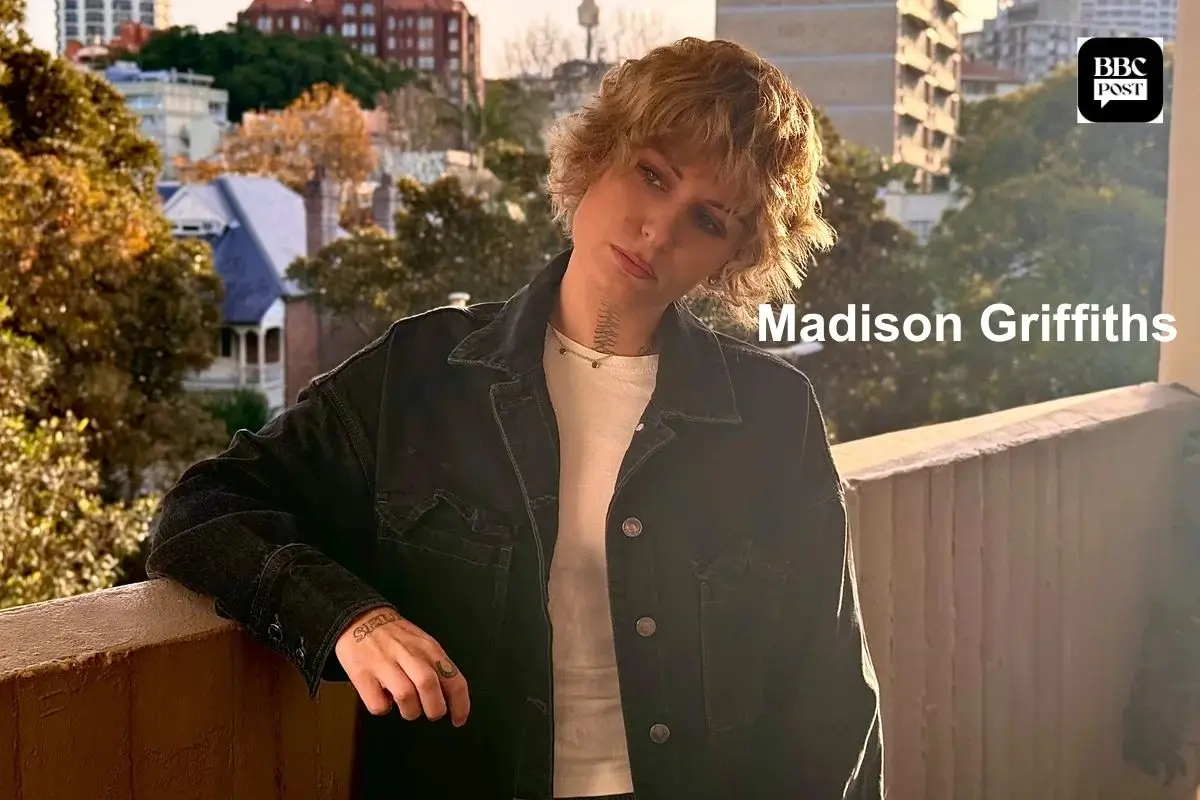
Australian novelist, writer, artist, and producer Madison Griffiths’s work has emerged as a significant component of current discussions around women’s agency, power, and the terminology used to express very intimate experiences. Griffiths, a Melbourne-based author of nonfiction, journalism, and audio storytelling, focuses on topics that are often minimised, distorted, or unheard.
Award-winning podcast journalism and two significant nonfiction books, Tissue and Sweet Nothings, are among her public works. Griffiths explores how institutions impact intimacy, how societal pressure shapes personal choices, and how silence itself can be a tool of control in all of these settings.
Contribution to Culture and Public Writing
Madison Griffiths was already well-known as a writer who contributed to Australian literary and cultural media before she released her first book. Publications including The Guardian, SBS, VICE, Meanjin, and Kill Your Darlings have published her pieces and opinions. Instead of focusing on personal lifestyle criticism, these platforms place her work in the context of professional journalism and literary discourse.
Her work often consists of introspective pieces that discuss societal power, gender, consent, and emotional labour. Griffiths connects personal story with more general societal patterns by establishing her work on lived experience rather than abstraction. She has been able to make a significant contribution to public discussions while being restrained and clear thanks to this strategy.
Griffiths has also discussed agency, choice, bodies, and power in public gatherings and conversations organised by Australian cultural organisations, such as The Wheeler Centre. Her position as a public intellectual voice rather than a personal memoirist is strengthened by these appearances.Griffiths utilises they/she pronouns, according to public biographies and interviews; this information is supported by many reliable sources.
Tissue: Agency, Silence, and Abortion
Tissue, Madison Griffiths’ first novel, was released by Ultimo Press. The book was made available to the general public in 2022, and it continued to be widely distributed in Australian stores throughout 2023. The lyrical nonfiction book Tissue explores abortion as a lived experience influenced by language, silence, and cultural judgement rather than as a political talking point.
The book addresses abortion as something that is both prevalent and demonised, encouraged and even lamented, and wonders what it means to end a pregnancy. Griffiths looks at the shame that might accompany making a decision and how societal expectations, not innate morality, influence that guilt. She argues that silence has a significant influence on comprehension and focuses especially on the language used to explain abortion as well as the purposeful omission of vocabulary.
Tissue explores the many aspects of abortion rather than portraying it as a single story. It looks at how the general public reacts to abortion and how it affects personal experiences. The book acknowledges the emotional complexity that may accompany abortion while presenting it as an act of agency.
Tissue was often portrayed as urgent, especially in light of the fact that access to safe abortion has been curtailed or endangered in several regions of the globe. In Australia, the book was well praised by critics. Fiona Wright said it was passionate, assertive, and broad. Its aggressive and uncompromising attitude to agency was commended by Lucinda Price. Books+Publishing emphasised its analysis of privilege, choice, and cultural criticism, while Gina Rushton regarded it as genuine and kind. In addition to individual reviews, Books+Publishing acknowledged the book’s importance in Australia’s publishing sector by reporting on Ultimo Press’ purchase and publication of the book.
Tissue’s paperback versions have traditionally retailed for around $34.99 AUD in Australian bookstores, with slight variations according on the vendor.
Tender: After-Harmed Audio Journalism
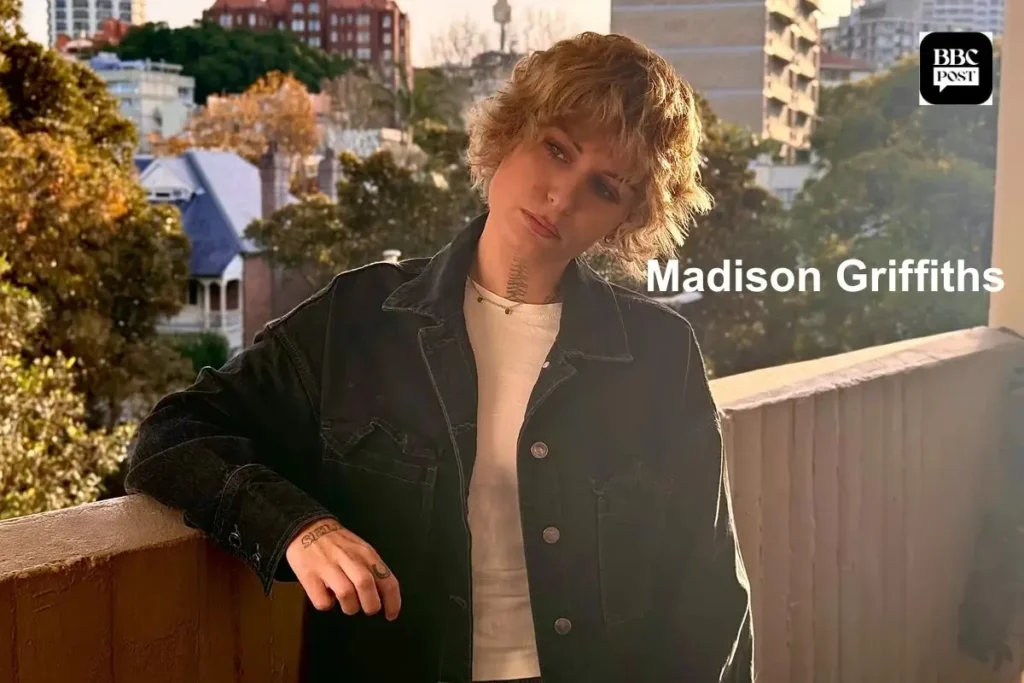
Madison Griffiths co-produces the award-winning podcast Tender, which is available on Broadwave, in addition to being a writer. Tender tracks individuals as they make the decision to leave abusive relationships and, crucially, what transpires after that choice. The podcast chronicles the lengthy emotional and practical aftermath rather than concluding tales at the moment of departure.
Tender is seen as more than just artistic podcasting; it is a kind of journalistic audio storytelling. Its reporting methodology allows participants to talk across time rather than at discrete times and emphasises continuity, responsibility, and depth.
Griffiths and co-producer Beth Atkinson-Quinton were honoured with the Walkley Foundation Our Watch Award for Excellence in Reporting on Violence Against Women in 2022. The prise acknowledged the podcast’s contribution to the public’s awareness of intimate partner abuse and was linked to particular reporting in the Tender series. The podcast’s reputation as serious reporting is further supported by the Walkley Awards, one of Australia’s most prestigious journalistic accolades.
Sweet Things: The University, Desire, and Power
Sweet Nothings, Madison Griffiths’ second nonfiction book, was released by Ultimo Press in 2025. The book specifically reopens discussions on sex, power, and gender at Australian universities, coming more than thirty years after Helen Garner’s The First Stone.
The interconnected tales of four women Rose, Blaine, Cara, and Elsie, who had romantic or sexual connections with their university instructors or tutors while they were students are told in Sweet Nothings. Although these relationships were legal and presented as consensual, the book questions how consent functions in hierarchical and authoritative situations.
Griffiths examines how intimacy is shaped by institutional power, gender, and class via these tales. The concept of exceptionality is a recurrent issue, where women are made to feel special or selected, only to find patterns that contradict that assumption. The book looks at how treachery increases when those in positions of power have professional and intellectual clout.
Griffiths’ own well reported experience with a university instructor at the age of 21 is what sparked her interest in this topic. The Guardian presents this story as background information for comprehending how ambition, validation, and power may interact in academic environments rather than as a confession. Instead of being a straightforward indictment of people, the Guardian’s review of Sweet Nothings presents the book as a confrontation with the belief in exceptionality and aspiration.
Sweet Nothings has received accolades for its deft handling of intricate power relationships, its lucidity on institutional accountability, and its avoidance of sensationalising injury. The book presents itself as an analysis of the ways in which academic institutions might permit imbalances that have long-lasting emotional effects.
The book is available on reader sites like Goodreads, where it has sparked reviews and discussions and raised awareness of it in the field of modern Australian nonfiction.
In Australia, the paperback version of Sweet Nothings costs around $36.99 AUD, while the eBook versions typically cost between $14.99 and $17.99 AUD, depending on the store.
Themes That Recur in Griffiths’ Writing
In her novels, articles, and audio journalism, Madison Griffiths often addresses a number of related topics:
- The boundaries of human choice and agency
- Inequalities in power in personal and professional relationships
- Silence’s role in causing damage
- Expectations based on gender regarding obedience and desire
- The psychological fallout from choices influenced by authority
These themes connect her long-form nonfiction and journalism, forming a cohesive body of work rather than discrete pieces.
Public Identity and Creative Practice
Griffiths generally identifies as an author and producer in public profiles. She also characterises herself as an occasional tattoo artist, an artistic endeavour that complements rather than defines her work. Her public biographies often include this information, which indicates a more general interest in creative expression.
There is no official Wikipedia article for Madison Griffiths. Rather than personal revelation, her published work, acclaimed journalism, and involvement in cultural discourse form her public profile.
Conclusion
Madison Griffiths’ insistence on paying attention to experiences that are often minimised or simplified has made her a prominent voice in modern Australian nonfiction. She addresses the emotional and cultural aspects of abortion in Tissue. She reveals how power functions in academic institutions and influences intimacy in Sweet Nothings. She contributes to a serious public awareness of violence and healing by following life outside of crisis situations via Tender.
Resolving suffering or providing comfort is not the goal of her job. Rather, it challenges listeners and readers to see how language, relationships, and beliefs are shaped by power and to consider the implications of doing so. Madison Griffiths continues to influence Australian discourse on agency, consent, and the narratives we choose to hear by doing this.
FAQs
Who is Madison Griffiths?
Madison Griffiths is an Australian author, writer, artist and producer based in Melbourne. She is known for the nonfiction books Tissue and Sweet Nothings, and for co-producing the award-winning podcast Tender, which examines life after abusive relationships.
What is Sally Griffiths known for?
There are multiple public figures named Sally Griffiths. The most commonly referenced is Sally Griffiths, an Australian journalist and editor who has worked in media and publishing. There is no verified connection between Sally Griffiths and Madison Griffiths.
Who is Neil Griffiths?
Neil Griffiths is a common name shared by several public figures. One well-known Neil Griffiths is a UK educator and author, recognised for his work on student engagement and learning models. There is no verified public link between him and Madison Griffiths.
Who is Elly Griffiths?
Elly Griffiths is the pen name of British novelist Domenica de Rosa, best known for the Ruth Galloway crime series. She is a bestselling author in the UK and internationally and is not related to Madison Griffiths.
What was Richard Griffiths’ medical condition?
Richard Griffiths, the British actor known for Harry Potter, Withnail and I and The History Boys, died in 2013 due to complications following heart surgery. While Parkinson’s disease was reported in some media during his later life, his death was officially attributed to cardiac complications.
Why did Griffith become evil?
This question most commonly refers to Griffith from the manga and anime Berserk. Griffith’s transformation into an antagonist occurs after profound betrayal, ambition and sacrifice, culminating in his rebirth as Femto, driven by his desire for power and destiny.
Who is Martin Griffith?
The name Martin Griffith (or Griffiths) applies to multiple individuals across fields such as academia, religion, sport and business. There is no single universally recognised public figure by this name, and no verified link to Madison Griffiths.
Where is Ruth Galloway’s cottage?
In Elly Griffiths’ novels, Ruth Galloway’s cottage is located in the Norfolk saltmarshes near King’s Lynn, England. The setting is fictional but closely inspired by real coastal landscapes in Norfolk.

