

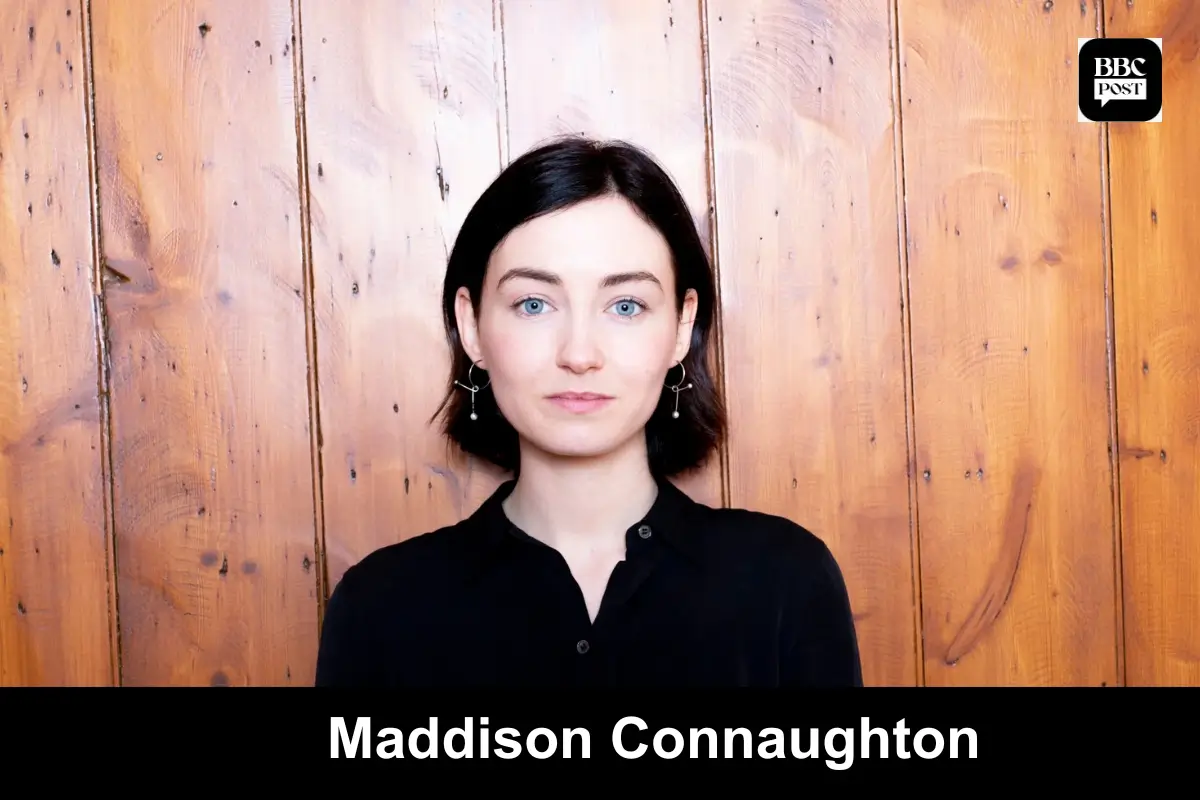
Maddison Connaughton is an Australian journalist, editor, producer and investigative reporter whose career spans long-form print journalism, international wire reporting and in-depth broadcast investigations at the Australian Broadcasting Corporation. Based in Sydney, she is best known for her investigative reporting on Background Briefing and her work with Four Corners, alongside earlier senior editorial roles at The Saturday Paper and VICE.
Her journalism is defined by patience, structure and evidence. Rather than responding to the daily churn of headlines, Connaughton’s work consistently examines how systems are built, how power operates within them, and how policy decisions shape lives over time, particularly in relation to gender, work, care and inequality.
Early Life and Education
There is no publicly verified information available regarding Maddison Connaughton’s childhood, family background, schooling or university education. These details are not disclosed in her ABC biography, her official website, festival profiles or reputable Australian media coverage.
This absence reflects a professional norm among investigative journalists in Australia, particularly those engaged in sensitive public-interest reporting. Connaughton has consistently maintained a boundary between her private life and her public work.
Developing an Interest in Journalism and Narrative Storytelling
Although Connaughton does not publicly discuss her personal interests outside journalism, her professional interests are clearly demonstrated through her reporting and editorial work. Across platforms, she has shown a sustained commitment to long-form storytelling and investigative journalism, with a particular focus on structural issues rather than individual scandal.
In interviews and editor profiles during her time at The Saturday Paper, she has spoken about the influence of documentary storytelling on her work. Her approach favours structure, pacing and accumulation of evidence, allowing conclusions to emerge gradually rather than being stated outright. This philosophy underpins both her investigative reporting and her reflective essays.
Early Career and Feature-Driven Foundations
Connaughton’s career developed in feature-focused environments rather than daily newsrooms. This early grounding shaped her reporting and editing style, emphasising context, clarity and narrative coherence over speed.
From the outset, her journalism showed a consistent interest in systems rather than isolated incidents. This focus on structural causes would later become central to her investigative work in broadcast media.
Senior Editorial Role at VICE
Before moving into national editorial leadership, Connaughton worked as a senior editor at VICE, a publication known at the time for blending youth-oriented publishing with serious reporting on politics, culture, conflict and social change.
In this role, she commissioned and edited long-form features and investigations, working closely with writers on complex and often sensitive topics. The position required careful judgement, particularly when dealing with international reporting and vulnerable communities, and helped establish her reputation as an editor with strong narrative instincts and ethical awareness.
This period laid the groundwork for her later appointment as editor of a national newspaper.
Editor of The Saturday Paper (2018–2020)
In June 2018, Maddison Connaughton was appointed editor of The Saturday Paper, a nationally respected weekly publication published by Schwartz Media. She succeeded founding editor Erik Jensen and became one of the youngest editors of a major Australian news title.
The Saturday Paper operates outside the daily news cycle and focuses on long-form journalism, investigations, essays and analysis. As editor, Connaughton was responsible for setting editorial direction, leading weekly editorial planning, commissioning investigative and analytical reporting, and overseeing legal and editorial standards.
During her tenure, she emphasised narrative journalism and structural analysis, reinforcing the paper’s commitment to depth and context. Her editorship coincided with continued expansion of the paper’s investigative and international coverage, including reporting connected to the Syrian conflict.
International Reporting and Global Publishing
Alongside her editorial leadership, Connaughton undertook international reporting, including work related to the Syrian war. This reporting contributed to her early professional recognition and later Walkley nominations.
Her journalism has appeared in major international publications such as The Guardian, The New York Times and Foreign Policy, demonstrating recognition of her work beyond Australia. According to her official biography, she has reported from Australia, the Pacific, the United States and the Middle East, giving her work a genuinely international scope.
International Wire Reporting with Agence France-Presse
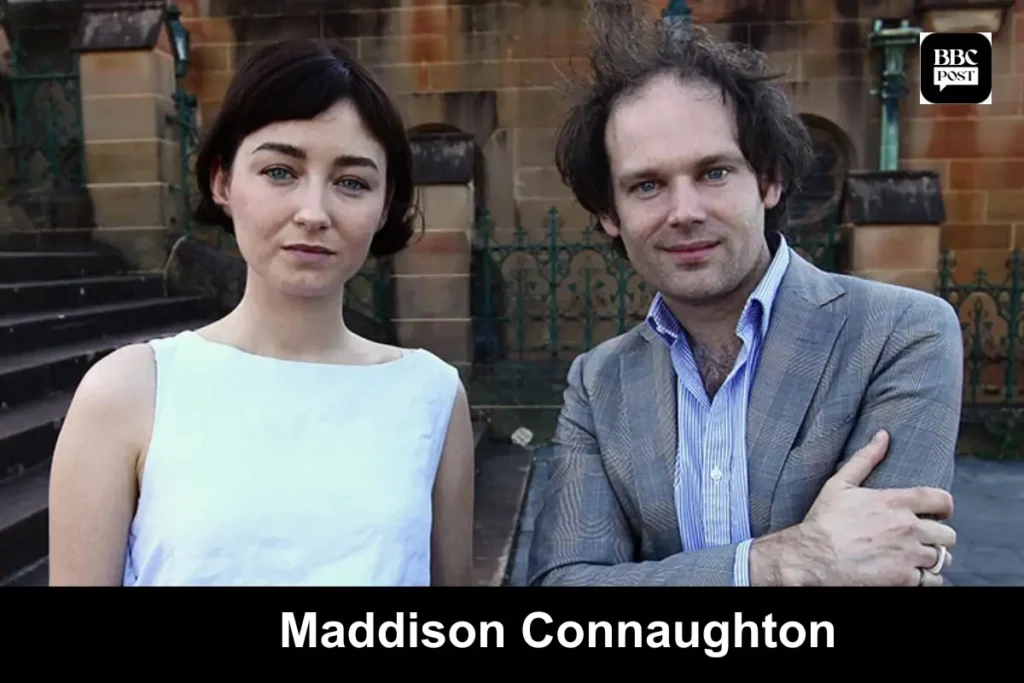
Following her editorship at The Saturday Paper, Connaughton joined Agence France-Presse as a correspondent in the Sydney bureau. Reporting for AFP required a different professional discipline, focused on accuracy, neutrality and speed for a global audience.
This phase of her career strengthened her experience in international wire journalism and further developed her ability to frame Australian and regional issues for readers worldwide.
Transition to the Australian Broadcasting Corporation
After her time in print leadership and wire reporting, Connaughton joined the Australian Broadcasting Corporation, transitioning into broadcast investigative journalism. This move marked a return to hands-on reporting within formats that demand extensive research, collaboration and legal scrutiny.
The transition also involved adapting her narrative approach to audio and television, while maintaining her commitment to evidence-based storytelling.
Investigative Reporting on Background Briefing
Maddison Connaughton is an investigative reporter for ABC Radio National’s Background Briefing, one of Australia’s most respected long-form investigative programs.
Her work on the program has included investigations into gambling industry influence and legacy harms, health and medical marketing practices, legal disputes and regulatory failures, and the lived impact of public policy decisions. These investigations often take months to complete and involve document analysis, source development, legal review and detailed narrative construction.
Examples of Background Briefing reporting credited to Connaughton include investigations into the legacy of Australia’s pokies industry, scrutiny of testosterone clinics and medical marketing, and episodes examining class actions and legal consequences linked to public policy decisions.
Contributions to Four Corners
Connaughton has also worked on ABC’s Four Corners, Australia’s longest-running and most influential investigative television program. Contribution to Four Corners reflects a high level of editorial trust, given the program’s legal scrutiny and national impact.
She has been credited on investigations later recognised in Walkley Award listings, including work connected to broader examinations of power, regulation and institutional accountability.
Media Accountability and Media Watch
In more recent work, Connaughton has been associated with ABC’s Media Watch, the program dedicated to scrutinising media ethics, reporting accuracy and power structures within journalism itself.
Working on Media Watch represents a further evolution in her career, shifting from investigating policy and institutions to examining journalism as an institution. This role is typically reserved for journalists with strong editorial judgement and a deep understanding of media practice.
Awards and Professional Recognition
In 2019, Connaughton was selected as an inaugural Walkley Our Watch Fellow. The fellowship focuses on improving how Australian media reports on violence against women and gender inequality and is highly competitive.
Earlier in her career, she was twice nominated for Walkley Young Australian Journalist of the Year. These nominations were linked to her reporting on the Syrian war and on criminal justice issues. The Walkley Awards are Australia’s most prestigious journalism honours, and nominations signal recognition from peers within the profession.
Essays, Commentary and Cultural Engagement
In addition to investigative reporting, Connaughton has written essays and long-form commentary on gender, labour and public policy. Her essay reflecting on Annabel Crabb’s Men at Work illustrates her analytical style, combining data, policy history and structural critique rather than relying on anecdote alone.
She has also served as a judge for major Australian literary awards, including the Victorian Premier’s Literary Awards, the New South Wales Literary Awards and the Horne Prize. These roles place her within Australia’s broader literary and cultural landscape.
Connaughton regularly hosts and moderates public discussions at major venues and festivals, including the Sydney Writers’ Festival, the Sydney Opera House and international literary events, reflecting her standing within Australia’s cultural and intellectual community.
Newsletter and Curatorial Work
Connaughton publishes a weekly newsletter titled One Good Thing, in which she curates essays, books and long-form journalism she considers worth reading. This work highlights her role not only as a reporter but also as a curator of ideas, contributing to public conversation beyond traditional newsroom output.
Lifestyle and Public Presence
Maddison Connaughton maintains a low-profile personal life. Publicly confirmed information indicates that she is based in Sydney and works across investigative reporting, editing and writing.
Details about her relationships, family life or daily routine are not publicly disclosed, and no reputable Australian source publishes this information.
Success, Influence and Impact
Connaughton’s professional success is reflected in her editorial leadership at a national publication, investigative reporting roles at the ABC, international bylines, Walkley recognition and cultural influence through events and literary judging.
Her influence lies in institutional trust and editorial responsibility rather than personal visibility. Across multiple organisations, she has been entrusted with work that requires depth, care and accountability.
Conclusion
Maddison Connaughton is an Australian investigative journalist whose career spans feature journalism, senior editorial leadership, international wire reporting and long-form investigations at the national broadcaster. Her work is defined by evidence, structure and persistence, with a sustained focus on power, policy and accountability.
By maintaining personal privacy while engaging deeply with public issues, she represents a tradition of Australian journalism that values clarity, rigour and public interest over speed or spectacle.

