

Blue swimmer crab is one of Australia’s most widely enjoyed seafoods. Found along much of the Australian coastline, from Western Australia through South Australia and into parts of Victoria and New South Wales, it is valued for its sweet flavour, light texture, and fast cooking time. It is commonly sold live, freshly cooked, or as picked meat through fish markets, seafood shops, and local suppliers.
Despite its popularity, blue swimmer crab is often mishandled at home. Many cooks treat it like mud crab or lobster, applying longer cooking times that strip the meat of moisture and sweetness. Blue swimmer crabs behave very differently. Its thinner shell and delicate muscle structure mean it cooks quickly and requires careful timing.
This guide brings together verified Australian home-cooking practices, fishing knowledge, and widely used kitchen methods. It covers preparation, stove-top cooking, steaming, BBQ use, curries, cooking whole crabs, working with fresh and frozen crab, exact cooking times, cleaning steps, sustainability considerations, and a complete black pepper blue swimmer crab recipe.
Understanding Blue Swimmer Crab
Blue swimmer crab has fine muscle fibres and a high water content. Heat passes through the shell and into the meat rapidly, which is why even a minute too long can affect texture. Once overcooked, the meat tightens, loses moisture, and becomes chalky.
Freshness is critical. Blue swimmer crabs should be cooked on the same day they are purchased. Once a crab dies, it begins to deteriorate quickly. Any crab with a sour, sharp, or ammonia-like smell should be discarded immediately. Cooking does not make spoiled seafood safe to eat.
Because of its quick cooking time, blue swimmer crab suits simple preparation methods. It works best when the natural flavour is allowed to stand out rather than being overwhelmed by heavy sauces or long simmering.
Preparing Blue Swimmer Crab Before Cooking
Many Australian fishers and home cooks place live crabs in fresh water for around 30 minutes after bringing them home. This is done to allow the crabs to empty their stomach contents. While not essential, it is a commonly used local practice and part of traditional crab handling for some.
For humane handling, crabs are often placed in the freezer for about 30 minutes before cooking. This reduces movement and stress prior to dispatch and makes handling safer.
Crabs can be cooked whole or cleaned before cooking, depending on the dish. Whole cooking is preferred for boiling and steaming, especially when the crab will be served simply. Cleaning and cutting the crab before cooking is common for curries and stir-fries.
How to Cook Blue Swimmer Crab on the Stove
The stove remains the most reliable way to cook blue swimmer crab at home. Two methods dominate Australian kitchens: boiling and steaming.
Boiling Blue Swimmer Crab (Whole)
Boiling is ideal for whole crabs that will be cleaned after cooking.
A large pot is filled with fresh water and seasoned with approximately:
- 2 tablespoons salt
- 1 tablespoon sugar
The water should taste similar to seawater. The sugar is sometimes added by Australian cooks to support the natural sweetness of the crab rather than to make the water sweet.
Once the water reaches a rolling boil, whole crabs are added head-first. The pot is covered so the water returns to the boil quickly. Cooking time begins only after boiling resumes.
- Medium blue swimmer crabs cook in 5–7 minutes
- Large crabs cook in up to 9 minutes
As the crabs near doneness, they often float, which is a common visual cue used by home cooks alongside timing.
As soon as the crabs are cooked, they must be transferred immediately into an ice-cold salted water bath. They are usually left there for around 10 minutes. This step is essential. Heat retained in the shell continues to cook the meat if cooling is delayed.
All cooking water and crab liquid should be discarded and never reused.
How Long to Cook Blue Swimmer Crab in Boiling Water
Cooking times depend on size and must remain short:
- Small crabs: 4–5 minutes
- Medium crabs: 5–7 minutes
- Large crabs: 7–9 minutes
Overcooking is the most common mistake made with blue swimmer crab and results in dry, crumbly meat.
How to Steam Blue Swimmer Crab
Steaming is popular in Australian homes because it preserves flavour and reduces dilution.
A wok or saucepan with a tight-fitting lid is used with ½ cup (125 ml) water brought to the boil. Crabs are added, covered, and steamed for 3–5 minutes, depending on size, until just cooked.
As with boiling, the crabs are transferred straight into an ice-cold salted water bath for around 10 minutes, then cleaned or served.
Steaming is often considered the most forgiving method for first-time cooks.
How to Cook Blue Swimmer Crabs Whole on the Stove
Cooking blue swimmer crabs whole is common in Australia, particularly for seafood platters, salads, and chilled crab meals.
After boiling or steaming, the abdominal flap underneath the crab is lifted and removed. The top shell is taken off, followed by the gills and mouthparts. The crab is rinsed briefly under cold water and placed upside down to drain.
Claws are usually cracked before serving to make eating easier. Whole-cooked crabs are often chilled in the fridge and served with lemon wedges, chilli mayo, bread, and cold beer.
How to Cook Blue Swimmer Crab on the BBQ
The BBQ is best suited to halved or pre-cooked blue swimmer crabs rather than whole raw crabs.
Cleaned crabs are brushed lightly with oil or butter and placed shell-side down first. After 3–4 minutes, they are briefly turned flesh-side down for 1–2 minutes.
Total BBQ time is usually 4–6 minutes. Overcooking on the BBQ dries the meat very quickly, so close attention is required.
BBQ crab is best finished with garlic butter, lemon juice, or light seasoning added after cooking.
How to Cook Blue Swimmer Crab Meat
Picked blue swimmer crab meat is already cooked and should only be reheated gently.
It is added at the final stage of cooking when making pasta, fried rice, omelettes, or crab sandwiches. The meat should be warmed for 1–2 minutes only.
Boiling or simmering cooked crab meat causes it to become tough and stringy and should be avoided.
How to Cook Blue Swimmer Crab Curry
Blue swimmer crab works well in curries because it absorbs flavour quickly while still holding its shape.
Raw crabs are cleaned and cut into halves or quarters. The curry base is cooked first, allowing spices, coconut milk, or tomato to develop flavour. Crab pieces are added toward the end and simmered gently.
Most blue swimmer crab curries cook in 8–10 minutes. The sauce should remain at a gentle simmer rather than a rolling boil. Stirring should be minimal to avoid breaking up the meat.
Black Pepper Blue Swimmer Crab (Australian–Asian Style)
Prep time: 10 minutes
Cook time: 15 minutes
Serves: 4
Cost note: The cost per serving includes staple ingredients. Prices vary depending on individual supermarkets.
This dish highlights the natural sweetness of blue swimmer crab with garlic, ginger, and cracked black pepper.
Ingredients
- 3 × 250 g raw blue swimmer crabs, cleaned
- 1 tablespoon sunflower oil
- 6 garlic cloves, finely chopped
- 5 cm piece ginger, sliced
- 1 teaspoon whole black peppercorns, crushed
- 2 teaspoons brown sugar
- 1 tablespoon fish sauce
- Juice of 1 lemon
- 2 eggs, lightly beaten
- Coriander leaves and fried Asian shallots, to serve
Method
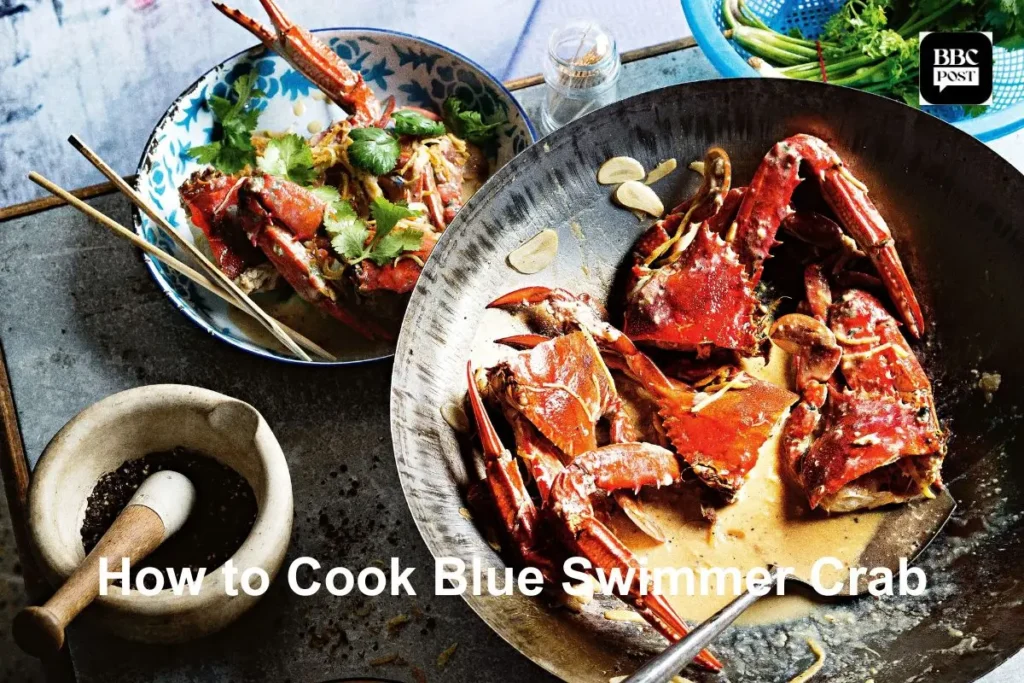
The crabs are cut in half and the claws lightly cracked. ½ cup (125 ml) water is brought to the boil in a wok with a lid. The crab is added, covered, and steamed for about 3 minutes until just cooked.
The crab and its cooking liquid are transferred to a tray. The wok is wiped clean and returned to medium-low heat. Oil, garlic, ginger, and crushed peppercorns are cooked gently until softened. Brown sugar is added and allowed to caramelise briefly before fish sauce, lemon juice, and the reserved crab liquid are stirred through.
The wok is removed from heat and left to cool for 2–3 minutes. This step prevents the eggs from scrambling. The eggs are stirred in, followed by the crab. The wok is returned to low heat and stirred gently for 1–2 minutes, ensuring the sauce does not boil.
The dish is finished with coriander leaves and fried Asian shallots and served immediately. Any remaining crab liquid or sauce should be discarded.
How to Cook Fresh Blue Swimmer Crab
Fresh blue swimmer crabs should always be cooked on the day they are purchased. Live crabs are usually boiled or steamed whole, then cooled immediately in ice-cold salted water.
Any crab with an off smell should be thrown away.
How to Cook Blue Swimmer Crabs from Frozen
Frozen blue swimmer crabs must be thawed fully in the fridge before cooking.
If frozen raw, they can be boiled or steamed once thawed, with cooking time reduced slightly. If frozen after cooking, the meat should only be gently reheated.
Refreezing thawed crab is not recommended.
Legal and Sustainability Considerations in Australia
The legal minimum size for blue swimmer crabs is around 6 cm, measured from the front of the shell to the back. Crabs at this size often contain very little meat and are commonly released.
Female crabs are typically brown in colour and have a rounded abdominal flap. Many fishers return females to the water to support sustainability.
Crabs with soft shells, identified by gently squeezing the shell at its widest point, have recently moulted and contain little meat. These are usually released.
Responsible handling helps protect future crab stocks.
Tips for Success
Do not overcook blue swimmer crab.
Always prepare an ice bath before cooking begins.
Discard all crab cooking liquid and marinades.
Crack claws before serving for easier eating.
Serve crab with bread, rice, or pasta to soak up juices.
Learning by Watching
Many Australians also learn crab preparation visually. Short instructional videos from fishing and outdoor programs, such as those produced by boating and fishing retailers and local outdoor cooking shows, demonstrate cleaning, boiling, and steaming methods commonly used at home.
Final Thoughts
Blue swimmer crab is one of Australia’s most rewarding seafoods to cook at home. With short cooking times, immediate cooling, and simple handling, it delivers sweet, tender meat across a wide range of dishes.
Whether boiled, steamed, BBQ’d, or cooked into curries and pepper crab, success comes down to freshness, restraint, and respect for the ingredient.
FAQs
What is the best way to cook blue swimmer crabs?
The best way to cook blue swimmer crabs is boiling or steaming them whole for a short time, followed by an immediate ice bath. These methods protect the delicate meat and preserve its natural sweetness. Steaming is often preferred for flavour retention, while boiling is quicker and widely used in Australian homes.
Is blue swimmer crab good to eat?
Yes, blue swimmer crab is excellent to eat. It is prized for its sweet, clean-tasting meat and soft shell. When fresh and cooked correctly, it is tender, moist, and well suited to simple dishes as well as curries, pasta, and Asian-style recipes.
How do you get the meat out of a blue swimmer crab?
After cooking and cooling, remove the abdominal flap and lift off the top shell. Discard the gills and mouthparts, then crack the claws and legs. The body meat can be gently pulled out by hand, while a small spoon or pick helps remove meat from the cavities and joints.
What is the best way to eat blue crabs?
Blue crabs are best eaten simply, allowing their natural flavour to stand out. In Australia, they are commonly served chilled with lemon wedges, chilli mayo, bread, or lightly warmed in pasta, rice dishes, or stir-fries. Cracking the claws before serving makes them easier to eat.
When should you not eat blue crabs?
You should not eat blue crabs if they smell sour or ammonia-like, appear slimy, or were dead for an unknown length of time before cooking. Crabs with very soft shells, indicating recent moulting, are also usually avoided because they contain little meat.
Why are crabs not killed before cooking?
Crabs are often cooked while alive because they spoil rapidly once dead. Cooking them immediately helps ensure food safety and quality. Many Australian cooks first chill crabs in the freezer to reduce stress and movement before cooking, which is considered a more humane handling method.
What part of a blue crab do you not eat?
You do not eat the gills (often called “dead man’s fingers”), the mouthparts, or the stomach sac behind the eyes. These parts are removed during cleaning. The shell itself is also discarded, while the body, leg, and claw meat are eaten.
Is blue crab high in mercury?
No, blue swimmer crab is considered low in mercury compared with larger predatory fish. It is generally regarded as a safe seafood choice when eaten in moderation, including for most adults following Australian seafood guidelines.

