

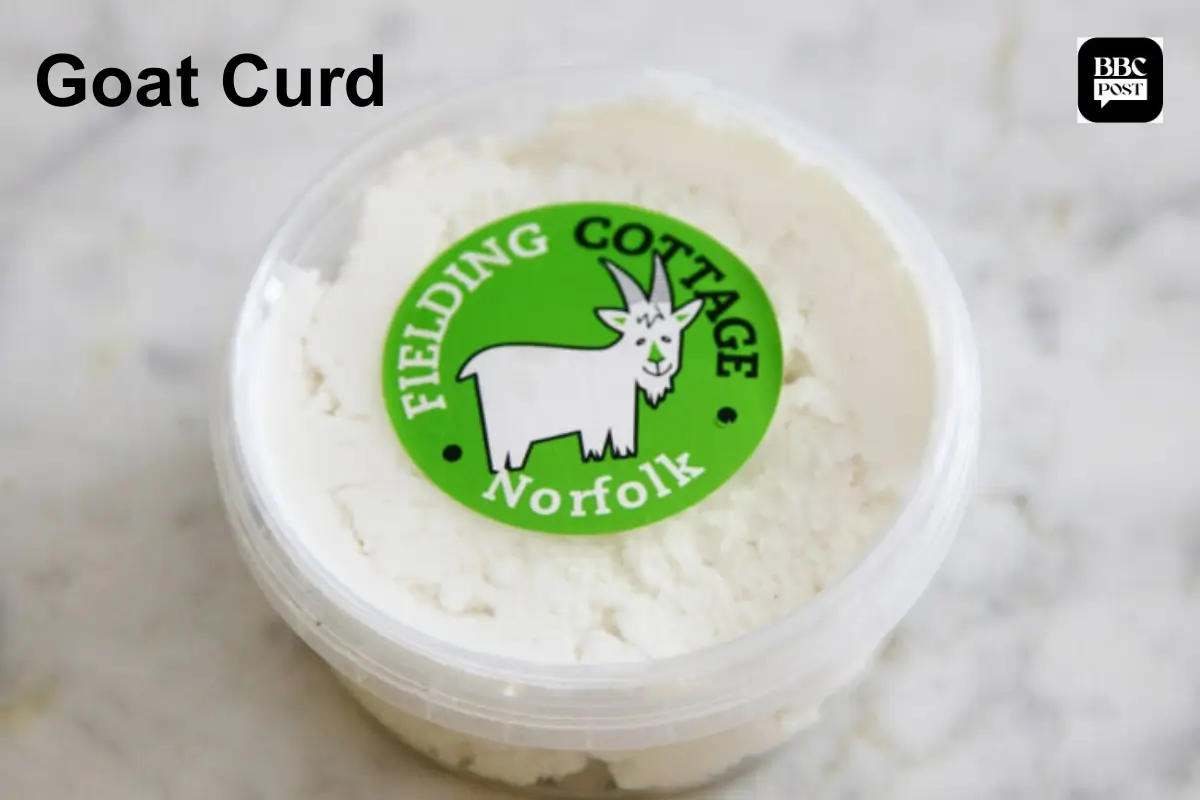
Goat curd is a fresh cheese made from goat’s milk, commonly used in both domestic and professional kitchens. It is known for its soft texture, mild acidity, and versatility across savoury and sweet dishes. While it is often grouped under the broader term “goat’s cheese”, goat’s curd has specific characteristics that set it apart from aged or firm varieties.
This article brings together verified, publicly available information to explain what goat’s curd is, how it is made, how it is used, how long it lasts, and how availability differs between Australia and the United Kingdom.
What Is a Goat’s Curd?
Goat’s curd is a fresh, unripened cheese produced by curdling goat’s milk and gently draining the whey. It is not aged, pressed, or rind-formed. As a result, it remains moist, creamy, and fresh in flavour.
Common characteristics include:
- Soft, creamy or lightly crumbly texture
- Mild tang rather than sharpness
- Bright white appearance
Because it is unaged, goat’s curd reflects the natural properties of goat’s milk more directly than matured cheeses.
Is Goat’s Curd the Same as Goat’s Cheese?
Goat cheese is a general category that includes all cheeses made from goat’s milk. Goat’s curd is one specific type within that category.
Key differences:
- Goat’s curd is fresh and unaged
- Aged goat’s cheeses are firmer and stronger in flavour
- Goat’s curd has higher moisture and lower salt
- Goat’s curd is commonly spread, whipped, or stirred into dishes
In cooking, goat’s curd behaves more like ricotta or cream cheese than firm goat cheese.
How Goat’s Curd Is Made
The production process focuses on freshness:
- Goat’s milk is gently warmed
- Starter cultures or food-grade acid are added
- The milk separates into curds and whey
- Curds are drained to retain moisture
- Light salting may be applied
No ageing takes place, which gives goat’s curd a short shelf life and requires refrigeration.
Is Goat’s Curd Pasteurised?
Goat curd may be made from pasteurised or unpasteurised milk, depending on the producer.
- Supermarket products are usually pasteurised
- Artisan or farm-made products may use unpasteurised milk
The pasteurisation status is always stated on the label and should be checked before purchase.
Can You Eat Goat’s Curd When Pregnant?
Australian and UK food safety guidance applies the same principle to soft cheeses.
- Pasteurised goat’s curd is generally considered suitable during pregnancy
- Unpasteurised goat’s curd should be avoided
This advice exists because soft cheeses made from unpasteurised milk can carry bacteria that pose higher risks during pregnancy. Proper refrigeration and adherence to use-by dates are also important.
Unpasteurised Goat’s Curd: Legal but Restricted
Unpasteurised goat’s curd is legal and regulated in both Australia and the United Kingdom. It may be sold through licensed producers and retailers that meet food safety requirements.
However:
- It is not recommended for pregnant people
- It is intended for general adult consumption only
This distinction is important: legal to sell does not mean suitable for all groups.
Food Safety Standards (High-Level Context)
Fresh dairy products such as goat’s curd are produced and sold under strict food safety standards in both Australia and the UK. These standards regulate:
- Milk handling and treatment
- Hygiene during production
- Cold storage and transport
- Labelling requirements
While specific rules differ slightly between countries, the overall approach prioritises temperature control, traceability, and clear consumer labelling.
Shelf Life and Storage
Because goat’s curd is a fresh cheese, it has a limited shelf life.
Typical timeframes (vary by producer):
- Unopened: around 1–3 weeks
- Opened: usually 5–10 days
Storage guidance:
- Keep refrigerated at all times
- Reseal after opening
- Follow the use-by date
Some producers note that freezing is possible, although texture may change after thawing.
What to Check on the Label
When buying goat’s curd, the label provides key information:
- “Pasteurised milk” or “unpasteurised milk”
- Vegetarian rennet, if relevant
- Use-by date (fresh cheeses use use-by, not best-before)
These details are particularly important for pregnancy safety and dietary preferences.
Goat’s Curd vs Ricotta
Although sometimes used as substitutes, they are not the same.
| Feature | Goat’s Curd | Ricotta |
| Base | Whole goat’s milk | Whey |
| Texture | Creamy, smooth | Lightly grainy |
| Flavour | Mild with tang | Mild, slightly sweet |
| Use | Spreads, sauces, fillings | Baking, pasta |
Ricotta is a whey-based cheese, while goat’s curd is milk-based.
Culinary Uses of Goat’s Curd
Goat curd is widely used because it blends easily.
Common uses include:
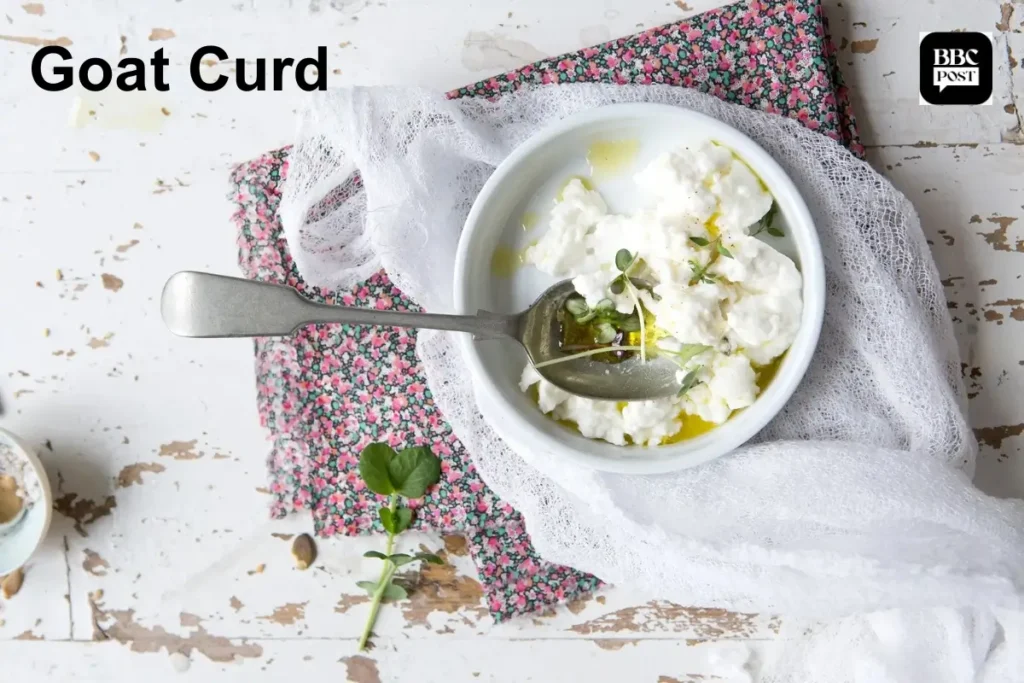
- Spread on toast
- Stirred into pasta or risotto at the end of cooking
- Used as a filling for ravioli, tarts, and pastries
- Added to salads
- Used in no-bake cheesecakes
When heated gently, it softens and becomes creamy rather than stretchy.
Why Goat’s Curd Is Used in Commercial Kitchens
Professional kitchens use goat’s curd because:
- It is available in large catering formats
- It blends smoothly into sauces and fillings
- Its flavour remains consistent between batches
- It works in both savoury and sweet dishes
These qualities make it practical for high-volume cooking.
Neal’s Yard Dairy and UK Artisan Goat’s Curd
Neal’s Yard Dairy is widely recognised in the UK for sourcing and selling British artisan cheeses. Their goat’s curd is available in large formats, including a 2kg catering tub, commonly used by restaurants and food professionals.
Due to freshness requirements, some goat’s curd products are shop-only and not sold online. This reflects handling, storage, and shelf-life considerations rather than limited supply.
Including recognised artisan references adds context to how goat’s curd is used beyond home kitchens.
Where to Buy Goat’s Curd
Australia
Goat’s curd is available through:
- Selected Woolworths stores
- Selected Coles stores
- Delicatessens and specialty food shops
Australian producers commonly stocked include:
- Meredith Dairy
- Udder Delights
- Tongola
Availability varies by location.
United Kingdom
In the UK, goat’s curd is more commonly found through:
- Artisan cheesemongers
- Farm shops
- Selected Waitrose stores
Large formats are often sold in-store only.
Australia vs UK Availability: Key Differences
- United Kingdom: stronger artisan and cheesemonger presence, wider access to large catering formats
- Australia: greater reliance on supermarkets and regional producers
This difference reflects market structure rather than demand.
Final Summary
Goat’s curd is a fresh, soft goat’s milk cheese valued for its mild flavour, short ingredient list, and versatility. It differs from aged goat’s cheese in texture, taste, and use. Pasteurisation status varies by producer, which is important for pregnancy safety. Goat curd is legal and regulated in both Australia and the UK, with availability shaped by local retail systems. Used in both home and professional kitchens, it remains a widely used ingredient in modern cooking.
FAQs
What is goat curd?
Goat curd is a fresh, unripened cheese made from goat’s milk. It is produced by curdling the milk and draining the whey without ageing. This gives it a soft texture and mild, tangy flavour.
What is a substitute for goat’s curd?
Common substitutes for goat’s curd include fresh chèvre, ricotta, cream cheese with a little lemon juice, or labneh for savoury dishes. Each substitute differs slightly in texture and acidity.
How do you make goat curd?
Goat curd is made by gently heating goat’s milk, adding a starter culture or food-grade acid, allowing curds to form, and then draining the whey. The curd is lightly salted and refrigerated for fresh use.
What are the benefits of goat curd?
Goat curd provides protein and calcium and is usually lower in salt than many aged cheeses. Some people find goat’s milk products easier to digest due to differences in milk proteins and fat structure, although it still contains lactose.
Is goat yoghurt better than cow yoghurt?
Neither is universally better. Goat yoghurt may be easier to digest for some people, while cow yoghurt is more widely available and often higher in protein. The better option depends on individual tolerance and dietary needs.
What does goat’s curd taste like?
Goat’s curd has a mild, fresh flavour with gentle acidity. It tastes clean and creamy rather than sharp, especially when compared with aged goat’s cheese.
Is goat curd strong?
No. Goat curd is generally not strong in flavour. Because it is unaged, it lacks the sharp or intense notes found in mature goat cheeses.
Which is healthier, goat milk yoghurt or Greek yoghurt?
Both can be part of a healthy diet. Greek yoghurt is usually higher in protein, while goat milk yoghurt may be easier to digest for some people. Healthiness depends on portion size, added sugars, and individual dietary needs.

