

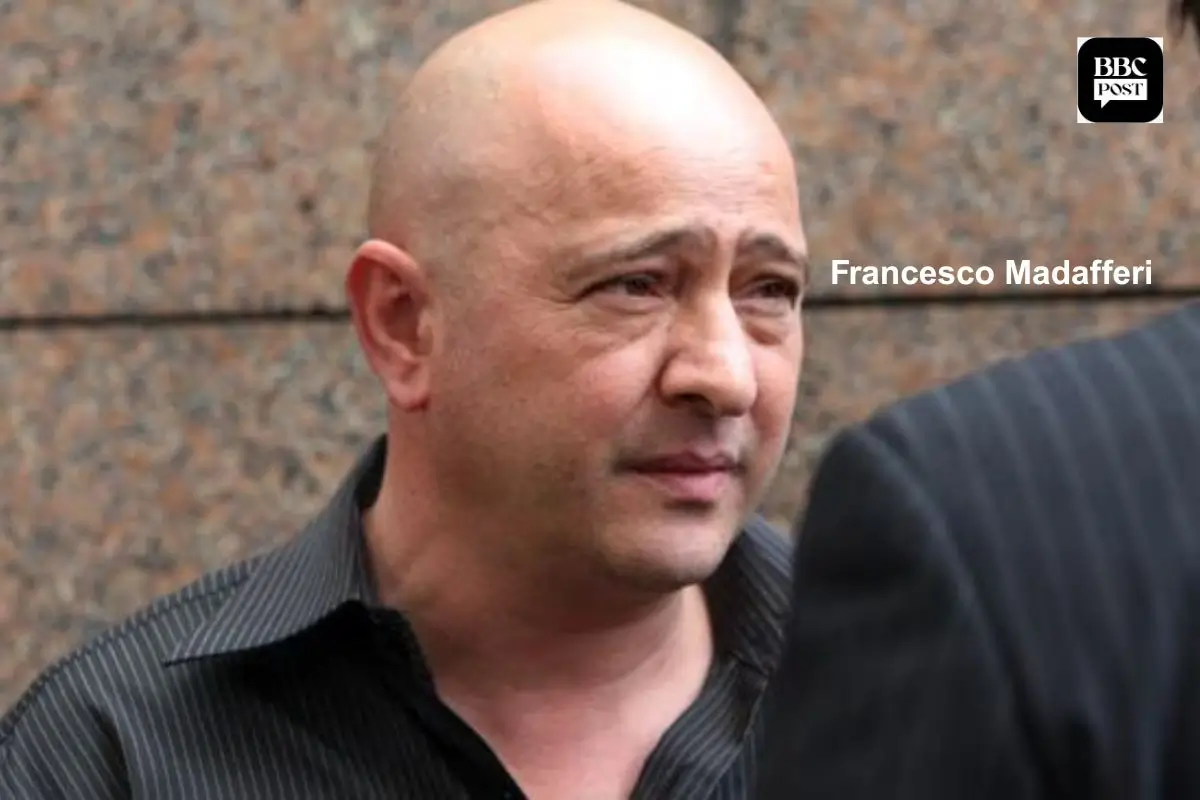
In Australia, Francesco Madafferi’s public persona has been mostly influenced by the law. Madafferi’s biography became public knowledge via immigration rulings, court rulings, international human rights findings, and political scrutiny, in contrast to prominent personalities whose lives are characterised by professional accomplishments, creative production, or public service. His case is still one of the most thorough and often quoted Australian instances of how international human rights duties, immigration legislation, extended detention, and ministerial discretion may all come together around a single person and family.
The whole story in this report is based only on credible sources, such as the Victorian Royal Commission into the Management of Police Informants, Australian courts and tribunals, legislative documents, and the UN Human Rights Committee. It doesn’t conjecture, exaggerate, or imply personal information. The public record stays mute where it is silent.
Participants and Family History
Italian citizen Francesco Madafferi was born on January 10, 1961. Later, he moved to Melbourne, Victoria, where his immigration status and family life came under intense legal and worldwide scrutiny.
Anna Maria Madafferi, his spouse, is a citizen of Australia. In addition to serving as the legal foundation for his application for permanent residence, their marriage became at the centre of debates on child rights, proportionality, and family unity.
All four of the couple’s children were born in Australia and are citizens of that country. On June 4, 1991, Giovanni Madafferi, their oldest child, was born. Giuseppina Madafferi was born on July 10, 1996, and Julia Madafferi on May 26, 1993. Antonio Madafferi, their youngest child, was born on July 17, 2001.
The existence of this familial unit was uncontested at every level of both local and international procedures. The children’s Australian citizenship and their permanent residency in Australia were acknowledged as facts and subsequently played a key role in decisions concerning family separation and the protection that international law owes children.
Early Italian Life and the History of Crime
January 1961 saw the birth of Francesco Madafferi in Italy. Information on his early personal circumstances, education, parents, siblings, and upbringing is not available in publicly accessible documents. Due to their lack of direct relevance to the legal problems at hand, these questions were never considered in Australian court proceedings or international human rights evaluations.
What is known is that Madafferi was imprisoned in Italy for two years in the 1980s. Additionally, an unfinished sentence of incarceration from an Italian court was still in effect when Australian officials subsequently evaluated his immigration status. Administrative, judicial, and ministerial rulings often cited these convictions and unresolved punishments, which were crucial to the evaluation of his character under Australian immigration legislation.
Madafferi was raising four Australian-born children and had a family with an Australian citizen by the time these issues were taken into consideration in Australia. The ensuing court dispute was based on the contrast between his established family life in Australia and his criminal past in Italy.
Arriving in Australia and Starting a Family
Francesco Madafferi arrived in Australia on a tourist visa on October 21, 1989. After that visa expired, he stayed in the nation. He married Australian Anna Maria Madafferi on August 26, 1990.
The couple established their family in Melbourne, Victoria, during the 1990s. All four of their children were born in Australia between 1991 and 2001. The fact that Australia was the focal point of the family’s social, emotional, and practical existence was undeniable in subsequent proceedings.
Decision-makers continuously recognised these facts while weighing them against character issues stemming from Madafferi’s criminal past in Italy.
Permanent Residency Application and Initial Rejection
Francesco Madafferi sought for a permanent resident visa in May 1997, citing his marriage to an Australian national as justification. Due to his past convictions in Italy and the fact that he still had an outstanding sentence, the Department of Immigration denied the application on character grounds.
Even in cases when an applicant has close family links, failing to pass the character test may result in obligatory rejection under Australian immigration law. Madafferi’s immigration status was put in peril by the rejection, which also sparked a protracted round of administrative reviews and court challenges.
Review of the Administrative Appeals Tribunal
Madafferi requested that the Administrative Appeals Tribunal examine the rejection. The Tribunal overturned the Department’s ruling on June 7, 2000, and sent the case back for review. The Tribunal acknowledged that more evaluation was necessary for pertinent elements, such as familial conditions.
Nevertheless, the visa was denied once again in July 2000 after being reexamined. The issue of whether ministerial discretion would be used was raised again by this second rejection.
Written Reasons and Ministerial Override
The Immigration Minister overruled the Tribunal’s ruling and denied the visa on October 18, 2000, using his personal discretionary powers under the Migration Act. When considered necessary, the Minister may use this authority to substitute his or her own judgement.
The Minister provided formal justification for the decision on December 21, 2000. These factors highlighted Madafferi’s criminal past, the unfinished Italian sentence, and the determination that he lacked the moral qualities necessary for permanent residency. According to the Minister, it was in the best interests of the country to remove him from Australia.
This ruling made Francesco Madafferi an illegal non-citizen under Australian law, making him subject to imprisonment and expulsion.
Immigration Detention and Surrender to Authorities
Francesco Madafferi turned himself in to immigration officials on March 16, 2001. He was sent to Melbourne’s Maribyrnong Immigration Detention Centre for immigration detention. Since there was no set period of time for his release, his incarceration was indefinite.
Maribyrnong was intended to serve as a temporary detention centre. However, Madafferi stayed there for a long time as the judicial proceedings went on. His mental state drastically deteriorated while he was in custody. After developing a stress-related condition, he spent around six months in an involuntary mental facility.
Later, the UN Human Rights Committee noted that, considering his mental health state, the decision to return him from the hospital to jail was not supported by the proper considerations.
Conditions of Detention and the Birth of a Fourth Child
Antonio, Madafferi’s fourth kid, was born on July 17, 2001, while he was in immigration detention. He wasn’t there when the baby was born. Australia then argued that his wife took the choice not to attend and that supervised attendance had been allowed. Beyond its more general conclusions about proportionality and custody circumstances, the Human Rights Committee could not identify any particular violations resulting from this incident.
Long-term incarceration, being cut off from family, and deteriorating mental health all played a major role in the global evaluation of his care.
Financial Conditions and Home Detention
Francesco Madafferi was moved from closed immigration prison to home detention between March 2002 and June 2003. He was able to live with his family under stringent restrictions because to this arrangement.
The family said that house detention was only allowed if they paid high fees, which they reluctantly agreed to as the only way to be together. In response, Australia said that the expenses were willingly incurred and that house detention was an extraordinary step. The Human Rights Committee examined these conflicting arguments as part of a more comprehensive evaluation of necessity and proportionality.
Domestic Judicial Review and Remedy Exhaustion
Madafferi petitioned the Federal Court of Australia for judicial review of the Minister’s decision. The Full Federal Court finally rejected his claims, concluding that the Minister’s judgement was free of prejudice, unlawful use of authority, and legal errors.
Later, Australia claimed that there were still other options, such as habeas corpus and filing a complaint with the Human Rights and Equal Opportunity Commission. This claim was rejected by the UN Human Rights Committee, which determined that domestic remedies had been exhausted and that these options did not amount to adequate remedies under the circumstances.
Legal Case: Australia v. Madafferi Before the UN

Francesco and Anna Maria Madafferi filed a letter with the UN Human Rights Committee on behalf of themselves and their four children after all domestic remedies had been exhausted.
Several sections of the International Covenant on Civil and Political Rights, including Articles 2, 3, 5, 7, 9, 10, 12, 13, 14, 16, 17, 23, 24, and 26, were allegedly violated, according to the lawsuit. Prolonged imprisonment, inappropriate circumstances, unfair procedures, and the planned deportation, according to the authors, violated their rights and seriously harmed their family life and the children.
In order to address recognised risks of severe self-harm, the Committee asked that Australia abstain from deporting Madafferi and offer information on alternatives to incarceration.
Submissions from Australia and Admissibility Results
Australia contested the complaint’s admissibility on a number of grounds, including inadequate proof, lack of authority, and failure to pursue domestic remedies. Australia contended on the merits that detention was permissible under the Migration Act and served justifiable immigration purposes.
Australia also argued that the deportation of one family member would not inevitably affect family life, explaining that if the children joined their father, they could either adapt into Italian culture or stay in Australia with their mother.” It argued that parental choice, not government intervention, would lead to any permanent separation.
The Human Rights Committee determined that the communication was partially admissible, permitting the prosecution of allegations pertaining to family interference, detention circumstances, and children’s rights.
Decision on Merits and Legal Argumentation
The Committee concluded that Australia’s disregard for the dignity of an individual who is deprived of their freedom constitutes a violation of Article 10(1) of the Covenant. The incarceration was disproportionate due to the extended stay in an institution unfit for long-term custody, declining mental health, and a lack of rationale.
The Committee concluded that detention was legal and not inherently arbitrary, failing to determine a distinct breach of Article 9. However, it addressed this issue under Article 10 and underlined the need of proportionality. In light of this conclusion, it deemed that a separate ruling on Article 7 was not required.
The Committee further determined that deportation would be an arbitrary interference with family life, which is against both Article 17 and Article 23. It amounted to an unwarranted disturbance of a long-established family life to force a family with four young children to choose between relocation and separation.
The Committee determined that Australia had not given the children the extra protection that their position as minors demanded, and it found a breach of Article 24.
Solutions, Views, and Execution
The Committee mandated that Australia provide a workable solution, which included delaying Francesco Madafferi’s removal until his spouse visa could be reexamined with due consideration for children’s rights and family unity. Additionally, Australia has to take action to stop future infractions of this kind.
Both opposing and concurring views were expressed. While one member brought up procedural issues, another maintained that immigration control was still a valid state duty and that parents should not be protected from immigration implications by having children.
Ministerial Reversal and Immigration Case Resolution
The deportation decision was reversed on humanitarian grounds in 2005 when the immigration minister was replaced. Francesco Madafferi was able to stay in Australia because to this ruling. While advocacy groups maintained that more extensive systemic change was still required, the Human Rights Committee eventually deemed Australia’s reaction to be adequate in light of the particular situation.
Subsequent Criminal Proceedings and the Background of the Royal Commission
Following the resolution of the immigration case, Francesco Madafferi was found guilty in Australia of taking part in a massive drug trafficking scheme that included MDMA hidden in shipments of canned tomatoes. He received a ten-year jail term with a seven-year non-parole period.
The Victorian Royal Commission into the Management of Police Informants subsequently looked at these processes, especially as they related to a registered police informant’s participation in organised crime cases. Madafferi then filed legal challenges related to such conclusions.
Legal Legacy and Political Discussion
The prior immigration ruling was the focus of fresh political discussion after Madafferi’s criminal conviction. Australian media and parliamentary documents reexamined the harmony between public safety, intelligence evaluations, and humanitarian concerns. The first ministerial decision was not deemed illegal by any court or integrity agency.
Conclusion
One of the most thorough Australian instances of the intersection of immigration law, detention policy, and international human rights duties is still the case of Francesco Madafferi. Even if subsequent criminal cases changed public opinion, the conclusions in Madafferi v. Australia still have an impact on debates about proportionality, family harmony, and child safety when making immigration decisions. In the end, his tale as it has been documented is a legal one, characterised by the persistent influence of official authority and international supervision.
FAQs
Who are the children of Frank Madafferi?
Frank (Francesco) Madafferi and his wife, Anna Maria Madafferi, have four children. Their names are Giovanni Madafferi, born on 4 June 1991; Julia Madafferi, born on 26 May 1993; Giuseppina Madafferi, born on 10 July 1996; and Antonio Madafferi, born on 17 July 2001. All four children were born in Australia and are Australian citizens.
When did Madafferi immigrate to Australia?
Francesco Madafferi entered Australia on 21 October 1989 on a tourist visa. He later remained in the country after the visa expired, which became a central issue in his immigration and legal proceedings.
Where did the Madafferi family originate from?
Francesco Madafferi originates from Italy. His wife, Anna Maria Madafferi, is an Australian citizen. Their children were all born in Australia, making the family a mix of Italian and Australian nationality by origin and citizenship.
What region of Italy does Madafferi come from?
Publicly available court records and human rights findings confirm that Francesco Madafferi was born in Italy, but they do not specify the exact region. No Australian court or international body has recorded this detail, and it is not part of the verified public record.
What is the most rare Filipino surname?
There is no single agreed-upon “most rare” Filipino surname. Filipino surnames originate from Indigenous languages, Spanish colonial naming systems, and later Chinese and regional influences. Rarity varies by region, migration history, and family lineage rather than a single national standard.
Are Sicilians considered Italians?
Yes. Sicilians are Italians. Sicily is an autonomous region of Italy, and people from Sicily hold Italian nationality. While Sicilian culture has distinct historical and linguistic influences, Sicilians are legally and nationally Italian.
What is an extremely Italian name?
Names commonly regarded as traditionally Italian include Giovanni, Giuseppe, Francesco, Maria, Antonio, and Giulia. Many of these names have strong historical and religious roots and are widely used across Italy and Italian diaspora communities.
Where is the surname Madafferi originally from?
The surname Madafferi is of Italian origin. Public records associated with Francesco Madafferi confirm its Italian roots, but they do not specify a precise regional origin within Italy. No verified source has formally documented the surname’s geographic origin beyond Italy itself.

