

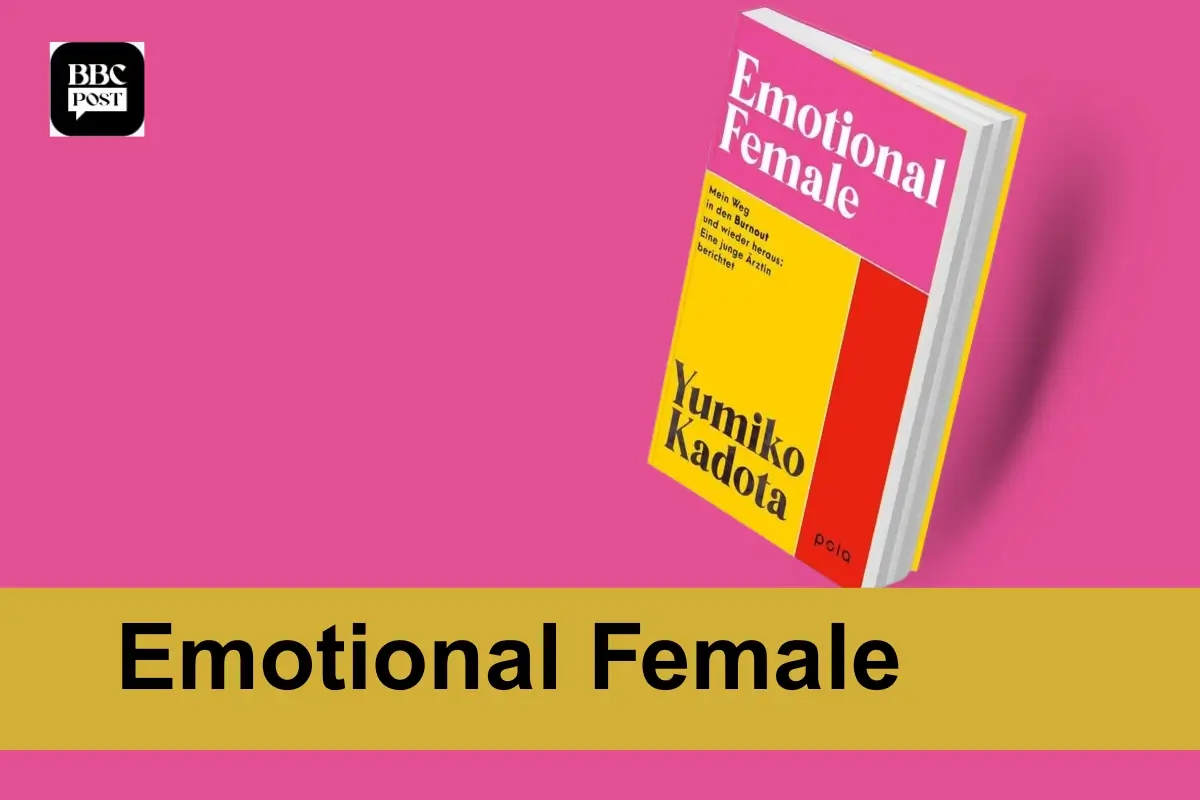
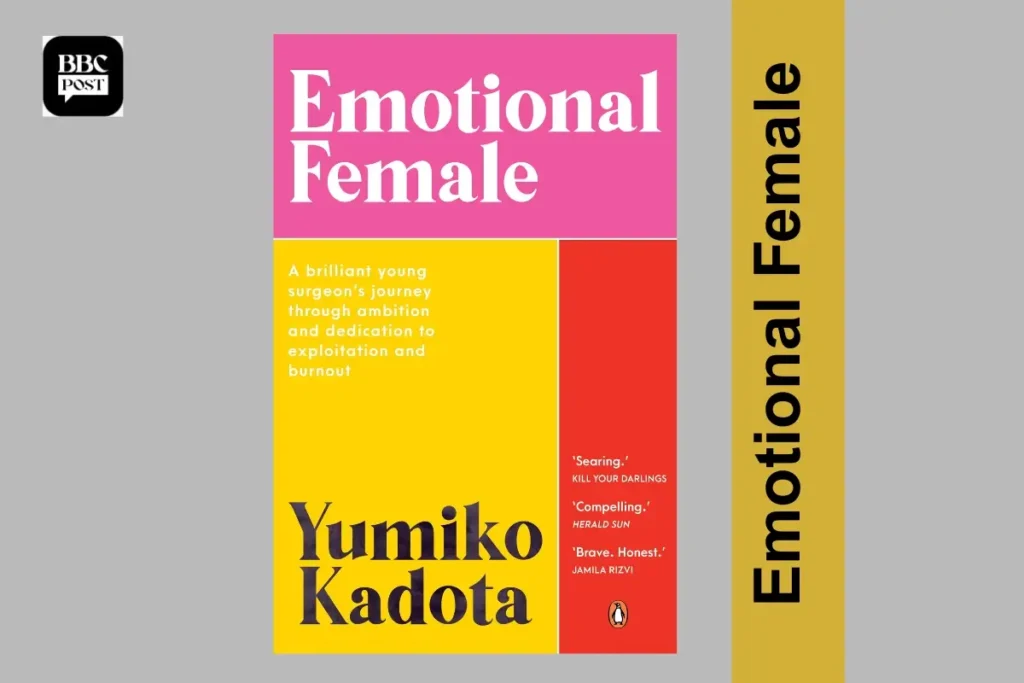
Emotional Female is a non-fiction memoir by Australian doctor Yumiko Kadota that examines the personal and professional consequences of medical training within Australia’s public hospital system. The book explores burnout, rigid workplace hierarchy, gender bias, and the long-term effects of extreme workloads on junior doctors.
This is not a novel or a fictionalised account. Emotional Female is a factual memoir, grounded in Kadota’s lived experience. Rather than presenting a dramatic exposé, the book offers a controlled and reflective account of how ambition, silence, and endurance can slowly become damaging.
Kadota’s story gained national attention because it mirrored experiences quietly shared by many medical professionals, yet rarely recorded with such clarity and restraint.
Book Overview and Publication Details
- Title: Emotional Female
- Author: Yumiko Kadota
- Publisher: Viking, Penguin Random House Australia
- First published: March 2021
- Genre: Memoir / Medical non-fiction
- Primary focus: Australian public hospital training
The book follows a chronological narrative, allowing readers to observe how pressure accumulates over time rather than arriving as a single dramatic breaking point. The focus remains on systems and culture rather than individual blame.
Pages, Editions and Formats
The Australian edition of Emotional Female is published at approximately 400 pages, placing it firmly among full-length memoirs.
Available formats include:
- Trade paperback
- Standard paperback
- eBook (page count varies by device and formatting)
- Audiobook
Common ISBNs listed by Australian retailers:
- 9781760894627
- 9781760894634
Some international listings show lower page counts, which usually reflect metadata differences rather than changes to content.
Book Prices in Australia
Book pricing varies depending on retailer and promotions, but common Australian listings show:
- Recommended retail price (RRP): around A$34.99
- Typical discounted price: A$24.99 – A$26.99
- eBook pricing: varies by platform and sale periods
- Second-hand copies: often available at lower prices
These figures align with other Australian non-fiction memoirs from major publishers.
Who Is Yumiko Kadota?
Yumiko Kadota is a Sydney-based medical doctor who trained within Australia’s public hospital system. She performed strongly throughout her academic career and entered surgical training, a pathway known for long hours, high expectations, and rigid hierarchy.
After experiencing severe burnout, Kadota resigned from public hospital work. She later transitioned into medical education and private healthcare, remaining connected to medicine without returning to the environment that contributed to her collapse.
The 2019 Public Moment
Before Emotional Female was published, Kadota’s experience entered national discussion in 2019, when she publicly wrote about leaving surgical training after reaching a breaking point.
That moment marked the first time many Australians encountered a junior doctor describing burnout with such honesty and precision. The response revealed how widespread these experiences were, particularly among medical trainees who recognised the patterns she described.
The memoir expands on this moment, offering depth, context, and reflection rather than reaction.
Early Ambition and Medical Training
Kadota’s early career reflects a familiar path among high-achieving medical graduates. Academic success led to surgical training, where long hours and personal sacrifice were framed as necessary proof of commitment.
Medical culture emphasised resilience, efficiency, and obedience to hierarchy. Junior doctors were expected to absorb pressure without complaint, often relying on senior doctors for references and future career progression.
This dependency shaped behaviour. Silence became a survival strategy.
Inside the Hospital System: A Lived Experience
Hospital life is portrayed through repetition rather than spectacle. Days blur into nights. Shifts stretch beyond schedules. On-call duties interrupt rest before it fully begins.
Fatigue becomes normal. Meals are skipped. Sleep fragments. Junior doctors learn to function while exhausted, suppressing emotion and continuing regardless of personal cost.
The system does not ask whether this is safe. It asks whether you can endure it.
Hierarchy Inside the Hospital System
A central theme of Emotional Female is the rigid hierarchy that governs hospital life.
Junior doctors sit at the bottom of a structure where:
- speaking up can carry career consequences
- supervision is inconsistent
- fatigue is treated as routine
- mistakes are personalised rather than contextualised
Kadota describes being expected to perform under intense pressure while physically exhausted, with limited support. These conditions are treated as normal rather than exceptional.
Gender Bias and Professional Labels
Gender plays a significant role in Kadota’s experience.
As a woman in a male-dominated surgical specialty, she encountered language that framed her behaviour differently from her male peers. Confidence was questioned. Assertiveness was interpreted as attitude. Emotional responses were used to undermine credibility.
The phrase “emotional female”, which gives the book its title, reflects how gendered language is used to dismiss concerns rather than address them. The memoir shows how these labels shape professional reputation and opportunity.
Overwork and Normalised Exhaustion
One of the most confronting aspects of the book is its depiction of working hours. Kadota describes on-call rosters that could exceed seventy hours per week, often with little opportunity for recovery.Exhaustion was not treated as a warning sign. Instead, it became evidence of dedication. Physical fatigue, anxiety, and emotional numbness were absorbed into daily practice.
The system functioned because junior doctors endured it.
Burnout as a Gradual Process
Burnout in Emotional Females is not sudden. It unfolds quietly.
Over time, Kadota experienced:
- persistent anxiety
- emotional detachment
- declining physical health
- loss of meaning in work
Continuing felt compulsory. Stopping felt dangerous. The line between resilience and harm gradually disappeared.
The Decision to Leave Surgery
Leaving surgical training was not empowering. It involved grief, shame, and fear of losing identity.
Kadota describes walking away from:
- years of education
- professional status
- a future she had planned since early adulthood
The book challenges the assumption that endurance should always be rewarded, asking whether systems that rely on collapse are sustainable.
Life After Leaving Public Hospitals
Recovery began with rest and physical healing. Kadota slowly rebuilt her life outside the hospital system, redefining success in terms of sustainability rather than productivity.
She later moved into medical education and private healthcare, remaining connected to medicine while protecting her wellbeing. Rebuilding is ongoing rather than complete.
Public Reception and Critical Response
Following publication, Emotional Female was widely discussed within Australian medical and professional circles. Many junior doctors recognised their own experiences in Kadota’s account, particularly the normalisation of overwork and silence.
The book became part of a broader national conversation about burnout, training culture, and whether Australia’s health system adequately protects its workforce. It was largely received as a systemic account rather than a personal grievance.
Who Should Read Emotional Female
This book is particularly relevant for:
- medical students and junior doctors
- women in male-dominated professions
- professionals in high-pressure workplaces
- readers interested in workplace culture and burnout
- anyone questioning the personal cost of success
Timeline Snapshot
- Academic excellence → Medical school
- Entry into surgical training
- Escalating workloads and responsibility
- Gradual burnout and identity erosion
- 2019 public account of leaving training
- Publication of Emotional Female (2021)
- Transition into education and private healthcare
Writing Style and Narrative Tone
The strength of an Emotional Female lies in its restraint.
Kadota writes with clarity and control, avoiding exaggeration or emotional manipulation. The tone is observational, allowing readers to draw their own conclusions.
This mirrors clinical documentation factual, precise, and quietly confronting.
What the Book Deliberately Avoids
To remain accurate and responsible, Emotional Female avoids:
- naming specific individuals
- detailing private family matters
- assigning personal blame
This keeps attention on systems rather than personalities.
Conclusion
Emotional Female is not fiction, nor is it a dramatic resignation story. It is a non-fiction record of what happens when ambition meets a system built on exhaustion.
Yumiko Kadota’s memoir stands as an important Australian contribution to conversations about work, identity, and the cost of silence. It asks readers not how much people can endure, but how much they should be expected to.

