


David Boon remains one of Australian cricket’s most enduring figures, a player whose reputation was forged not through flamboyance or constant headlines, but through reliability, discipline, and a lifetime of service to the game. For more than four decades, Boon has been connected to cricket in one form or another, first as a player, then as a selector, international match referee, and senior administrator. This long association explains why interest in David Boon net worth continues to rise, particularly among fans curious about how a cricketer from a pre-franchise era built lasting financial security.
Boon’s career coincided with a period of profound change in Australian cricket. He played during the transformation from post-World Series Cricket instability to sustained global dominance. While modern players often accumulate wealth quickly through leagues and endorsements, Boon’s financial position developed gradually. His net worth reflects consistency, longevity, and continued professional relevance rather than sudden commercial success.
Early Life and Family Background
David Clarence Boon was born on 29 December 1960 in Launceston, Tasmania, a city far removed from the major cricketing centres of Sydney and Melbourne. He grew up in a working-class household where routine and responsibility shaped everyday life. His father, Clarrie Boon, ran a local newsagency, while his mother, Lesley Boon, had earlier represented Australia in hockey before later supporting the family business. Sport, discipline, and commitment were part of the household culture.
Boon grew up alongside his younger sister Vanessa, and family life remained grounded and practical. There was no sense of entitlement or expectation that cricket would provide fame or fortune. Instead, Boon’s upbringing reinforced values of effort, patience, and humility. These qualities later became hallmarks of his cricketing identity.
Tasmania in the 1960s and 1970s offered limited exposure for aspiring cricketers. State players often felt overlooked by national selectors, which made Boon’s rise even more significant. His early environment demanded self-belief and resilience, traits that later defined his international performances.
Education and Early Cricket Development
Boon attended school in Launceston, where his aptitude for cricket became evident at a young age. He was not the most naturally gifted stroke-maker, but coaches noticed his ability to concentrate for long periods and his willingness to work on technical details. While others chased attacking shots, Boon focused on balance, defence, and timing.
His early development came through school cricket, local clubs, and Tasmanian age-group competitions. Rather than progressing rapidly through elite pathways, Boon advanced step by step, refining his technique and mental approach. This slow, methodical development laid the groundwork for a career built on endurance rather than flashes of brilliance.
By his late teens, he had already attracted attention within Tasmanian cricket circles, earning opportunities in higher-level competitions that tested his temperament and adaptability.
Domestic Cricket Career With Tasmania
David Boon made his first-class debut for Tasmania in the late 1970s, becoming one of the youngest players to represent the state at senior level. From the beginning, he established himself as a dependable top-order batsman, capable of facing high-quality bowling attacks without being overwhelmed.
During this period, Tasmania often struggled against stronger mainland states. Boon’s consistency provided stability and credibility to the team. Season after season, he accumulated runs through patience rather than aggression, often batting long hours to keep Tasmania competitive.
His loyalty to Tasmanian cricket never wavered. While some players sought opportunities elsewhere, Boon remained committed to his home state, carrying the batting order through difficult years. Eventually, his weight of runs made national selection unavoidable, even in an era when Tasmanian players were rarely prioritised.
Entry Into Australian International Cricket
David Boon made his Test debut for Australia in November 1984 at the Gabba. His selection came during a rebuilding phase following years of instability in Australian cricket. The team needed solidity at the top of the order, and Boon’s domestic record suggested he could provide exactly that.
From his first appearances, Boon was chosen for reliability rather than flair. He was entrusted with opening the batting, a role demanding patience, courage, and technical discipline. Facing the new ball against fast bowlers on lively pitches, Boon quickly proved that he could survive and thrive at the highest level.
His calm presence at the crease became a reassuring constant for an Australian side still finding its identity.
Test Cricket Career and Achievements
Over the course of his Test career, David Boon played 107 matches and scored 7,422 runs, including 21 centuries. These numbers reflect not just longevity, but consistency across different conditions and opponents. Boon was rarely dropped for form, a testament to the trust selectors placed in his ability to deliver when needed.
His greatest value lay in his capacity to absorb pressure. In an era dominated by fast bowling, Boon’s defensive technique allowed him to withstand hostile spells and wear down opposition attacks. He was particularly effective in England, where swing and seam bowling exposed technical flaws in many visiting batsmen.
Boon’s willingness to bat often allowed Australia’s middle order to flourish. While others played attacking roles, Boon laid the foundation, quietly accumulating runs and blunting momentum.
One Day International Career and World Cup Glory
David Boon’s contribution to Australia’s One Day International side was equally significant. He played 181 ODIs and scored 5,964 runs, operating as an anchor in an era when ODI cricket was still evolving.
His defining moment in limited-overs cricket came during the 1987 Cricket World Cup. Australia entered the tournament without being clear favourites, yet emerged champions in a campaign that reshaped the nation’s cricketing confidence. Boon’s performances throughout the tournament were vital, and his Player of the Match award in the final cemented his place in Australian sporting history.
This World Cup victory marked the beginning of Australia’s transformation into a dominant force in global cricket.
Ashes Campaigns and Australia’s Rise to Dominance
David Boon played a central role in several Ashes series during one of Australia’s most successful periods. His performances against England were particularly important in re-establishing Australia’s authority in the contest.
The 1989 Ashes tour of England stands as a defining chapter. In conditions that tested technique and temperament, Boon’s compact style and mental strength helped Australia take control early in matches. His contributions set the tone for a team that would dominate world cricket for years to come.
Beyond statistics, Boon symbolised the toughness and discipline that became synonymous with Australian cricket during that era.
Playing Style and Technical Strengths
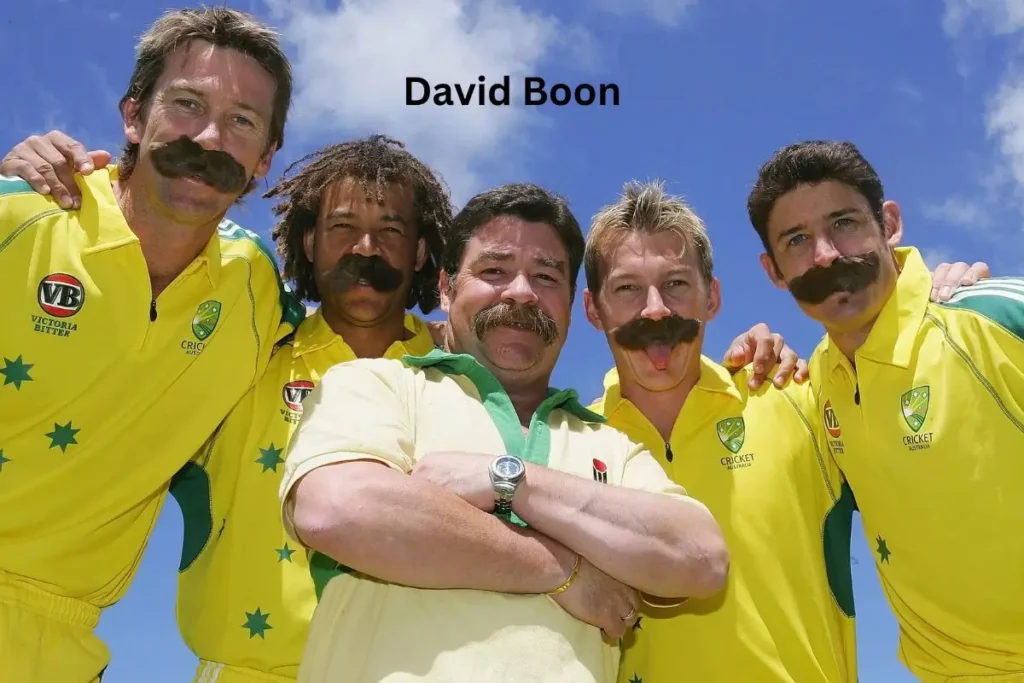
Boon’s batting style was built on balance, patience, and mental resilience. He was not an aggressive opener, nor did he rely on power or improvisation. Instead, his game revolved around solid defence, precise shot selection, and an unshakeable temperament.
Selectors valued Boon because he reduced early collapses and provided certainty at the top of the order. His approach was especially effective in long series, where consistency outweighed flair. In high-pressure situations, Boon rarely panicked, preferring to grind down bowlers through discipline.
His technique may not have attracted highlight reels, but it delivered results where it mattered most.
County Cricket and Leadership With Durham
After stepping away from Australian cricket, David Boon extended his playing career in English county cricket with Durham. He captained the side during a formative period, contributing not just runs but leadership and experience.
This phase of his career proved significant. County cricket exposed Boon to different conditions and responsibilities, sharpening his leadership skills and broadening his understanding of the game’s administrative and organisational aspects. His time with Durham helped bridge the gap between playing and governance, preparing him for roles beyond the boundary.
Retirement From International Cricket
David Boon retired from international cricket in 1996, concluding a career defined by dependability and service. By the time he stepped away, Australia had re-established itself as a global powerhouse, and Boon’s role in that resurgence was widely recognised.
His retirement coincided with the emergence of a new generation of Australian cricketers who benefited from the standards and culture set during his era.
Transition Into National Selection
In 2000, Boon became an Australian selector, replacing Geoff Marsh. This appointment marked the beginning of a new chapter in his cricket life. As a selector, Boon applied the same discipline and balance that characterised his playing career.
He later chaired selection panels, influencing squad composition during periods of transition and renewal. These roles required difficult decisions and long-term thinking, and they provided ongoing professional income while keeping Boon closely connected to the national team.
International Match Referee Career
After stepping away from selection duties, Boon transitioned into international officiating. Over more than a decade, he served as a match referee across Tests, One Day Internationals, and T20 matches around the world.
This role demanded authority, neutrality, and a deep understanding of the laws of cricket. Boon oversaw hundreds of international matches, managing high-pressure situations involving elite players and officials. His officiating career concluded in 2025, marking the end of yet another long chapter of professional involvement in the game.
Cricket Tasmania and Cricket Australia Leadership
Boon joined the Cricket Tasmania board in 2014 and later became chairman, playing a key role in governance, development pathways, and long-term planning for the state. His leadership focused on sustainability and opportunity for future generations.
In 2025, he was appointed to the Cricket Australia board, further reinforcing his standing within the national game. These senior administrative roles provided continued professional income and long-term financial stability.
David Boon Net Worth Explained
David Boon net worth is estimated to be in the multi-million-dollar range in Australian currency. This estimate reflects his international playing earnings, domestic and county cricket income, long service as a national selector, extensive work as a match referee, and senior administration roles.
While his playing income was modest compared to modern cricketers, Boon’s extended post-retirement career significantly increased his lifetime earnings. His financial success is built on longevity, relevance, and consistent professional engagement rather than short-term commercial deals.
Comparison With Modern Cricketers
Comparisons between David Boon and modern cricketers can be misleading. Today’s players benefit from franchise leagues, global sponsorships, and media exposure that did not exist during Boon’s era.
Boon’s financial journey reflects a different model of success, one based on sustained involvement and contribution over decades rather than rapid accumulation.
Honours and Recognition
Boon’s recognition comes less through formal awards and more through continued trust from cricket authorities. His appointments to senior roles reflect respect earned through service, judgment, and integrity rather than individual accolades.
Legacy in Australian Cricket
David Boon’s legacy is defined by reliability, service, and continuity. As a player, he helped restore Australia’s standing. As an administrator and official, he contributed to the game’s structure and stability.
Conclusion
David Boon’s journey from Tasmanian domestic cricket to Australian international, selector, match referee, and board member represents one of the most complete careers in Australian cricket history. His net worth reflects decades of steady professional involvement rather than sudden wealth.
Through discipline, leadership, and lifelong service to cricket, David Boon remains one of the most respected figures the game has produced.
FAQs
Who is David Boon’s wife?
David Boon is married and has kept his marriage largely private throughout his life. Unlike many modern sports figures, he has chosen to keep his spouse out of the public spotlight, focusing public attention on his cricket career rather than personal relationships.
Does David Boon have a son?
Yes, David Boon has children, including a son. However, he has consistently protected his children’s privacy, and they have not been involved in professional cricket or public media in any significant way.
Does David Boon have a daughter?
David Boon is a father and has maintained a strong family life away from cricket. Details about his daughter are intentionally kept private, reflecting his long-standing approach to separating family life from public attention.
How many children does David Boon have?
David Boon has children, but he has never publicly detailed their lives or careers. His focus has always remained on cricket and administration, while ensuring his family life stays out of the public domain.
What is David Boon’s highest score in cricket?
David Boon’s highest Test score is 200, which he scored against India during the 1991–92 series in Sydney. The innings is regarded as one of the finest examples of patience and concentration by an Australian opening batsman.
How old is David Boon?
David Boon was born on 29 December 1960. As of 2025, he is 64 years old, turning 65 in December 2025.
What is known about David Boon’s family?
David Boon comes from a grounded Tasmanian family background. His upbringing emphasised discipline, hard work, and modesty, values that strongly influenced his cricket career and life after retirement.
Who is David Boon’s father?
David Boon’s father is Clarrie Boon, who worked in a local newsagency in Launceston, Tasmania. His father’s steady work ethic played an important role in shaping Boon’s disciplined approach to both cricket and life.

