

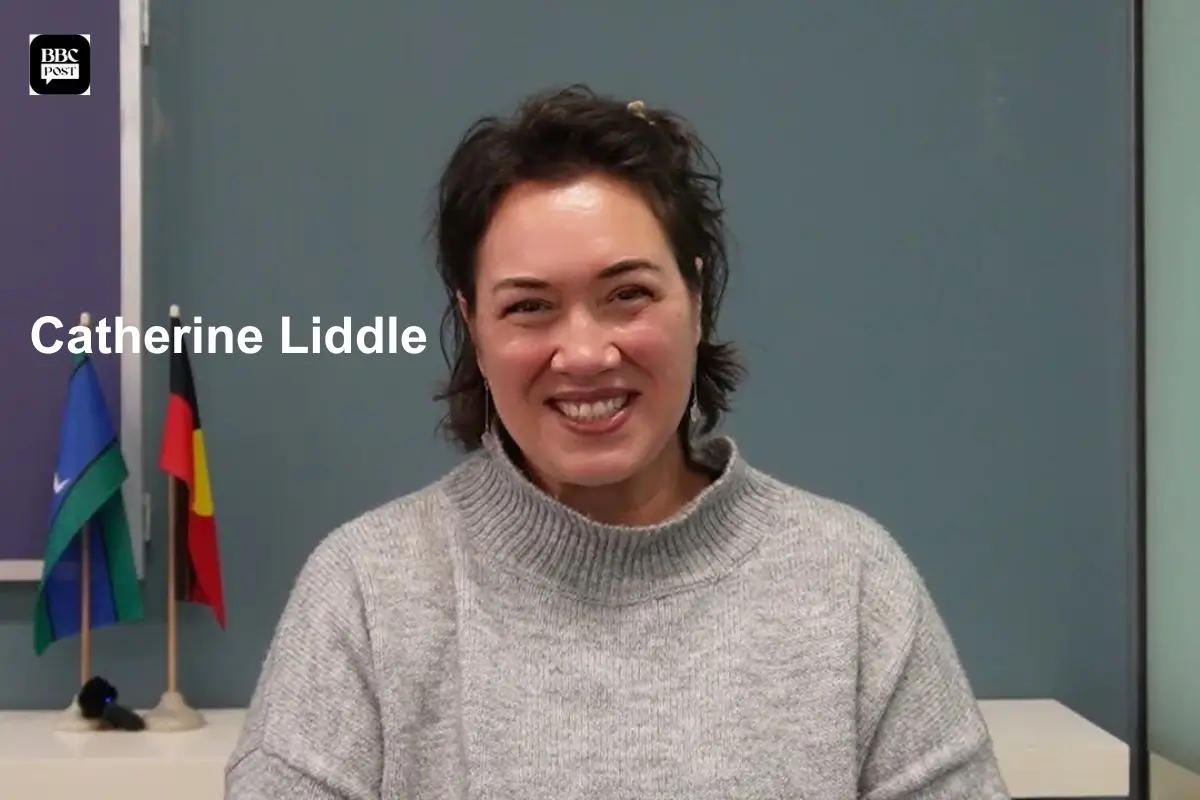
Catherine Liddle is one of Australia’s most prominent Aboriginal leaders working in the fields of child wellbeing, policy reform and Indigenous-led governance. As the Chief Executive Officer of SNAICC National Voice for Our Children, she leads the national peak body representing Aboriginal and Torres Strait Islander children and their families. Her work is grounded in cultural authority, lived experience and a long-standing commitment to ensuring that systems affecting children are shaped by Aboriginal and Torres Strait Islander voices.
An Arrernte/Luritja woman from Central Australia, Catherine Liddle has built a career that spans journalism, senior public sector roles, national media organisations and Aboriginal-led institutions. Over more than a decade, she has led multidisciplinary teams, overseen organisational and workplace transformations, and consistently advocated for policy reform that improves outcomes for First Nations people, particularly children.
Her leadership is recognised for its clarity, integrity and refusal to separate child wellbeing from culture, family and community.
Cultural identity and early foundations
Catherine Liddle’s cultural identity sits at the core of her leadership. As an Arrernte/Luritja woman, she brings a deep understanding of kinship, family responsibility and community authority. These foundations shape her views on child wellbeing and inform her strong opposition to systems that disconnect Aboriginal children from their families and culture.
She has spoken publicly about how the strengths of Aboriginal and Torres Strait Islander communities to care for children and support positive self-identity have been undermined by the historical and continuing separation of children from their families, communities and cultures. When children do not know who their mob and families are, the harm is profound and long-lasting. This harm does not stop with one generation but carries forward, affecting health, wellbeing and identity across time.
For Catherine Liddle, culture is not an add-on to service delivery. It is a protective factor and the foundation of wellbeing.
Professional background and early career
Catherine Liddle is a journalist by trade, a background that has shaped her communication style and advocacy approach. Journalism equipped her with the ability to interrogate systems, challenge narratives and bring lived experience to the forefront of public discussion.
Across her career, she has held senior management roles within the Northern Territory Education Department, the Australian Broadcasting Corporation, and NITV/SBS. These roles provided insight into public institutions, media influence and the way policies are communicated and understood by the broader community.
In addition to mainstream institutions, Catherine has held senior leadership roles in national Aboriginal and Torres Strait Islander organisations, where she led teams, managed organisational change and worked directly on policy reform. She later served as Chief Executive Officer of First Nations Media Australia, strengthening her experience in executive leadership, governance and Aboriginal-led institutions.
Over more than ten years, she led multidisciplinary teams, oversaw workplace transformations and remained focused on change that delivers practical, long-term outcomes rather than symbolic commitments.
Transition into national leadership
Catherine Liddle’s career progression reflects a steady move toward national influence. Her experience across education, media, government and Aboriginal organisations positioned her as a leader capable of navigating both community expectations and complex policy environments.
She developed a reputation for bridging the gap between lived experience and institutional decision-making. This ability to translate community realities into policy language without losing meaning became a defining feature of her leadership.
Appointment as CEO of SNAICC
Catherine Liddle commenced as Chief Executive Officer of SNAICC – National Voice for Our Children in early 2021. SNAICC is the national peak body representing Aboriginal and Torres Strait Islander children and families, with a focus on child protection, early childhood education, family support and wellbeing.
As CEO, Catherine leads national advocacy, policy engagement and strategic direction. She works to strengthen, represent and amplify the voices of children and families in systems that have historically excluded Aboriginal perspectives. Her role involves engagement with governments, peak bodies, researchers, community organisations and the media.
Under her leadership, SNAICC has continued to assert its position as a trusted authority on Aboriginal child wellbeing.
Leadership focus at SNAICC
A central focus of Catherine Liddle’s leadership is addressing the over-representation of Aboriginal and Torres Strait Islander children in out-of-home care. Australia’s child protection systems continue to remove Aboriginal children at alarming rates. Today, Aboriginal and Torres Strait Islander children are 11 times more likely to be living in out-of-home care than non-Indigenous children.
Only 42 per cent of these children are placed with Aboriginal or Torres Strait Islander carers. This percentage is dropping every year, raising serious concerns about children losing connection to culture, family and community. Catherine has also highlighted that many states and territories are increasingly using permanent care and adoption orders, which can permanently sever cultural ties.
She has consistently argued that removing children without addressing the underlying causes of family distress perpetuates harm rather than preventing it.
Child protection reform, healing and prevention

Catherine Liddle advocates for a fundamental shift away from crisis-driven child protection systems toward healing and preventative approaches. She has spoken extensively about the need to remove barriers that prevent families from raising children strong in culture.
This includes direct, trauma-informed support for children that responds to their individual experiences, alongside family- and community-level healing services. She has emphasised that effective reform must be driven by the cultural authority of Aboriginal and Torres Strait Islander families and communities, who know best what their children need to thrive.
The rights of children to grow up connected to their culture must be protected, and Aboriginal knowledge must be at the forefront of child and family practice.
Indigenous wellbeing and mental health
Catherine Liddle was a keynote speaker at the Child & Adolescent Mental Health Conference and the Indigenous Wellbeing Conference held on 7–8 October 2021. In these forums, she articulated a clear message: cultural connection, positive self-identity and a sense of belonging within family and community are the bedrock of health and wellbeing for Aboriginal and Torres Strait Islander children.
She has drawn strong links between self-determination, cultural continuity and resilience, highlighting their role in promoting mental health and addressing the tragically high incidence of suicide among Aboriginal and Torres Strait Islander young people.
Her position challenges approaches that focus narrowly on clinical responses while ignoring the cultural and social determinants of wellbeing.
Coalition of Peaks and Closing the Gap
Catherine Liddle is a key member of the Coalition of Peaks, working with Aboriginal and Torres Strait Islander organisations under the National Partnership Agreement on Closing the Gap. Her involvement centres on shared decision-making, accountability and Aboriginal-led governance.
She has been particularly vocal about the early years and child protection, arguing that Closing the Gap targets will not be met unless Aboriginal community-controlled services are properly supported and resourced.
Her leadership reinforces the importance of genuine partnership rather than consultation after decisions have already been made.
Family Matters report and accountability
Each year, Catherine Liddle and the SNAICC team produce the Family Matters report, which documents how First Nations children are treated within Australia’s child protection systems. The Family Matters 2023 report showed that child protection systems continue to fail Aboriginal and Torres Strait Islander children, with the number entering out-of-home care continuing to rise.
The report highlights that Aboriginal children are more likely to be reported to authorities, more likely to be removed from their families and more likely to spend extended periods institutionalised. Catherine has described the findings as devastating but necessary for accountability.
She has also drawn attention to the funding imbalance within the system. For every dollar spent, only 16 cents goes toward helping families, while the rest is spent on removal and institutional care, causing enormous harm.
Media presence and public engagement
Catherine Liddle is a regular national media contributor. She appeared on ABC’s Q+A on Monday, 25 March 2024, during a week highlighted as SNAICC in the News. The program, hosted by Patricia Karvelas, featured a panel including Andrew Leigh, Andrew Bragg, Cameron K. Murray, Max Chandler-Mather and Rose Jackson.
While the discussion was often dominated by political jargon and policy debate, Catherine stood out for grounding the conversation in lived experience. She refocused attention on the human impact of housing insecurity, particularly for Aboriginal mothers and children, and urged governments to confront the dignity and wellbeing costs of unstable housing.
Her contribution was widely recognised as a call to action for policy grounded in real-life circumstances.
Family Matters webinar and Aboriginal-led solutions
On Tuesday, 26 March 2024, Catherine Liddle led a Family Matters lunchtime webinar focused on Aboriginal-led solutions for reunification and stronger families. The webinar featured Dr Paul Gray, Craig Rigney, and Darcy Cavanagh, and explored how organisations such as KWY and REFOCUS deliver culturally safe wraparound services for children, families and communities.
The discussion reinforced the effectiveness of Aboriginal-led models in achieving better outcomes for children and families.
Leadership style and values
Catherine Liddle is widely regarded as a calm, principled and values-driven leader. She prioritises evidence, accountability and cultural authority, while remaining focused on outcomes that improve children’s lives. She has described herself as a storyteller, recognising the importance of narrative in shaping public understanding and policy.
Her leadership consistently affirms that Aboriginal communities hold the knowledge and strength needed to care for their children.
Why Catherine Liddle’s work matters
As CEO of SNAICC, Catherine Liddle holds one of the most influential advocacy roles for Aboriginal and Torres Strait Islander children in Australia. Her work continues to shape national policy discussions, funding priorities and public understanding of child wellbeing.
By centering culture, family and community, she has helped reframe conversations away from deficit-based approaches and toward systems that recognise strength, resilience and self-determination. Her leadership reinforces a simple but powerful truth: Aboriginal children thrive when they grow up connected to their families, culture and communities.
Conclusion
Catherine Liddle’s work as Chief Executive Officer of SNAICC – National Voice for Our Children reflects a sustained commitment to improving the lives of Aboriginal and Torres Strait Islander children through leadership grounded in culture, evidence and accountability. As an Arrernte/Luritja woman from Central Australia, she brings lived experience and cultural authority to national policy discussions that have too often excluded Aboriginal voices.
Across journalism, government, media and Aboriginal-led organisations, Catherine Liddle has consistently focused on reform that addresses the underlying causes of harm rather than its symptoms. Her leadership at SNAICC has strengthened national advocacy on child protection, early childhood development and family support, while challenging systems that continue to remove Aboriginal children from their families at disproportionate rates.
Through her involvement in the Coalition of Peaks, her contribution to the Family Matters reports and her public engagement on issues such as housing, wellbeing and mental health, Catherine Liddle has helped refocus national conversations on dignity, prevention and self-determination. Her work reinforces the principle that Aboriginal children thrive when they remain connected to family, culture and community, and when decisions about their lives are led by Aboriginal people themselves.
As Australia continues to grapple with child protection reform and Closing the Gap commitments, Catherine Liddle’s leadership remains central to shaping approaches that are fair, culturally informed and focused on long-term outcomes for children and families.

