

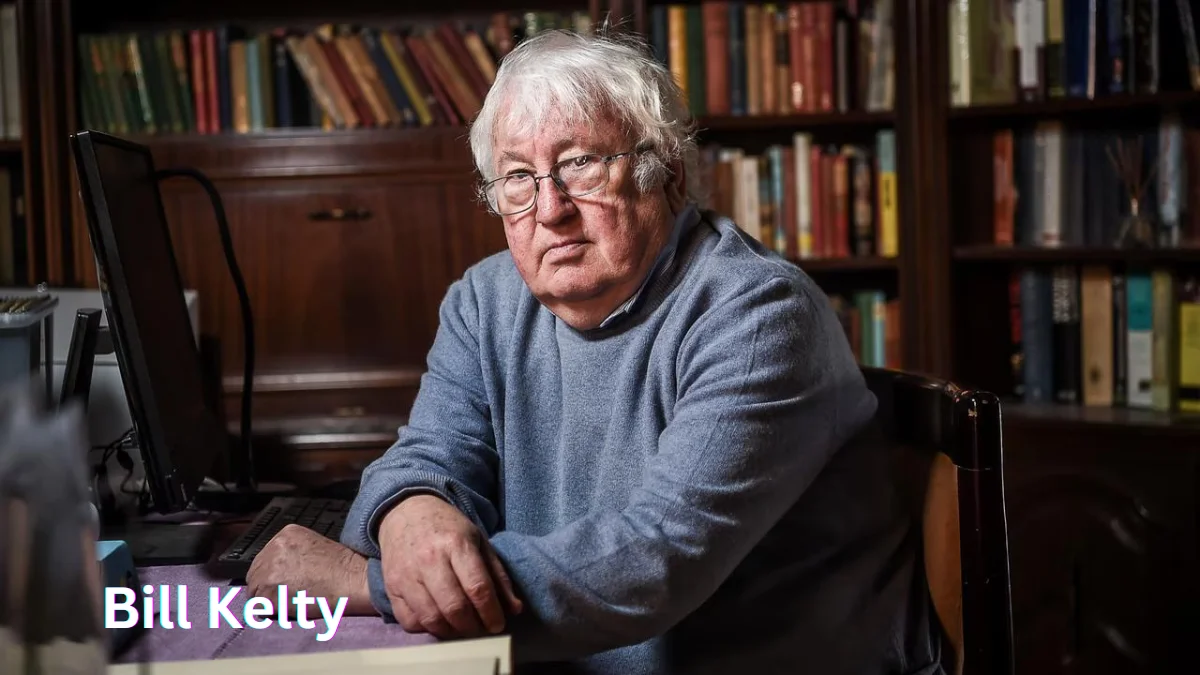
Bill Kelty is a name that is well-known in modern Australian history, but for many people, the details of how he affected things are still unclear. Kelty was the secretary of the Australian Council of Trade Unions (ACTU) for almost twenty years. He was more than just a union leader; he was also a key figure in the economic and social reforms that changed the country from the 1980s onwards. His legacy is part of everyday life, from your retirement account to how workplaces talk about pay.
This article talks about Bill Kelty’s life and what he did. We will look at how he went from being a young union leader to one of the most powerful people in Australia. You will learn about his important work with the Hawke and Keating governments, the Prices and Incomes Accord, and how he helped make superannuation available to everyone. We will also talk about the problems and criticism he faced and what his career can teach Australia today.
The early life and influences of a future leader
The early life and influences of a future leader William “Bill” Kelty was born in 1948 in Melbourne, which was still rebuilding after the war. He learnt the value of community and working together from a young age because he grew up in a working-class family. He learnt how to think critically while studying economics at La Trobe University. He used these skills later to deal with complicated political and industrial situations.
The Storemen and Packers’ Union was where Kelty got his start in the union movement. He learnt how to negotiate and plan here. He quickly became known as a very smart, practical, and hard-working person who wanted to make life better for working Australians. These early years were very important because they combined his theoretical knowledge of economics with the real-world problems he faced on the shop floor.
His rise in the Australian union movement
Kelty quickly moved up the ranks in the union movement. Senior figures, like Bob Hawke, the president of the ACTU at the time, noticed him because he was smart and good at making deals. By the early 1980s, Kelty was a well-known member of the ACTU and worked as its assistant secretary.
When Hawke left the ACTU to run for office, there was a power gap. Bill Kelty was only 35 years old when he was elected secretary of the ACTU in 1983. He took on the job at a very important time in Australia’s history, when the country was dealing with high inflation, unemployment, and strikes.
The Hawke–Keating governments worked well together.
The Hawke Labour government won the election in 1983, which began one of the most important political partnerships in Australian history. As head of the union movement, Kelty and Prime Minister Bob Hawke, who used to be president of the ACTU, both knew a lot about how the industrial relations system worked. They made a strong trio with Treasurer Paul Keating that would push for big changes in the economy.
This partnership was based on agreement and working together, which was very different from the politics of the time, which were often confrontational. Kelty’s job was to get the unions to the negotiating table and convince them to agree to lower wages in exchange for more social and economic benefits. This method, called corporatism, put the ACTU at the centre of the government’s decisions.
The Prices and Incomes Accord: a deal that changed Australia
The Prices and Incomes Accord was the most important part of the Kelty-Hawke-Keating partnership. This was a historic deal between the federal government and the ACTU to fight stagflation, which is a bad combination of high unemployment and high inflation.
At its heart, the Accord was an agreement. To help keep prices from going up, the union movement agreed to lower its wage demands. The government promised to pay a “social wage” in return, which included:
- Tax cuts: Giving workers more money to take home.
- Better social welfare: making programs like Medicare stronger.
- Starting universal superannuation: Making sure that workers had money saved for retirement.
Over the years, the Accord went through a number of changes to keep up with the economy. It was a complicated and sometimes controversial policy, but it worked to stop inflation and set the stage for years of economic growth. For the first time, Australian unions were not only fighting for higher wages, but they were also involved in making decisions about the country’s economy.
Important events: superannuation and enterprise bargaining
Bill Kelty’s leadership brought about two changes that changed the way Australians worked: universal superannuation and the move to enterprise bargaining.
Before the 1980s, only public servants and white-collar workers could get superannuation. Kelty was a strong supporter of the idea that every worker should have a respectable retirement.
Through a series of industrial campaigns and negotiations, the ACTU, with his help, made superannuation a requirement for all jobs. This mandatory system has since become one of the largest pools of investment capital in the world, giving millions of Australians a secure retirement.
As his time in office came to an end, Kelty also oversaw the shift from a centralised wage-fixing system to enterprise bargaining. This made it possible for workers to talk directly with their employers about pay and working conditions. The goal was to make people more productive and flexible. Workers and employers alike reaped the benefits of this shift in power, but unions declined and wage disparities widened—issues that have not yet been adequately addressed.
Criticisms and disputes around his method
Concerning Bill Kelty’s approach, there were differing opinions and critiques. Some people thought his career was flawed. Some people on the left of the union movement said he was selling out workers’ interests by agreeing to keep wages low and supporting economic rationalism. They said that the Accord made unions weaker and didn’t do enough for workers who didn’t make much money.
Business groups and conservative critics, on the other hand, often thought he had too much power and thought the ACTU’s influence over government policy was undemocratic. People also said that the move to enterprise bargaining made workers who were in weaker bargaining positions more likely to be taken advantage of. This is still a worry in today’s gig economy.
People knew that Kelty was a straight shooter who didn’t beat around the bush. He was a tough negotiator who didn’t mind making enemies to get what he wanted. Even if his detractors thought he was being too dictatorial, his admirers thought it was a positive thing.
His impact and legacy
Former ACTU secretary Bill Kelty resigned in 2000, but his legacy lives on in the work he did. The economic system he helped establish, which prioritises stable prices, adaptable job markets, and a robust social safety net, has remained mostly unchanged across the many administrations that have passed through this country. Universal superannuation is his most famous and enduring legacy.
Kelty has maintained an active role in public life following her departure from the ACTU through her service on boards and her advice-giving. In his role as AFL Commissioner, he has also been an outspoken advocate for Australian football. Leaders in business, politics, and sports are still moved by the way he stressed long-term vision and strategic thought.
What can people in Australia today learn from the story of Bill Kelty?
We can learn a lot from Bill Kelty’s life and work in this day and age of divided politics and short-term thought. He thought that everyone should agree on something and try to find common ground. This helped him do well. He showed that groups that are at odds with each other can make progress if they are willing to talk and work together for the better good.
In addition, Kelty’s method was very realistic. He knew that in order to reach big social goals, like setting up superannuation, a strong economy was needed. It is admirable that he can find a balance between his political beliefs and the way things work in the economy. This is especially true in today’s complex society. He showed that unions could help the country move forward instead of just being against change.
Questions that people often ask
1. What was the Prices and Incomes Accord?
In the 1980s, the ACTU and the Hawke Labour government made a historic deal called the Accord. Unions agreed to keep wage demands low to help keep inflation down. In exchange, the government raised the “social wage” by cutting taxes, expanding Medicare, and making universal superannuation available.
2. What did Bill Kelty do to get credit for creating superannuation?
Bill Kelty was the one who made universal superannuation a reality for Australian workers, even though the idea had been around before him. As Secretary of the ACTU, he used the union movement’s industrial power and his relationship with the government to push for and put into place mandatory superannuation as a national standard.
3. Did a lot of people like Bill Kelty?
People liked Kelty more than they respected him. He was a tough negotiator who worked behind the scenes, not a charming public figure. He was powerful because he was the head of the powerful Australian union movement and had a strategic mind. However, he was criticised by both the left and right of politics.
Final Thoughts
Bill Kelty was an important guy who helped Australia get through a very different time. He made a lot of changes to the country’s business and way of life. His work was a big part of what made the Accord, universal retirement, and the switch to collective bargaining possible. His life is a powerful example of how strong, united leadership can bring about long-lasting change.
Many people today don’t feel like they have any say in politics. When we think about what he left behind, we try to figure out how we can help make the world a better place for everyone. To keep the cooperative spirit of his time alive, you could join a community group, a union, or get active in local politics.

