

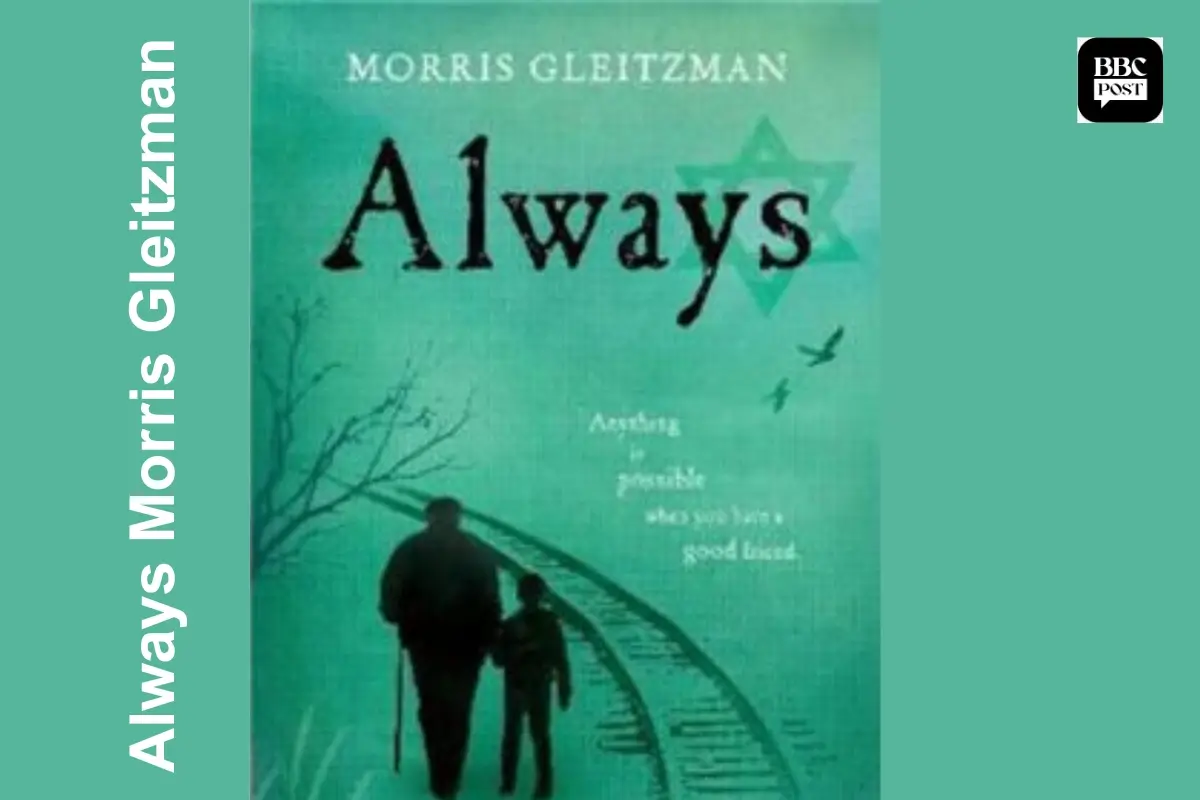
Always, the seventh and last book in Always Morris Gleitzman Felix trilogy, revolves on this idea, which follows Felix from boyhood to old age. Always, which was published in 2021, concludes a narrative that started with Once fifteen years before and developed over the course of six further volumes. Characters in children’s book series are seldom followed throughout their whole lives. Gleitzman’s choice to do this lends Always a significance and accountability that goes beyond a conventional series conclusion.
Instead of providing a tidy conclusion, the book takes Felix back to the starting point of his tale and poses the question of what’s left behind after recollection, loss, and survival.
Morris Gleitzman Method for Composing for Young Audiences
Born in Lincolnshire, England, Morris Gleitzman relocated to Australia when he was sixteen years old. Paperboy, shelf stacker, frozen chicken defroster, sugar mill worker, fashion industry trainee, department shop Santa, television producer, newspaper columnist, and screenwriter were among his numerous jobs prior to becoming a writer. Later, he attended Canberra College to study professional writing.
His early work in screenplay and television moulded a unique narrative language based on direct address, rhythm, and clarity. With books like Bumface, Two Weeks with the Queen, and the Felix series, he rose to prominence as one of Australia’s most popular children’s writers.
When given honestly, Gleitzman has repeatedly maintained that youngsters can engage with important concepts. His stories depict war, sickness, death, relocation, and fear—not to shock, but to mirror realities that young readers already see. Rather than sidestepping challenges, his work honours emotional intelligence.
Gleitzman was the Australian Children’s Laureate from 2018 to 2019. Constant travel, school visits, interviews, and public reading promotion were all part of the job. Felix stayed with him for those two years, even though this prevented him from spending most of that time at his writing desk. He accompanied him on flights, into media studios, and into discussions with thousands of young readers.
The Felix Series: A Single Character Throughout Fifteen Years
Fifteen years prior to Always, Felix made his debut in Once. Readers accompany Felix through infancy, survival, maturity, and ultimately old age in Once, Then, After, Soon, Maybe, Now, and Always.
It is uncommon to see this full-life arrangement in children’s books. Gleitzman lets experience build up instead of resetting Felix at the conclusion of each novel. Felix evolves, gains knowledge, and retains memories. His inclination towards compassion and optimism endures despite the world’s ongoing challenges against such ideals.
Felix is no longer a little kid attempting to comprehend history by the time Always starts. He is a guy who has endured it for many years.
Writing Constantly: Three Drafts and the Most Difficult Book to Complete
“No book in my career challenged me as much as Always,” Gleitzman said. Finding the appropriate approach to communicate the tale was challenging, despite the fact that it had been well prepared and vividly visualised.
Felix, who is now 87 years old, narrated the whole initial version of Always. His voice was moulded by a lifetime of experience and tragedy, but the little Felix was still within him. After finishing, this draft felt emotionally unfinished yet structurally complete. Without a child’s voice, Gleitzman wondered how readers would react to a Felix narrative.
Wassim, a ten-year-old youngster who is already a major character in the story, wrote the whole second edition. The narrative developed via Wassim’s speech. Felix showed himself in new ways, while Wassim showed himself to be courageous, kind, and optimistic. However, this version seemed unsettled as well. Felix’s life narrative culminated in Always, and it seemed terrible to leave out Felix’s own voice.
The answer became evident after weeks of doubt. Felix would share the anecdote with Wassim.
Felix and Wassim alternate in the finished version. The narrative is told by both the kid narrator and the senior survivor. It took an additional nine months to write this edition, which produced a book that was reshaped around common understanding rather than a synthesis of previous versions.
Later, Gleitzman thought that the difficulties he had while writing made the book stronger than any other he had ever written.
Morris Gleitzman’s Always
always follows Felix as he approaches the end of his life. He is now a retired doctor and an old man whose past has never completely let go. Even if his life seems to be calm, his unresolved past is still around.
Felix’s modern world is the setting for the story’s calm opening, but it is interrupted by an unexpected knock on the door. Wassim, a little child, shows up with a message requesting assistance. Wassim is familiar with battle, just as Felix was, even if his struggle takes place in a contemporary setting.
Their encounter puts Felix in jeopardy again and makes him face memories he has suppressed for decades.
A synopsis of Morris Gleitzman’s Always
Zel, Felix’s granddaughter, is getting ready to pursue a career in medicine. Her name has great significance since it was selected in remembrance of Zelda, the little child whose passing had plagued Felix all of his life. Zel stands for legacy, continuity, and the potential for caring to endure after tragedy.
Felix’s history and present are connected by Wassim’s arrival. They are both in danger due to a long-buried bond. Felix and Wassim are compelled to travel, avoid danger, and return to the starting point of Felix’s narrative when things get out of hand. Once again, moral judgement, bravery, and trust are necessary for survival.
The Morris Gleitzman Plot Is Always Explained
Chapters alternate as the narrative develops. Felix’s narrative is introspective and influenced by his extensive memory and life experiences. Wassim’s storytelling creates a sense of immediacy and intensity.
They confront a historical as well as contemporary threat. Wassim’s contemporary experience of battle and Felix’s boyhood during the war are similar but not the same. This comparison demonstrates how war leaves identical wounds but alters people’s identities over generations.
The storyline emphasises consequences over spectacle. Every choice has emotional weight that is influenced by Wassim’s evolving worldview and Felix’s background.
What Is Felix’s Constant Age?
Felix, in Always, is 87 years old.
This enables the book to examine introspection, remorse, accountability, and legacy in ways that previous works were unable to, all the while maintaining a child’s viewpoint via Wassim.
The Generational Contrast and Dual Narration
A key component of the novel’s significance is the dual narrator. Felix is a symbol of endurance and remembering. Wassim is a symbol of opportunity and immediacy. Although Felix’s conflict is in the past and Wassim’s is in the present, their emotional experiences are similar.
Rather than feeling, shared peril is what builds their friendship. Neither voice takes over the narrative, and both gain knowledge from one another.
Morris Gleitzman’s Ending Is Always Explained Without Any Spoilers
Felix is taken back to the starting point of his adventure at the conclusion of Always. Meaning, rather than victory, brings his life full circle. Suffering and loss are not eliminated by the end. Rather, it acknowledges that loss and remembrance may coexist with optimism.
Felix’s ultimate decisions are a reflection of the philosophy that has driven him since he was a little child: never give up.
Emotional Impact and Reader Reaction
Felix is often described by readers who have followed him from Once as seeming comfortable and authentic. Over the course of fifteen years, he develops into more than simply a character—he becomes a recurring figure across various phases of life.
Many readers say that even after completing the book, they still weep, worry for Felix, and think about his experience. Felix is often characterised as having the sense of an old friend and, towards the end, as a grandpa figure moulded by life and silent melancholy.
Age Rating for Always Morris Gleitzman
Readers between the ages of 10 and 15 can usually enjoy Always, especially those who have read the previous Felix stories. It deals with battle, death, danger, and remembrance but stays away from gory detail.
Other Works by Morris Gleitzman, the Writer of Always
Once, Then, After, Soon, Maybe, Now, Two Weeks with the Queen, and Bumface are some of Morris Gleitzman’s most notable pieces.
Morris Gleitzman, Borrow Always
The whole Felix series is often shelved with Always, which is readily accessible via public and school libraries. To really comprehend Felix’s adventure, libraries often advise reading the novels.
Details of the Publication
Puffin, an imprint of Penguin Random House Children’s UK, released Always on October 7, 2021.
9780241380482
300 pages in paperback
Historical fiction, children’s and adolescent war literature, and tales of friendship and family are among the genres.
Conclusion
Always serves as a thoughtful and heartfelt goodbye to Felix, a character who has developed over the course of fifteen years alongside readers. Morris Gleitzman provides something uncommon in children’s fiction by following Felix from infancy until old age: a whole existence moulded by memory, consequence, and moral decision. The book doesn’t try to make the past more bearable or provide simple solace. Rather, it acknowledges the enduring burden of loss while demonstrating how responsibility and compassion may still serve as a life’s compass.
Always reminds readers that while history may alter in form, its human effect survives by connecting several generations affected by conflict via the common voices of Felix and Wassim. The choice to put Felix back where his journey started gives the book a feeling of fulfilment that is earned rather than coerced. It permits introspection without discounting suffering and resolution without forgetting the past.
Above all, Always reaffirms the conviction that has characterised Felix from the start: hope is a deliberate decision made repeatedly rather than being passive or naïve. That conviction endures as Felix’s journey comes to a conclusion, providing readers with a timeless lesson of the quiet power found in hope, compassion, and remembrance.
FAQs
What is the book Always about?
Always follows Felix in the final stage of his life as he is drawn back into danger through a young boy named Wassim. The novel connects past and present, focusing on memory, survival, and the choice to remain hopeful despite loss.
Is Always the last book in the Once series?
Yes. Always is the seventh and final book in the Felix (Once) series by Morris Gleitzman, bringing Felix’s life story to a close.
How old is Felix in Always?
Felix is eighty-seven years old in Always. The story reflects on his childhood, adulthood, and long life shaped by war, memory, and responsibility.
What is Morris Gleitzman known for?
Morris Gleitzman is known for writing children’s and young adult novels that address serious themes such as war, illness, loss, and moral choice, while respecting young readers’ emotional intelligence.
Why do books have 10 9 8 7 6 5 4 3 2 1?
This number line shows the printing history of a book. The lowest number indicates the current printing. If “1” is present, it means the book is from the first printing.
Is Rick Riordan LGBTQ-friendly?
Rick Riordan is widely recognised for including LGBTQ+ characters and themes in his books and for publicly supporting inclusivity and representation in children’s and young adult literature.
What is the correct order to read the Once series?
The correct reading order is:
Once, Then, After, Soon, Maybe, Now, Always.
What is the #1 longest book in the world?
The longest novel ever written is often cited as À la recherche du temps perdu (In Search of Lost Time) by Marcel Proust, based on word count across its volumes.

