

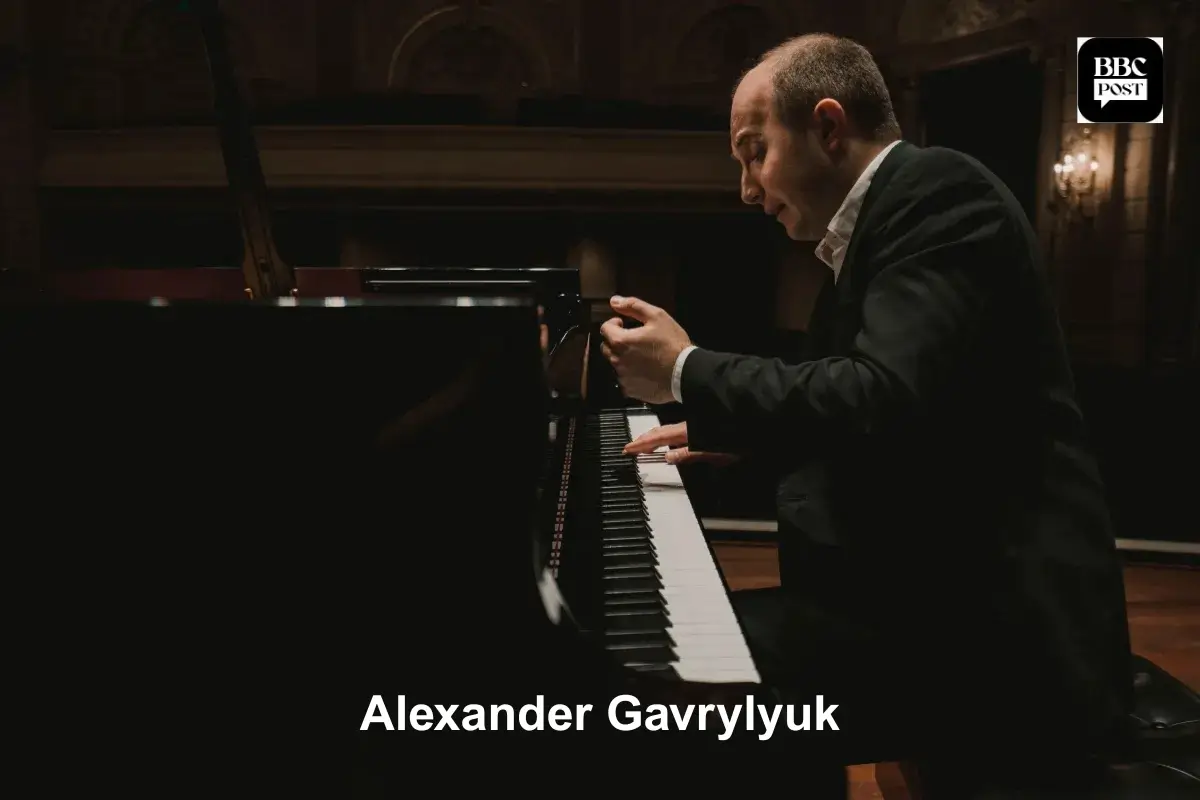
One of the most well-known pianists of his time, Alexander Gavrylyuk is praised for performances that blend technical mastery with emotional intelligence and structural clarity. He was born in Ukraine and now resides in Australia. His life story is marked by early discipline, cultural change, personal struggle, and a strong conviction that music unites people rather than separates them.
Gavrylyuk has established a career based on depth and stability via performances in worldwide concert venues, partnerships with top orchestras and conductors, significant recordings, television appearances, and long-term participation in music education. Rather than becoming a spectacle, his narrative is one of tenacity and purpose.
Kharkiv Childhood and a Musical Family
In the latter years of the Soviet period, in Kharkiv, Ukraine, Alexander Gavrylyuk was born in 1984. His parents were both accordion musicians, therefore he was raised in a musical family. From the start, music was considered a serious vocation and was ingrained in everyday life.
He started taking piano lessons when he was seven years old, and he showed remarkable talent practically right away. He made his public debut as a concerto soloist at the age of nine. The rigors training culture of the day was reflected in his boyhood routine, which included extended practice sessions that sometimes lasted up to 10 hours each day.
Gavrylyuk has spoken about times of balance that remained significant to him despite the stress of this upbringing. His most treasured recollections were time spent away from the piano, especially trips to the country with his grandmother, which provided respite from the regimen of training.
Being Raised in a Restricted Creative Environment
Despite Ukraine’s independence in the early 1990s, Gavrylyuk has said that Soviet institutions continue to influence the creative milieu of his childhood. Rigid hierarchies governed musical education, and talented kids received intensive instruction with little opportunity for personal preference.
Concert pianists were often developed in accordance with predetermined formulae, and contests were seen as emblems of national status and accomplishment. Like professional sports, musicians were supposed to represent systems rather than individual voices. According to Gavrylyuk, this strategy often came at a human cost, creating extremely talented performers with limited room for mental health or freedom of expression.
His subsequent opinions on music, creativity, and the value of competition were greatly impacted by these encounters.
Relocating to Australia and Finding Independence
Gavrylyuk, along with five other talented Ukrainian pianists, arrived in Sydney at the age of thirteen after receiving scholarships from the privately owned Australian Institute of Music. As a result of their early brilliance and performances at schools, the trio gained popularity very fast.
The journey to Australia was a sea change. According to Gavrylyuk, the experience was thrilling, especially the feeling of light, space, and individual independence he had when he arrived in Sydney. It was an instantaneous and striking contrast to his previous surroundings.
He received a music scholarship to attend St Andrew’s Cathedral School at this time. Up until 2006, he resided in Sydney, a pivotal period that influenced his creative perspective and solidified Australia as an enduring presence in his life.
Early Competition Achievement and International Acknowledgement
Gavrylyuk had remarkable success in international events throughout his adolescent years. He returned to Ukraine at the age of fifteen to participate in the Vladimir Horowitz International Piano Competition, where he won the gold medal and first place. He took first place in the Hamamatsu International Piano Competition in Japan the following year. He won the gold prise in the Arthur Rubinstein International Piano Masters Competition in 2005, completing a unique triad of significant accomplishments.
He had established himself as one of the top pianists of his generation by the time he was twenty-one. These accomplishments paved the way for global engagements and partnerships with world-renowned orchestras.
However, he has often considered the emotional toll that competitive culture has on young artists.
An Unambiguous Position on Music and Competition
Gavrylyuk has continuously said that he is uncomfortable with music being seen as a competitive activity, even if he has achieved success in contests. He thinks that rather than being a ranking system, music functions best as a unifying factor.
Based on his own experiences, he has discussed how cultures that prioritise competitiveness may put a great deal of stress on musicians and mask the true meaning of music. He believes that music is most important when it is seen as a shared experience that unites people rather than as something to be evaluated and contrasted.
Developing a Global Career
As a soloist and orchestral musician, Alexander Gavrylyuk has amassed a diverse worldwide career. Leading orchestras such as the New York Philharmonic, Los Angeles Philharmonic, Royal Concertgebouw Orchestra, Chicago Symphony Orchestra, NHK Symphony Orchestra, City of Birmingham Symphony Orchestra, Philharmonia Orchestra, Wiener Symphoniker, Sydney Symphony Orchestra, Adelaide Symphony Orchestra, Detroit Symphony Orchestra, Dallas Symphony Orchestra, Polish Baltic Philharmonic, and São Paulo Symphony Orchestra have all featured him.
Vladimir Ashkenazy, Valery Gergiev, Herbert Blomstedt, Vladimir Jurowski, Sir Mark Elder, Osmo Vänskä, Thomas Søndergård, Kirill Karabits, Rafael Payare, Alexander Shelley, and Thomas Dausgaard are just a few of the conductors he has worked with.
Wigmore Hall, the Musikverein in Vienna, the Concertgebouw in Amsterdam, Tonhalle Zurich, Suntory Hall, Tokyo Opera City Hall, the Great Hall of the Moscow Conservatory, Cologne Philharmonie, Sydney Recital Hall, and Melbourne Recital Centre are just a few of the prestigious venues where he has performed as a recitalist. Additionally, he often travels around Europe with his recital partner, Janine Jansen.
Australian Media Presence, Festivals, and Broadcasts
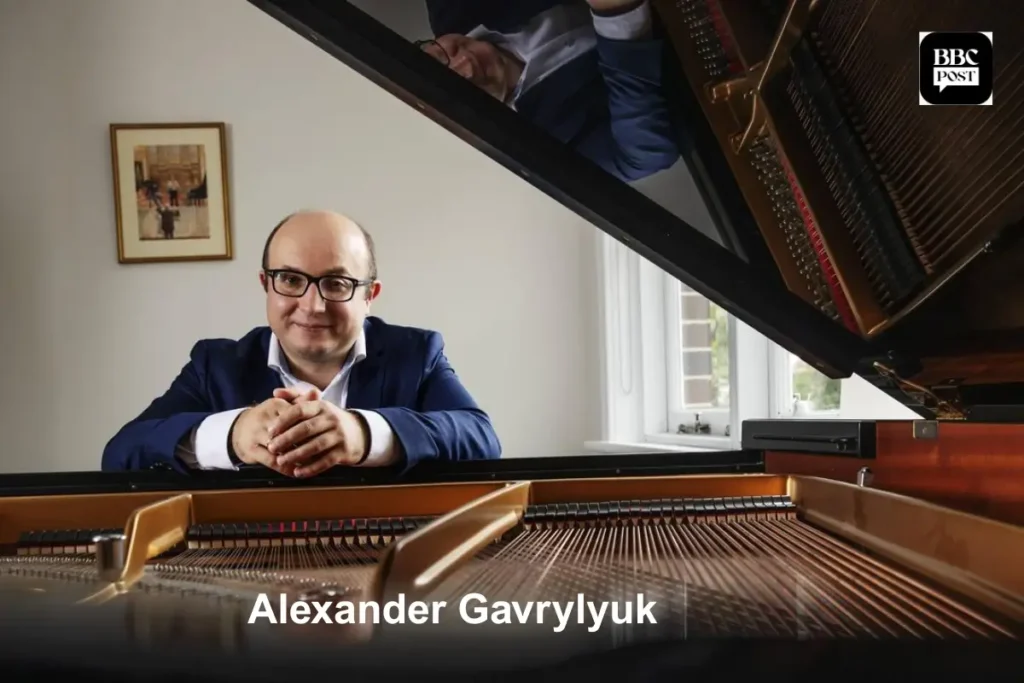
Major worldwide music festivals that are renowned for showcasing top classical musicians, like the Hollywood Bowl, Mostly Mozart Festival, Bravo! Vail, Ruhr Festival, Kissinger Sommer worldwide Music Festival, and the Gergiev Festival in Rotterdam, have featured Gavrylyuk.
His influence in Australia’s cultural environment outside of concert halls has been reinforced by national broadcast platforms, such as ABC Classic and ABC Radio, where he has performed and been interviewed.
Recordings and Positive Reviews
In 2009, under the direction of Vladimir Ashkenazy, Gavrylyuk recorded the whole set of Prokofiev piano concertos with the Sydney Symphony Orchestra, marking a significant turning point in his recording career. In the field of classical music, Ashkenazy, a prominent figure in the Russian pianistic tradition, has praised Gavrylyuk as an amazing talent.
He was well praised for his 2017 BBC Proms performance of Rachmaninoff’s Piano Concerto No. 3, which was led by Thomas Dausgaard with the BBC Scottish Symphony Orchestra. One of the hardest pieces in the piano repertory, the concerto is often seen as a standard for aspiring musicians in terms of both technical and musical proficiency.
Gavrylyuk’s reputation for fusing virtuosity and understanding was reinforced by critics who characterised his performance as highly melodic, emotionally compelling, and structurally smart.
Stage Presence and Performance Style
Gavrylyuk’s stage persona has often been compared by critics to the old Russian school of pianism. In addition to playing with grandeur, nobility, virtuosity, and a polished sense of style, reviews have highlighted his dramatic concentration, expressive body, and formal presentation.
His performances are now distinguished by this fusion of history and consideration, which distinguishes him as a pianist who strikes a balance between control and strength.
An Extreme Injury and Its Effects
Gavrylyuk was in a coma for a day after being in a catastrophic vehicle accident when he was seventeen and living in Sydney. It took two doctors many hours to operate on his skull above the left eye.
Although the incident changed his perspective on life, he completely healed and resumed performing. Beyond the performance stage, he has spoken about how the accident altered his view on freedom and reaffirmed the value of perspective.
Years in Europe Before Going Back to Australia
Gavrylyuk lived and worked in Europe for around thirteen years after his early triumphs, including long stints in Germany and the Netherlands. He continued to expand his repertory while maintaining a busy worldwide itinerary throughout this period.
He and his family stayed in Sydney during the epidemic. When his girls started attending school there and the family developed a strong bond with the city and its culture, what had started out as a temporary choice turned into a permanent one.
Stability and Family Life
Alexander Gavrylyuk has two daughters and is married. He appreciates a secure home life in addition to his work obligations and resides in Sydney with his family. He focuses public attention on music, education, and creative endeavours while keeping his personal life mostly out of the limelight.
Residencies, Instruction, and Community Service
Gavrylyuk has a strong commitment to music education in addition to his performing career. During the 2023–2024 season, he presented three concerts at Wigmore Hall as Artist in Residence, a position only given to internationally renowned musicians.
In addition, he is the Chautauqua Institution’s Artist in Residence, where he oversees the piano programme and acts as an artistic advisor, assisting in determining the institution’s long-term creative direction.
He backs groups like Opportunity Cambodia, which promotes residential education for kids, and the Theme and Variations Foundation, which helps young Australian pianists. Additionally, he is acknowledged as a Steinway Artist, a distinction that only a few concert pianists throughout the globe possess.
Music as Meaning and Connection
Gavrylyuk often discusses how music may bridge cultural divides. Few things, in his opinion, have the ability to bring people together as effectively as music, and he finds it extremely touching when crowds react in unison.
His conviction that music is an eternal medium for human communication has been strengthened by his reflections on how artists from centuries ago still convey feelings that are important today.
Australian Chamber Orchestra’s First Performance and Upcoming Events
Gavrylyuk’s recent debut with the Australian Chamber Orchestra represents a significant turning point in his Australian career. Richard Tognetti directs his performances of George Gershwin’s Rhapsody in Blue and Shostakovich’s Piano Concerto No. 1.
He has described Shostakovich’s concerto as young and defiant, seeing it as music composed by a composer battling for recognition under a repressive system. He has also highlighted the work’s comedy, characterising it as a kind of clenched-toothed laughing.
On the other hand, he sees Rhapsody in Blue as a manifestation of openness, freedom, and exuberance that captures the essence of New York during the jazz period. He has called the combination of these pieces a “masterstroke,” emphasising the contrast between creative freedom and limitation. From August 1 until August 18, the programme visits Australian cities.
Conclusion
Alexander Gavrylyuk’s path from early discipline in Ukraine to a global profession rooted in Australia illustrates a life moulded by fortitude, independence, and creative commitment. His narrative demonstrates how music may transcend control mechanisms to become a source of meaning and connection.
Gavrylyuk continues to emphasise the timeless force of music by providing performances that speak to the depth, clarity, and universality of human experience rather than aiming for fame outside of the concert hall.
FAQs
Who is Alexander Gavrylyuk?
Alexander Gavrylyuk is a Ukrainian-born, Australian-based classical concert pianist. He is known internationally for performances of Romantic and Russian repertoire and has appeared with major orchestras and at leading concert halls worldwide.
Who is Australia’s best pianist?
There is no official designation for Australia’s “best” pianist, as musical excellence is subjective. However, Alexander Gavrylyuk is widely regarded as one of Australia’s most internationally recognised and critically respected concert pianists.
How do you pronounce Alexander Gavrylyuk?
Alexander Gavrylyuk is commonly pronounced as Al-ex-AN-der Gav-REE-lyuk, with the emphasis on the second syllable of Gavrylyuk. Pronunciation may vary slightly depending on accent.
Where does Alexander Gavrylyuk perform?
Alexander Gavrylyuk performs internationally in Europe, North America, Asia, and Australia. He appears regularly with major orchestras, at international music festivals, and in leading concert halls such as Wigmore Hall, the Concertgebouw, and major Australian venues.
Who is the world’s fastest pianist?
There is no official or universally accepted title for the world’s fastest pianist. Speed alone is not considered a meaningful measure of pianistic skill, as musical interpretation, tone, and expression are equally important in classical performance.
What is the 80/20 rule in piano?
In piano practice, the 80/20 rule refers to the idea that around 80 percent of results can come from focusing on the most important 20 percent of technical or musical challenges, such as difficult passages, rhythm, or voicing, rather than repeating entire pieces evenly.
Who is the most skilled pianist in the world?
There is no single pianist universally regarded as the most skilled in the world. Pianistic skill is assessed differently depending on technique, interpretation, repertoire, and personal style. Many pianists are recognised at the highest level for different strengths.
Is Shine based on a true story?
Yes, Shine is based on the real life of Australian pianist David Helfgott. The film is inspired by true events, particularly his struggles and career, though some aspects were dramatised for storytelling purposes.

