

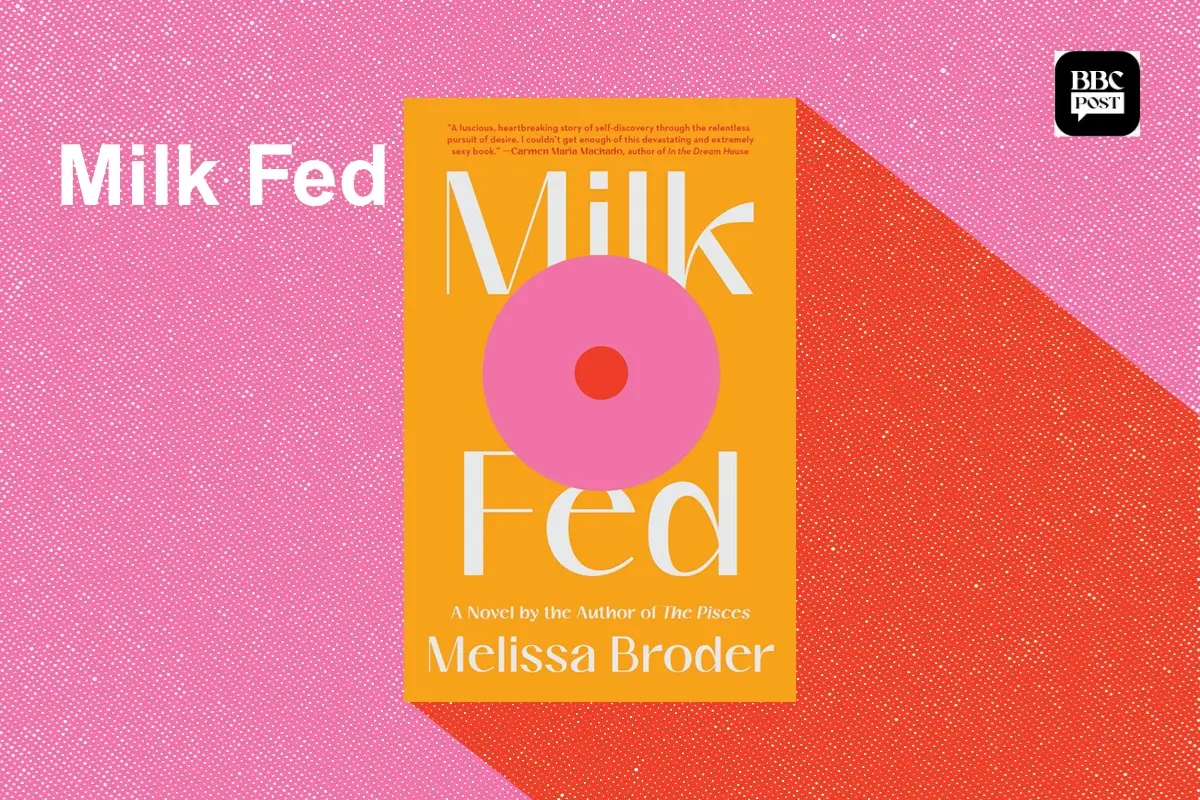
Milk Fed is a contemporary literary fiction novel by Melissa Broder, published on 27 February 2021 by Scribner. Since its release, the book has sparked intense discussion among readers and critics, largely because of its unfiltered approach to disordered eating, sexuality, religion, and emotional dependence. It is often described as confronting, darkly funny, and deeply intimate, a novel that does not shy away from discomfort.
Rather than offering reassurance or tidy resolution, Milk Fed immerses readers in obsession and uncertainty. It asks what happens when control becomes identity, and what it costs to let go of the systems that promise safety.
Book Overview and Publication Details
- Title: Milk Fed
- Author: Melissa Broder
- Genre: Literary fiction
- Publisher: Scribner
- Publication date: 27 February 2021
- Language: English
- Length: Approximately 320–352 pages (varies by edition)
- Formats: Hardcover, paperback, ebook, audiobook
- Setting: Los Angeles, United States
The novel is intended for adult readers and contains explicit content that is central to its themes.
Publisher Description and Framing
The official publisher description presents Milk Fed as a scathingly funny, wildly erotic, and fiercely imaginative story about food, sex, and God. This framing accurately captures the book’s tone and focus. The novel treats appetite, desire, and belief as intertwined forces rather than separate experiences.It is not interested in moderation or subtle suggestions. Instead, it explores fixation, surrender, and excess directly and without apology.
TL;DR Review
Milk Fed is a visceral and psychologically intense novel about disordered eating, sexual desire, spiritual longing, and the unstable boundary between freedom and control. It is sharply written, explicit, and emotionally demanding.Recommended for readers who enjoy challenging literary fiction and are prepared for detailed depictions of eating disorder behaviour and sexuality.
Reader Reception and Ratings
Milk Fed has received a mixed but highly engaged response from readers. On Goodreads, the novel holds an average rating of around 3.56, based on tens of thousands of ratings and over ten thousand reviews. It is also widely logged on reading-tracking platforms, where readers frequently classify it as intense, emotionally heavy, and polarising.
The divided reception reflects the book’s refusal to soften its subject matter. Readers who connect with it often describe feeling unsettled yet deeply engaged. Others find it overwhelming or distressing, particularly due to its close portrayal of obsessive thinking.
Plot Summary: A Life Organised Around Hunger
The story centres on Rachel, a 24-year-old Jewish woman living in Los Angeles. Rachel works in a junior role at a talent management agency, a job that mirrors her emotional position in the world: controlled, peripheral, and constantly aware of her lack of power.Rachel’s daily life is structured around rigid food rules and calorie restriction.
Eating is never casual. Hunger is planned, measured, and rewarded. Restriction gives her a sense of order and moral clarity in a world that otherwise feels unstable.At night, Rachel exercises compulsively on an elliptical machine, pedalling endlessly without destination or satisfaction. This repetitive motion reflects the mental loops that dominate her inner life.
Disordered Eating as Identity

One of the novel’s most striking elements is how it presents disordered eating not simply as illness, but as ideology. For Rachel, restriction has become a belief system complete with rules, rituals, rewards, and punishments.
Hunger is experienced as a virtue. Thinness is equated with goodness. Fullness is associated with failure. Control becomes proof of worth. The novel shows how easily self-denial can be mistaken for strength.
The Mother–Daughter Relationship and the Detox
Rachel’s relationship with her mother plays a central role in shaping this belief system. Raised in an environment where calorie counting and body monitoring were normalised, Rachel absorbed the idea that discipline equals care.
At her therapist’s suggestion, Rachel begins a 90-day communication detox from her mother. While this removes direct contact, it reveals how deeply her mother’s voice has already been internalised. Judgement and self-surveillance continue even in her absence.The novel presents this relationship as emotionally enmeshed rather than overtly abusive, showing how control can be passed down through anxiety and good intentions.
Miriam: Abundance and Disruption
During the detox, Rachel meets Miriam, an Orthodox Jewish woman who works at her favourite frozen yoghurt shop. Miriam is physically confident, emotionally grounded, and deeply comfortable with food. She insists on feeding Rachel and does so with warmth and certainty.
Rachel becomes powerfully drawn to Miriam’s body, her faith, her family life, and her sense of belonging. This attraction is sexual, emotional, and spiritual. Miriam represents abundance in contrast to Rachel’s carefully maintained scarcity.As their relationship develops, Rachel’s rigid system begins to fracture, forcing her to confront fears she has long avoided.
Feeding as Power and Intimacy
In Milk Fed, feeding is never neutral. It carries emotional weight, vulnerability, and power. To feed someone is to care for them. To be fed is to accept dependence.For Rachel, this acceptance is terrifying. Her sense of safety depends on restraint. Eating under another person’s gaze feels like surrender. The novel explores this tension without simplifying it, allowing care and control to exist side by side.
Food as Emotional Language
Food functions as emotional language throughout the novel.
Restriction signals virtue and control. Feeding signals intimacy and connection. Hunger signals moral clarity. Pleasure signals danger.Frozen yoghurt, often marketed as a “safe” indulgence, becomes symbolic of Rachel’s illusion of balance. Miriam’s approach to food disrupts this illusion and exposes the fear beneath it.
Sexual Desire and the Fear of Wanting
Sexuality in Milk Fed is explicit and intense. Desire is inseparable from hunger, and both are treated as forces that threaten control.The novel does not frame desire as inherently liberating. Instead, it presents wanting as destabilising, particularly for someone whose identity depends on restraint. Rachel’s attraction to Miriam blurs the boundaries between physical craving, emotional need, and spiritual longing.
Religion, Judaism and Spiritual Longing
Judaism is woven deeply into the novel’s structure. Rachel is a lapsed Jew who associates religion with guilt and restriction. Miriam’s Orthodox life presents faith as daily practice, routine, and community.The novel draws parallels between religious discipline and eating disorder logic, particularly ideas of purity, sacrifice, and obedience. At the same time, it suggests that faith might offer an alternative to control: surrender rather than punishment.
Symbolism and Recurring Motifs
Milk symbolises nourishment, dependence, motherhood, and care. It reflects Rachel’s fear of being fed and her discomfort with needing others.Honey represents sweetness, abundance, and temptation, standing in opposition to Rachel’s fear of pleasure.Mirrors reinforce constant self-surveillance and internal judgement.Mystical imagery appears alongside erotic scenes, linking bodily desire with spiritual yearning.
Narrative Style and Reading Experience
Melissa Broder’s prose is intimate, confessional, and deliberately repetitive. The narrative remains closely tied to Rachel’s interior voice, creating a claustrophobic reading experience that mirrors obsession.
Moments of heightened imagery and fantasy blur the line between reality and perception, reflecting how fixation distorts experience.
About the Author: Melissa Broder
Melissa Broder is an American writer, poet, and essayist born in 1980. Her work spans fiction, essays, and poetry, and is known for its focus on anxiety, obsessive thought, desire, shame, bodily control, faith, and doubt.
She has written six widely recognised books across genres, with Milk Fed often regarded as her most psychologically confronting novel due to its realism and intensity.
Melissa Broder’s Books
- Meat Heart (2014) – poetry
- So Sad Today (2016) – essays
- Last Sext (2016) – poetry
- The Pisces (2018) – novel
- Milk Fed (2021) – novel
- Death Valley (2024) – novel
Milk Fed Compared to The Pisces
While both novels explore obsession and desire, The Pisces leans more heavily into surrealism. Milk Fed is grounded in everyday reality, which many readers find more confronting due to its closeness to lived experience.
Availability and Formats
Milk Fed is available in hardcover, paperback, ebook, and audiobook formats through major retailers and independent bookshops.
Content and Trigger Warnings
For readers who need them, the novel contains:
- Severe depictions of disordered eating
- Body dysmorphia
- Graphic sexual content
- Religious homophobia
These elements are integral to the narrative and described in detail.
Final Thought
Milk Fed is a novel that resists comfort. It does not guide the reader gently toward insight or resolution, and it does not apologise for its intensity. Instead, it sits firmly in the uneasy space where control, desire, faith, and fear overlap, asking the reader to remain there long enough to feel the weight of it.
Melissa Broder’s achievement lies in her refusal to separate the body from belief. Hunger is never just physical, desire is never just sexual, and discipline is never just self-control. Through Rachel, the novel exposes how easily restraint can become identity, and how frightening nourishment can feel when deprivation has long been mistaken for safety.
The book will not be for everyone, and it does not try to be. For some, it will feel overwhelming or unsettling. For others, it will feel sharply honest, even recognisable in its discomfort. What Milk Fed ultimately leaves behind is not a lesson, but a question: if control has been our way of surviving, what happens when we no longer rely on it and are we willing to be fed instead?

