

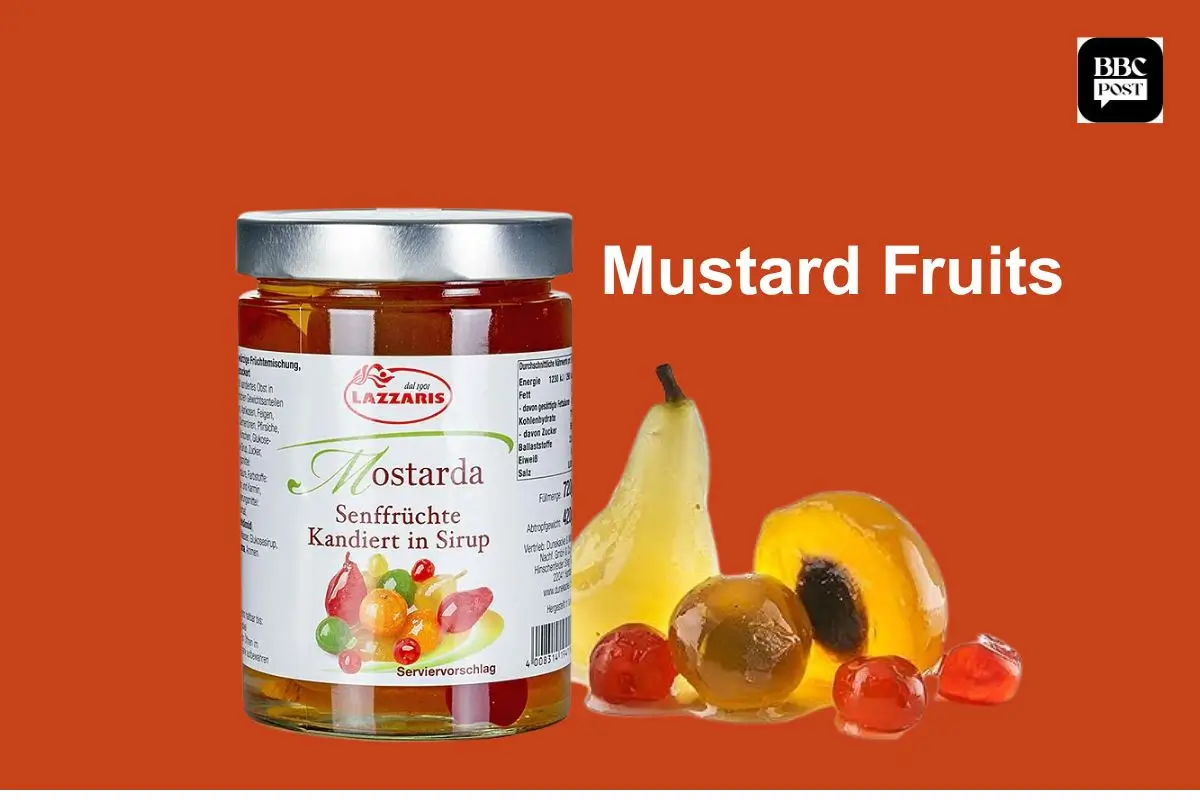
Despite being widely used in supermarket lists, recipes, and internet searches, the word “mustard fruits” is still one of the most misinterpreted terms in the food industry. It may be used botanically to refer to the dried fruits of the mustard plant or, depending on the context, to describe a classic Italian fruit preserve flavoured with mustard. Although these two meanings are completely distinct, they sometimes appear together in search results, confusing readers, shoppers, and home chefs.
In order to clarify what mustard fruits are, how they are created in Italy, where to get them in Australia and the surrounding areas, how they are served, and how they vary from mustard plant fruits, this page compiles all of the verifiable and proven facts. Common search phrases, name confusion, colour references, and pricing concerns are also included.
Mustard Fruits: What Are They?
Mostarda di Frutta, a classic Italian condiment produced from whole or mixed fruits preserved in sugar syrup and infused with mustard taste, is the most frequent example of mustard fruits in culinary use. Instead of originating from the fruit itself, the mustard taste is added during preparation, often using mustard seed oil or mustard powder.
There is no such thing as a mustard tree that yields edible fruits, and these fruits are not cultivated on mustard plants. The term has nothing to do with plant origin, rather flavour.
Italian mustard fruits seem different from marmalade or jam. The fruit pieces are floating in a transparent syrup and can stay whole or in big portions. After starting off sweet, the taste intensifies into a comforting, somewhat abrasive mustard heat.
The History of Italian Mustard Fruits
Northern Italy, namely the Lombardy area, is where Italian mustard fruits first appeared. The city of Cremona is often referred to as the reference standard and is generally acknowledged as the historical and cultural hub of mostarda manufacturing.
Mostarda has been used with meat dishes for ages, particularly during gatherings and special occasions. Its strong taste and long shelf life made it ideal for both contrasting rich dishes and preserving fruit.
Regional styles evolved throughout time, giving rise to names like Mostarda di Voghera, Mostarda Cremonese, and Mostarda di Cremona. The basic process of preserving fruit and adding mustard taste is the same regardless of geographical variations.
Fruits with Cremona Mustard as the Model Style
Cremona mustard fruits are regarded as the standard due to their emphasis on:
- Whole or crystallised fruits
- Instead of a thick gel, a clear, light syrup
- Mustard heat that is balanced
- Texture and visual clarity
Even if they are grown elsewhere, many Italian mustard fruits that are marketed abroad use the Cremona method.
The Italian Method for Making Mustard Fruits
A Classic Recipe for Mustard Fruits
Instead of overcooking, Italian mustard fruits depend on time and careful sugar extraction.
After weighing the prepared fruits, caster sugar is added in an amount that is around half of the fruit’s weight. After completely combining the fruit and sugar, they are refrigerated for about 48 hours. The sugar absorbs moisture from the fruit during this time and turns into a natural syrup. To guarantee uniform dispersion, the mixture is agitated in the morning and evening.
The fruit is drained and put away after two days. White wine, lemon juice, and mustard flavouring are added to the gathered syrup and cooked slowly. Mustard powder and optional mustard seeds may be used in this flavour. The syrup is maintained clear instead of thick, although it is somewhat decreased.
The fruits are put into sterile jars, covered with hot syrup, and sealed. In order to stabilise and combine the sweetness and mustard heat, the mustard fruits are then allowed to sit at room temperature for a minimum of one week before usage.
Crystallised and Candied Mustard Fruits
It’s common to characterise Italian mustard fruits as candied or crystallised. This describes how sugar seeps into the fruit during preservation, giving it a glossy look and the ability to maintain its form.
Traditional mostarda requires crystallisation. Instead of being mushy or spreadable, the fruit stays solid and undamaged. The fruit is visually and texturally highlighted by the syrup’s continued clarity.
Fruit Varieties and Mixed Mustard Fruits
The most popular commercial kind of mustard is mixed mustard fruits. Pears, apples, cherries, figs, citrous, and stone fruits are often among them.
Mandarin mustard fruits are especially well-liked because they complement mustard’s heat with their inherent sweetness and citrusy bitterness. Although they are less often exported than mixed types, single-fruit variants do exist.
Barbieri Fruits with Mustard
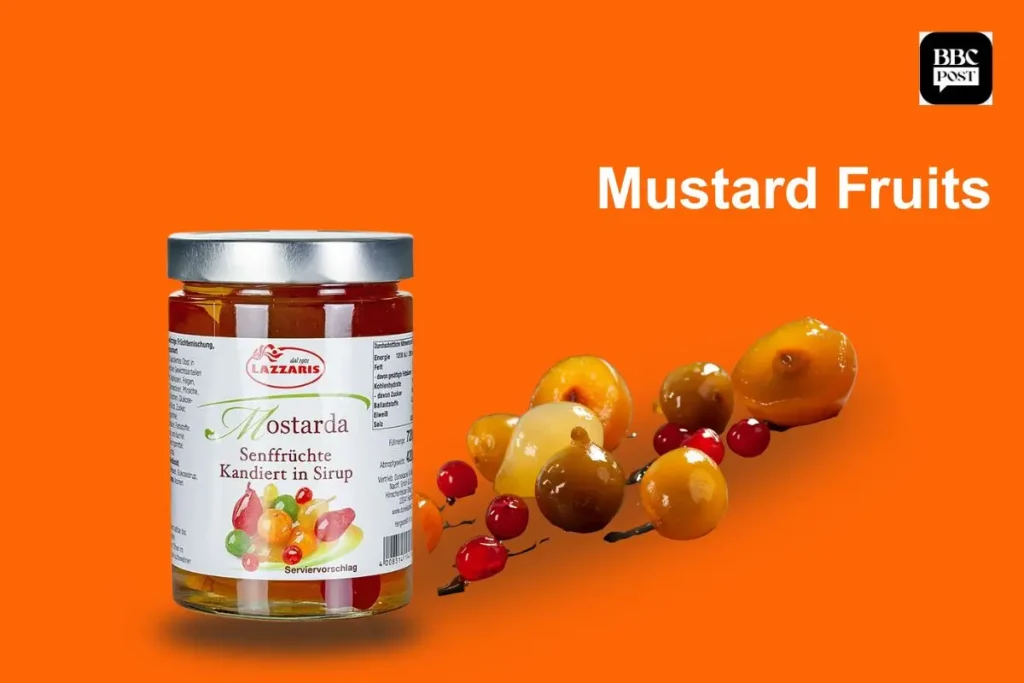
Located in the Oltrepò region, Barbieri is a family-run Italian manufacturer. For decades, the firm has manufactured fruit sauces, jams, and mostardas; Mostarda di Voghera is its most well-known product.
380g jars of Barbieri’s mixed fruit mostarda are often advertised as being accessible countrywide via specialty stores. The selling price of £7.95 GBP is often cited, and the product has been reviewed by several customers.
The De.C.O. The mark, which honours extraordinary culinary items strongly linked to regional heritage and geographic origin, is present on Barbieri’s Mostarda di Voghera. Authenticity is confirmed by this mark instead of mass manufacture.
The Cremona Tradition and Sperlari
Producing mostarda since 1836, Sperlari is one of the most well-known brands connected to Cremona mustard fruits. This is the result of over two centuries of uninterrupted manufacturing.
The use of entire crystallised fruits, transparent syrup, and mustard seed oil to produce a balanced piccante taste rather than overpowering heat was one of Sperlari’s key contributions to the preservation and standardisation of the Cremona style.
Traditional Serving Methods for Mustard Fruits
Bollito Misto, a northern Italian dish made with a variety of cooked meats, is often served with Italian mustard fruits. Additionally, they are served with cured meats like prosciutto, salami, and classic Italian hams.
Cheese combinations are just as popular. Both soft cheeses like ricotta and goat’s cheese and hard cheeses like Parmesan, pecorino, and cheddar perform nicely. The mustard heat creates contrast, while the sweetness balances the fat and salt.
Outside of Italy, mustard fruits are often served with grilled meats, sausages, turkey, and roast pig. Because of the intense taste, portions are usually tiny.
Where to Purchase Mustard Fruits
Purchasing “Near Me” Mustard Fruits
Mustard fruits are not your typical grocery goods; they are speciality commodities. They are most often found at gourmet grocers, European food stores, and Italian delicatessens in Australia. Cities may have different availability, and regional regions often depend on internet merchants.
Lookups like “mustard fruits” Mustard fruits and Woolworths Although Coles is widely available, large supermarkets seldom ever carry real Italian mostarda in-store. When it is accessible, it is often limited, seasonal, or offered online instead than on traditional stores.
Similar searches are conducted at Waitrose and Tesco in the UK, where genuine mostarda is also restricted to speciality or imported areas. Similar to Australian purchasing practices, mustard fruits are often imported into New Zealand via European food merchants.
Although they are separate goods, fruit chutneys and mustard sauces are sometimes confused for mustard fruits, therefore it’s crucial to carefully read labels before making a purchase.
Alternatives to Mustard Fruits
Traditional Italian mostarda has no direct replacement. As an alternative, some individuals mix horseradish or mustard with fruit preserves. It is also possible to use mildly pickled fruits with mustard seasoning or sweet-spicy chutneys, however their texture, clarity, and balance are different.
Mustard Plant Fruits vs. Mustard Fruits
In botanical contexts, the name “mustard fruits” is sometimes used. Mustard seeds are found in the dried seed pods that mustard plants produce. Both the seeds and these pods are categorised as dry fruits.
Contrary to how they are used in Western cooking, mustard and groundnut are often combined under the umbrella phrase “dry fruits.” Italian mustard fruits have nothing to do with their botanical connotation.
No edible fruit is produced by any mustard tree. Instead of being based on botanical truth, references to mustard tree fruits are often the result of search word misunderstanding.
Fruits with Mustard Colours and Yellow Mustard Fruits Described
Words like “mustard colour fruits” or “mustard yellow fruits” describe colour rather than plant kind. Not because they are connected to mustard plants, but because of the syrup and fruit selection, Italian mustard fruits often have a golden, amber, or transparent appearance.
Colour is not a strict categorisation; rather, it depends on the fruit used and the preservation method.
Price and Preparation at Home
Due to manufacturing time and transportation, imported mustard fruits are sometimes costly. In order to get a comparable taste at a far lesser cost, many individuals choose to prepare mustard fruits at home using conventional techniques. Many people believe that homemade versions are far more affordable without sacrificing authenticity.
Conclusion
In the Italian sense, mustard fruits are not a recent innovation, but rather a preserved fruit condiment with roots in northern Italian history. Their combination of sweetness and controlled mustard heat, rather than novelty, is what makes them appealing.
Much of the ambiguity around the phrase is cleared up by knowing the distinction between mustard plant fruits and Italian mustard fruits. One of the most unique preserved fruit condiments still in use today is Mostarda di Frutta, which may be made at home or bought from a speciality store.
FAQs
What is a mustard fruit?
In culinary terms, a mustard fruit refers to Mostarda di Frutta, an Italian condiment made from whole or mixed fruits preserved in syrup and flavoured with mustard. Botanically, mustard plants produce dry seed pods, which are also called fruits, but these are unrelated to Italian mustard fruits.
What fruits are typically used in mustard fruit?
Italian mustard fruits are commonly made using pears, apples, cherries, figs, citrus fruits, and mandarins. Mixed fruit versions are the most widely available, while single-fruit varieties, such as mandarin mustard fruit, are also produced.
Is mustard a fruit or a vegetable?
Mustard itself is neither a fruit nor a vegetable. It is a condiment made from mustard seeds. Botanically, mustard seeds come from dry seed pods, which are classified as dry fruits, but the edible condiment is not considered a fruit or vegetable.
What is Italian candied fruit with mustard?
Italian candied fruit with mustard is known as Mostarda di Frutta. It consists of fruits that have been candied or crystallised in sugar syrup and then infused with mustard flavour, creating a sweet yet spicy condiment traditionally served with meats and cheese.
What is the fruit of mustard called?
The fruit of the mustard plant is a dry seed pod, botanically known as a silique. This pod contains mustard seeds. This botanical fruit is entirely different from Italian mustard fruits used in cooking.
What are some variations of mustard fruit?
Variations include mixed mustard fruits, single-fruit versions such as pear or mandarin, and regional Italian styles like Mostarda di Cremona and Mostarda di Voghera. Differences usually relate to fruit selection and the intensity of mustard flavour rather than preparation method.
Why do athletes eat yellow mustard?
Some athletes consume yellow mustard because it contains vinegar, salt, and small amounts of minerals, which may help with electrolyte intake. This practice is anecdotal and related to sports routines rather than mustard fruit consumption.
Is mustard good for your stomach?
Mustard has traditionally been used in small amounts to support digestion, particularly with heavy foods. However, tolerance varies, and mustard can irritate sensitive stomachs if consumed in excess. Italian mustard fruits are usually eaten in small portions due to their strong flavour.

