

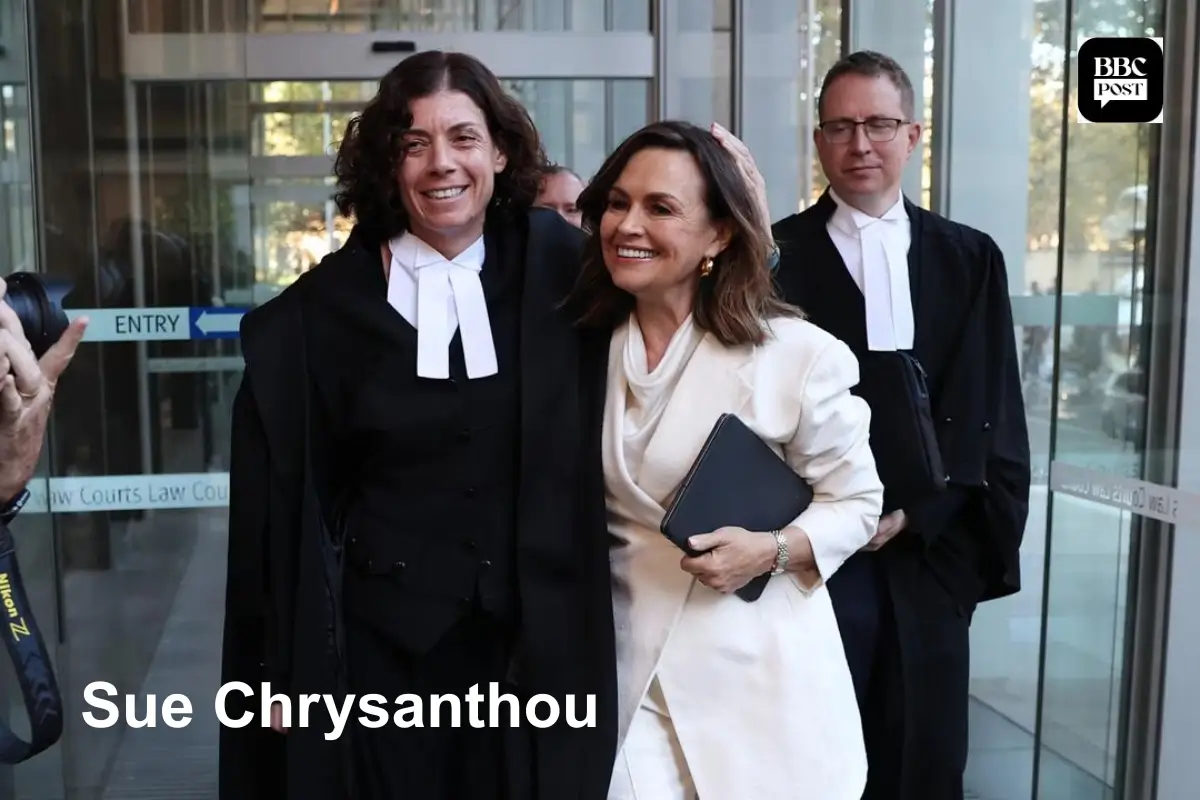
One of the most well-known names in Australian media and defamation law is Sue Chrysanthou SC. Her more than 20-year tenure at the New South Wales Bar has taken place amid a time of heightened public discourse around power, journalism, and reputation. She has been instrumental in influencing the interpretation and application of defamation law in Australia via significant court rulings, public comments, and law reform debates.
There is much documentation on her work life. In contrast, nothing is known about her personal history. This is a comprehensive narrative based only on public interviews, judicial rulings, professional profiles, and cultural criticism.
Childhood and Family History
No documentation exists on Sue Chrysanthou’s early years, birthplace, or upbringing. Professional biographies, interviews, and media coverage in Australia don’t include information on her parents or if she has siblings. She has not discussed her early family life in public, and there are no sources that detail her upbringing.
Even though her work often entails close examination of other people’s private lives, this lack of information shows a constant division between her personal and public lives.
Learning and Intellectual Development
Sue Chrysanthou earned a Bachelor of Laws and a Bachelor of Communications with a concentration in Media Arts and Production from the University of Technology Sydney. She has clarified that becoming a lawyer was not her first goal. She did not see a future in law while in school, and she chose the combined degree primarily to meet expectations while maintaining flexibility.
Her passion immediately developed after she started studying law. She found the topic interesting and realised that she was more suited to legal reasoning than she had thought. She attended the University of New South Wales to pursue a Master of Laws after finishing her undergraduate studies. She balanced her academic study with the beginning of her legal profession by working as a research assistant and instructor for Associate Professor Penny Croft and Professor Patrick Keyzer at this period.
She gained a deeper grasp of public law, legal theory, and constitutional principles via her study and teaching experiences, which eventually showed in the way she approached the courtroom.
Rejecting the Solicitor Pathway and Selecting the Bar
Sue Chrysanthou has been transparent about her choice to forego the conventional attorney route. She has said that the summer clerkship procedure did not appeal to her and that she was totally against becoming a solicitor. She chose to get experience in the legal system instead.
Before joining Justice Jeff Shaw, she served as a tipstaff to Justices David Levine and Carolyn Simpson AO, who both ruled over defamation cases. These positions exposed her to courtroom procedures early on and put her in close proximity to judges handling complicated cases. The advice from the judges she worked with—that she could proceed directly to the Bar if she so desired—turned out to be crucial.
After being admitted to the New South Wales Bar in 2004, she accepted a readership at Blackstone Chambers, which at the time was one of Sydney’s biggest chambers.
Early Obstacles in the Bar Career
Her early years as a lawyer were harsh and demanding. She has spoken about attending court daily and taking on whatever task that comes up, from apprehended violence orders to Local Court contract issues. There was a lot of labour, long hours, and ongoing financial strain.
She had little influence over the kind or speed of her job and, like many young barristers, had to deal with uncertainty. She has called this time period “shockingly hard work,” requiring perseverance and fortitude. She was able to hone her advocacy skills and gain confidence over time via consistent exposure to and experience in the courts.
Developing a Media Law and Defamation Practice
Eventually, she developed a significant interest in defamation law. She had an edge in conflicts concerning publishing, reputation, and disputed narratives because of her communications experience, which provided her with insight into how the media functions and how stories are presented.
Her practice expanded to include intellectual property issues, privacy, defamation, media and communications law, enquiries, and orders for suppression or non-publication. These fields sometimes overlap, especially when it comes to situations involving public people, journalists, publishers, and politicians.
In 2020, she was named Senior Counsel in appreciation of her status and expertise.
Significant and Important Court Cases
A number of cases that Sue Chrysanthou SC has taken part in have influenced contemporary Australian defamation law. Rush v. Nationwide News, which involves actor Geoffrey Rush and News Corp publications, is among the most important. The case garnered national attention and brought up important issues about reliability, journalistic norms, and the consequences of libellous reporting. The result still serves as a benchmark in defamation cases and has an impact on how media companies evaluate legal risk.
Hanson-Young v. Leyonhjelm, which dealt with defamatory remarks made in a political setting, was another significant case. The case strengthened restrictions on personal assaults in public discourse and made it clear that political disagreement does not absolve one of responsibility for defamatory behaviour.
Herron v. HarperCollins, Schiff v. Nine, Stead v. Fairfax Media Publications, Mercedes Corby v. Channel Seven, Lehrmann v. Wilkinson, and Deeming v. Pesutto are among the other cases she has worked on. Public attention was drawn to each of these issues, which included intricate issues of responsibility, publishing, and reputation.
In her own observations, the Mercedes Corby instance is particularly noteworthy. According to her, it is a very risky situation that will cost a lot of money and get a lot of media attention. She has spoken about the emotional toll of waiting for the jury’s verdict, remembering hours of restless expectation, and the dread of public mockery if the case failed.
The Cab Rank Rule and Professional Duty
According to Sue Chrysanthou, barristers are subject to the taxi rank rule, which mandates that they take briefs regardless of their comfort level or the opinion of the public. She has said that fulfilling professional commitments is more important to a lawyer than selecting safe matters.
She has also said that, rather than seeing them as foolish professional risks, she views the speculative cases she takes on each year as a chance to help clients who may otherwise find it difficult to get counsel.
The Conflict Case of Christian Porter v. ABC
Sue Chrysanthou’s role in Christian Porter’s defamation lawsuit against the Australian Broadcasting Corporation was one of the most scrutinised incidents in her career.
Porter filed the lawsuit in March 2021 in response to an ABC story about claims made in a dossier that was delivered to lawmakers. Porter refuted the accusation after claiming to be the minister in question.
The lady who made the accusation’s friend, Jo Dyer, had hired Sue Chrysanthou in November 2020 for legal counsel on a similar issue. Dyer claimed that Chrysanthou had private information pertinent to the ABC proceedings and filed an application with the Federal Court to stop her from representing Porter.
A fair-minded person would assume that Chrysanthou should not act since she had acquired sensitive material that may be misused, according to Justice Thomas Thawley. Later, Porter dropped the defamation lawsuit, and the ABC inserted an editor’s comment expressing sorrow that some readers had taken the item to be a guilt charge.
In July 2022, Porter lost his appeal of the ruling. Sue Chrysanthou was reprimanded by the New South Wales Bar Council in June 2023 for engaging in unacceptable professional conduct after Dyer filed a professional complaint. She had time to request that the ruling be reviewed.
Chrysanthou was an exceptional lawyer and a leader in her area, according to Porter’s counsel, who subsequently claimed that she had performed bravely under duress.
Opinions on Law Reform and Public Commentary
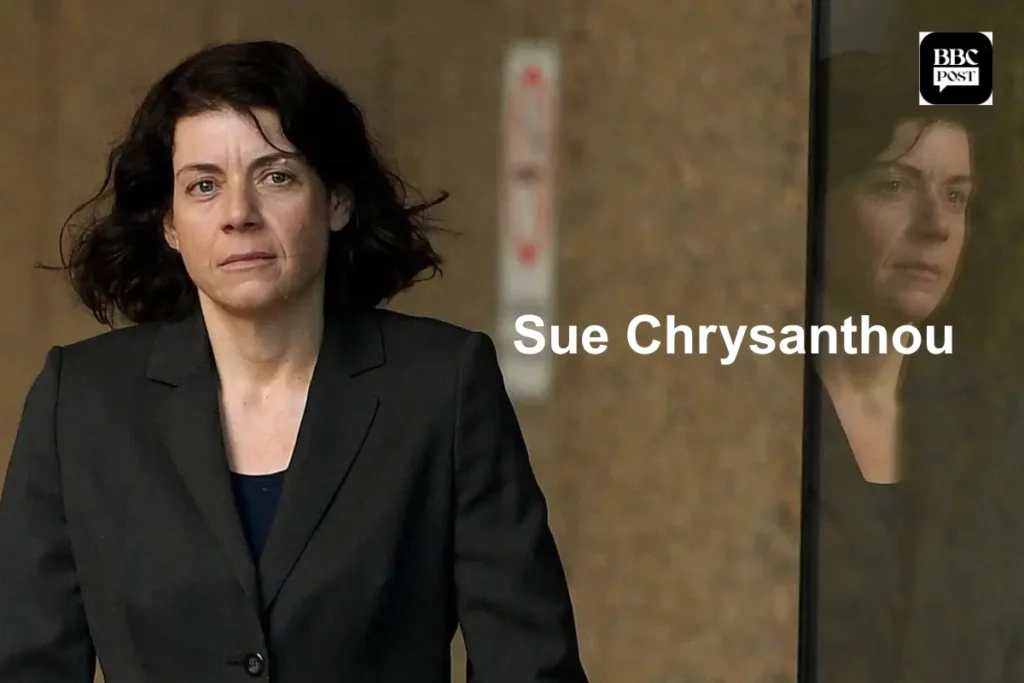
In discussions about the revision of defamation laws, Sue Chrysanthou has been outspoken. She has maintained that recent modifications to the Uniform Defamation Laws have not taken into account the difficulties that regular people encounter. She has brought attention to instances in which people had to pay more than $100,000 in legal fees for internet postings that are promptly taken down and followed by an apology.
The significant injury standard, the notification procedure, and the revisions that permit courts to calculate expenses after a party’s passing have all drawn criticism from her. Additionally, she has voiced her worry that the public interest defence fails to take into account the reality of digital publication.
According to her, defamation laws need to adapt to technology advancements and should prioritise national uniformity, justice, and accessibility above disjointed state-based strategies.
International Women’s Day, Gender, and Leadership
Sue Chrysanthou has discussed gender dynamics in the legal field, particularly in interviews using the hashtag #ChooseToChallenge in honour of International Women’s Day. She has challenged the ongoing emphasis on the identification of female attorneys rather than their skill and condemned gender stereotypes.
She has urged women in the legal profession to express their opinions, defend themselves, and not put up with abuse, no matter who does it. Her counsel to the next generation places a strong focus on self-reliance, discipline, and doing well without being sidetracked by criticism.
Her professional principles have been formed by mentors such as Margaret Beazley AC QC, Justice Lucy McCallum, and Judge Penny Wass. She has praised their brilliance, impartiality, and regard for advocates.
Public Presence and Cultural Recognition
Artist Peter Wegner, the 2021 Archibald Prise winner, created an oil portrait of Sue Chrysanthou. Wegner claims that after seeing her handle a slander case webcast, he was motivated by her enthusiasm and the custom of interrogation in a courtroom.
She is seen in the photo sporting Senior Counsel robes and a silver bracelet that her four children gave her, which captures a feeling of life outside of the courtroom as well as a professional moment.
Business, Finances, and Professional Organisation
Sue Chrysanthou is a barrister by profession. There is no documentation of company ownership or commercial endeavours, and her income comes from legal services done via chambers. Information on her personal fortune is unavailable.
Conclusion
The career of Sue Chrysanthou SC illustrates the reality of practicing law at the intersection of public scrutiny, power, and reputation. She has established herself as a powerful defamation and media law counsel over more than 20 years at the New South Wales Bar, participating in cases that have influenced how Australian courts handle disputed speech and personal injury. Her writings have impacted legal theories about political debate, media accountability, and the boundaries of publishing in the digital era.
Her career path has not been without difficulties. The obligations imposed on senior advocates working in the most well-known and contentious fields of law are exemplified by early career pressures, high-risk litigation, and public disciplinary scrutiny. Her promotion to Senior Counsel, participation in historic cases, and continued engagement in discussions about legal reform, however, show her enduring professional status and impact.
Outside of the courtroom, Sue Chrysanthou has kept her private life under strict control while letting interviews and cultural recognition reveal aspects of her ideals and interests. When considered together, her career provides insight into the demands, obligations, and difficulties of contemporary defamation practice in Australia, where public responsibility, ethical judgement, and legal expertise are continuously put to the test.
FAQs
What is Sue Chrysanthou known for?
Sue Chrysanthou SC is known as a senior Australian barrister specialising in defamation and media law. She has appeared in high-profile cases involving major media organisations, politicians and public figures, and is recognised for her work in reputation and publication disputes.
How old is Sue Chrysanthou?
Sue Chrysanthou’s age has not been publicly disclosed. Her year of birth does not appear in court records, interviews or professional biographies, and there is no reliable source confirming her exact age.
Who are some of Sue Chrysanthou’s clients?
Sue Chrysanthou has acted for a range of high-profile clients in defamation matters, including Geoffrey Rush, Sarah Hanson-Young, Lisa Wilkinson, and individuals involved in cases such as Hanson-Young v Leyonhjelm, Rush v Nationwide News, Lehrmann v Wilkinson, and Deeming v Pesutto. She has acted for both plaintiffs and defendants.
Who is the richest barrister in Australia?
There is no authoritative or publicly available ranking of the richest barristers in Australia. Barristers’ earnings are private, and wealth is not publicly reported or verified. Any claims naming a “richest” barrister are speculative.
Who is Chrysanthou defamation lawyer?
Sue Chrysanthou SC is a defamation lawyer and Senior Counsel at the New South Wales Bar. She practises from chambers in Sydney and is known for her focus on defamation, media law, privacy and breach of confidence matters.
How old is Sue in Puberty Blues?
This question does not relate to Sue Chrysanthou SC. Puberty Blues is a fictional work with unrelated characters. Sue Chrysanthou is not a character in Puberty Blues, and there is no connection between the two.
Who are the parents of Sue Chrysanthou?
Information about Sue Chrysanthou’s parents has not been publicly disclosed. Their names, backgrounds and occupations do not appear in published interviews, court material or professional profiles.
How old is Sue in F Is for Family?
This question does not relate to Sue Chrysanthou SC. F Is for Family is an animated television series with fictional characters. Sue Chrysanthou has no connection to the show, and the character named Sue in that series is unrelated.

