

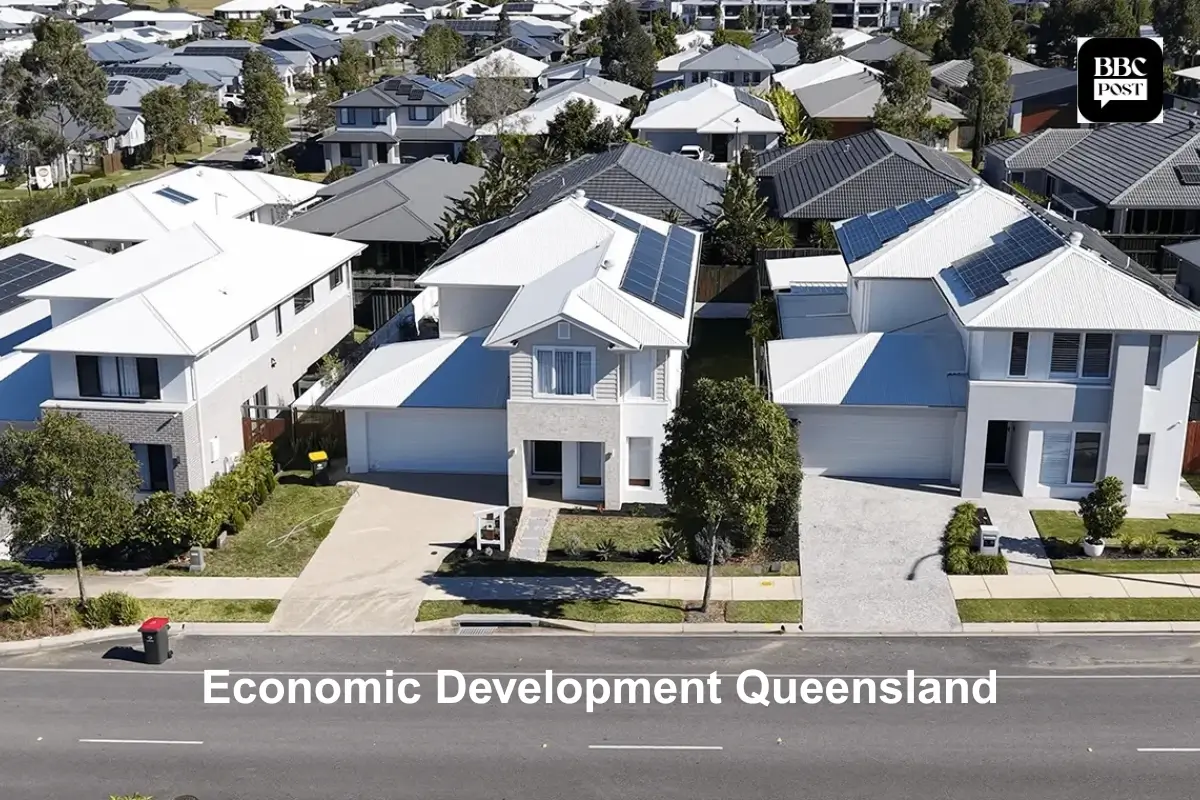
Development of the Economy The Queensland Government’s development framework includes Queensland, sometimes referred to as EDQ, as a primary delivery agency. As the state’s specialised land use planning and development authority, it collaborates with local governments, businesses, and communities to provide housing, economic development, and liveable environments quickly and efficiently. In order to accomplish results that promote Queensland’s long-term prosperity, economic development Queensland’s job goes beyond just supervising planning; it also involves land activation, coordinating infrastructure, and interacting directly with the development market.
In order to tackle the issues brought about by population increase, housing demand, and the need of industrial development, EDQ was founded. In contrast to conventional government agencies that prioritise policy or regulation, EDQ integrates property development capabilities with statutory planning authority. The agency can work swiftly, collaborate across government, and lower obstacles that may cause large development projects to be delayed thanks to its hybrid structure.
The Economic Development Act of 2012 and the legal jurisdiction of EDQ
The Economic Development Act of 2012 is the cornerstone of economic development in Queensland. This law establishes EDQ’s legislative authority as well as its duties, obligations, and standards for accountability. The Act gives EDQ the authority to manage land, promote development, and collaborate with the private sector to open doors for economic expansion that will benefit Queenslanders.
The designation and administration of Priority Development Areas is a crucial role made possible by the Act. These regions enable EDQ to implement a unified development plan in strategically significant areas, substituting a simplified framework for disjointed planning controls. The Act also lays out EDQ’s reporting and governance responsibilities, including the need to prepare operational and strategic plans as well as yearly reports that are presented to Parliament.
The Economic Development Act of 2012 is intended to enable EDQ to take decisive action while upholding accountability and openness. It guarantees that EDQ can adapt to infrastructure requirements and market circumstances without jeopardising public scrutiny.
The activities of Queensland’s Economic Development
Development of the Economy Queensland is the land use planning and development department of the Queensland Government. Its goals include coordinating the delivery of infrastructure, releasing land for industry and housing, and supporting initiatives that boost the state’s economy and generate employment. To align public and private interests, EDQ collaborates with developers, investors, local authorities, and community groups.
Finding property that is suited for development, overcoming infrastructural and planning restrictions, and assisting with projects that increase the supply of homes and stimulate the economy are all important aspects of EDQ’s work. This covers projects on excess government property that may be used for mixed-use, residential, or industrial development as well as projects in Priority Development Areas.
Accelerated growth and priority development areas
One of Queensland’s most prominent strategies for economic growth is Priority growth Areas, or PDAs. PDAs are created in areas deemed essential to the provision of housing, the expansion of jobs, or urban regeneration. They were declared under the Economic Development Act of 2012.
EDQ creates a development plan that outlines land usage, infrastructure needs, and development criteria within a PDA. Multiple levels of planning regulation are replaced by this unified framework, which also makes it possible to evaluate development applications more quickly and clearly. Large housing complexes, mixed-use districts, industrial estates, and transportation-oriented developments are all delivered utilising PDAs.
Through PDA management, EDQ actively influences the planning and implementation of significant growth regions around Queensland.
The distinction between industrial land development and EDQ
Development of the Economy In order to attract investment and employment, Queensland places a lot of emphasis on the development of industrial property. In order to maintain current industry and draw in new company investment, EDQ provides industrial land options for more than seventeen industrial sites around Queensland.
A wide range of industrial uses, such as manufacturing, transportation and logistics, resource processing, mining equipment and technology services, energy and renewables, food production, resource recovery, aerospace and defence, and related supporting activities, can be accommodated on the land developed by EDQ. Recognising that large-scale projects are complicated and need confidence, EDQ opens up and de-risks land for industrial development to generate possibilities.
EDQ provides contractual structures that enable proponents to do due diligence prior to acquisition in order to facilitate informed decision-making. The exclusive securing of land for the length of the application and approval procedure gives approved applicants additional assurance. This strategy lowers business risk and encourages long-term investment choices.
The Queensland Board for Economic Development and Governance
The Economic Development Queensland Board, an independent body, is in charge of overseeing Economic Development Queensland. The board is in charge of establishing the strategic direction of EDQ, managing governance, and making sure that the Economic Development Act of 2012 and other pertinent laws are followed.
The board oversees key projects, adopts strategic objectives, and keeps an eye on organisational performance. By suggesting candidates for the Chief Executive Officer, it also contributes to executive leadership. EDQ strikes a balance between operational freedom and public and governmental responsibility with this governance system.
Executive leadership and the CEO of Economic Development Queensland
The CEO of Economic Development Queensland is in charge of running the organisation on a daily basis and carrying out the plan that the board and government have established. Throughout the state, the CEO is in charge of infrastructure coordination, land activation projects, housing delivery programmes, and stakeholder engagement.
After serving as Acting CEO for a while, Julian Simmonds was named as Economic Development Queensland’s current CEO. The EDQ Board recommended his nomination, which was then approved by the government. His responsibilities include spearheading EDQ’s delivery emphasis and enhancing collaborations with local government and business.
Debbie McNamara was formerly Economic Development Queensland’s CEO. Throughout her tenure, EDQ maintained its status as a delivery-focused organisation that prioritised service improvement and public-private partnerships. At EDQ, changes in leadership are handled within the framework of governance set by law and board supervision.
Queensland’s Minister of Economic Development
Development of the Economy A responsible Queensland Government Minister is in charge of overseeing Queensland’s operations. EDQ is usually within the purview of ministerial ministries that deal with infrastructure, planning, state development, or economic development. The Minister provides political responsibility and policy direction, however the precise title may vary based on the organisation of the government.
It is crucial to remember that Australian Business Numbers are not assigned to ministerial titles. Ministerial offices and portfolio titles are not covered by ABNs; only legal companies are.
Queensland’s Department of Economic Development and typical misunderstandings
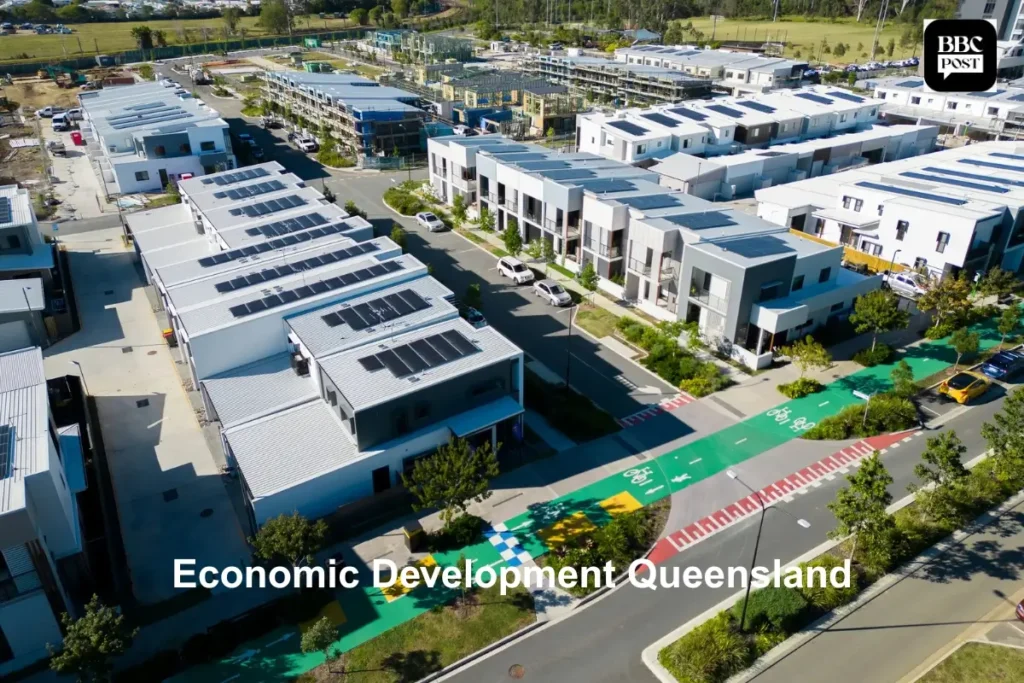
A “Department of Economic Development Queensland” is often mistaken for Economic Development Queensland. EDQ is not a regular department in practice. With its own board, executive leadership, and reporting requirements, it functions as an independent statutory entity.
EDQ is a distinct organisation that focuses on development delivery rather than just policy administration, even though it collaborates closely with government agencies in charge of planning, transportation, housing, and infrastructure.
Offices and contact information for Economic Development Queensland
Development of the Economy Brisbane serves as the home base for Queensland’s central government, which supports regional and urban activities across the state. EDQ uses its offices and formal communication channels to interact directly with local governments, companies, and developers.
EDQ offers direct contact alternatives, including phone help for stakeholders like real estate brokers, for queries about industrial land and development. Additionally, EDQ publishes comprehensive guidelines that outline eligibility criteria and circumstances under which agents are acknowledged for real estate agents who want to offer industrial property under its management.
Jobs and careers in Economic Development Queensland
Economic Development Queensland’s wide range of responsibilities is reflected in its employment. Planning, land and property development, infrastructure coordination, economics, project management, stakeholder involvement, and corporate services are all frequent areas of employment.
EDQ’s website and the official Queensland Government recruiting channels are used to post job openings. Professionals who want to work on initiatives that influence Queensland’s growth and contribute to long-term development results are drawn to careers at EDQ.
Annual report and responsibility from Economic Development Queensland
In compliance with legal requirements, Economic Development Queensland releases an annual report every fiscal year. A thorough description of EDQ’s operations, governance, financial results, and progress towards strategic goals is given in the annual report.
Housing approvals inside Priority Development Areas, land activation results, infrastructural coordination projects, and organisational performance are usually included in these reports. Annual reporting guarantees openness and enables the public and Parliament to evaluate the efficacy and effects of EDQ.
Queensland’s ABN framework for economic development
Economic Development Queensland functions within the financial and legal framework of the government as a statutory body created by Queensland statute. Because financial arrangements are often administered via whole-of-government frameworks, government bodies do not usually have independent ABNs in the same manner that private firms do.
Official government records, not commercial company registers, are used for any formal verification of ABN-related information.
The logo and identity of Economic Development Queensland
Digital portals, yearly reports, and official publications all utilise the Economic Development Queensland logo. It symbolises EDQ’s function as a government agency and is a component of the Queensland Government’s branding strategy. Official brand and intellectual property standards regulate how the logo is used.
Development economics and educational routes
Jobs that support economic growth Academic credentials in economics, planning, public policy, and development studies are often used to support Queensland. Economic and analytical skills necessary for positions in economic development and planning are provided by programmes like the University of Queensland’s Master of Development Economics.
The competence gained from postgraduate study in development economics strongly corresponds with the analytical, strategic, and policy-focused parts of EDQ’s work, even though EDQ does not operate education programmes.
EDQ’s function in Queensland’s future
Development of the Economy Queensland is essential to controlling the state’s expansion. Coordinated planning and execution are necessary to meet housing demand, infrastructural investment, and economic diversification. EDQ is in a position to address these issues in a useful and delivery-focused manner by fusing legislative power with development competence.
Economic Development Queensland continues to have an impact on the planning and delivery of Queensland’s communities and employment centres via land activation, industrial development, and collaboration with industry and government.
Conclusion
Development of the Economy The foundation of Queensland’s development system is the state. Operating at the nexus of planning, development, and economic growth, EDQ was founded under the Economic Development Act of 2012 and is overseen by an executive team answerable to the government and controlled by an independent board.
Economic development Queensland contributes significantly to the future of the state and the prosperity of Queenslanders by releasing land, speeding up the construction of new homes, and encouraging investment that creates jobs.
FAQs
Who is the CEO of Economic Development Queensland?
The Chief Executive Officer of Economic Development Queensland (EDQ) is Julian Simmonds. He was appointed to the role following a period as Acting CEO and leads EDQ’s work in land use planning, housing delivery, infrastructure coordination and economic development across Queensland.
What does economic development in Queensland do?
Economic development in Queensland focuses on supporting business growth, job creation, housing supply and infrastructure delivery. Through agencies such as Economic Development Queensland, the Queensland Government works to unlock land, attract investment, support industry expansion and plan well-located, liveable communities that can accommodate population growth.
What is the $20,000 employment incentive in QLD?
The $20,000 employment incentive commonly refers to Queensland Government employer incentive programs that provide payments of up to $20,000 to businesses that hire eligible unemployed jobseekers. These incentives are usually targeted, time-limited and subject to eligibility rules such as the age of the employee, duration of unemployment and location of the business.
Is Economic Development Queensland a statutory body?
Yes. Economic Development Queensland is a statutory body established under the Economic Development Act 2012. This means it is created by legislation, has defined legal powers and responsibilities, and operates independently within a government accountability framework rather than as a traditional department.
What is the $10,000 wage subsidy?
The $10,000 wage subsidy generally refers to Australian or Queensland Government programs that support employers who hire eligible jobseekers, such as mature-age workers or long-term unemployed people. These subsidies are paid over time and are subject to specific eligibility and compliance requirements set by the administering agency.
Who is eligible for the $750 Centrelink payment?
The $750 Centrelink payment was a one-off Economic Support Payment introduced during the COVID-19 period. It applied only to people who were receiving certain Centrelink payments or concession cards at that time. It is not an ongoing payment, and new claims for the $750 payment are not available.
Does everyone get a pay rise in July 2025?
No. Not everyone receives a pay rise in July 2025. Pay increases depend on factors such as award wage decisions by the Fair Work Commission, enterprise agreements, individual contracts and employer policies. While minimum and award wages are often reviewed annually, a pay rise is not automatic for all workers.
What is the $5,000 return to work payment?
The $5,000 return to work payment usually refers to targeted government incentives designed to help people re-enter the workforce, such as parents, carers or people returning after a long break. These payments are program-specific, time-limited and subject to eligibility criteria, including employment type, hours worked and residency.

