

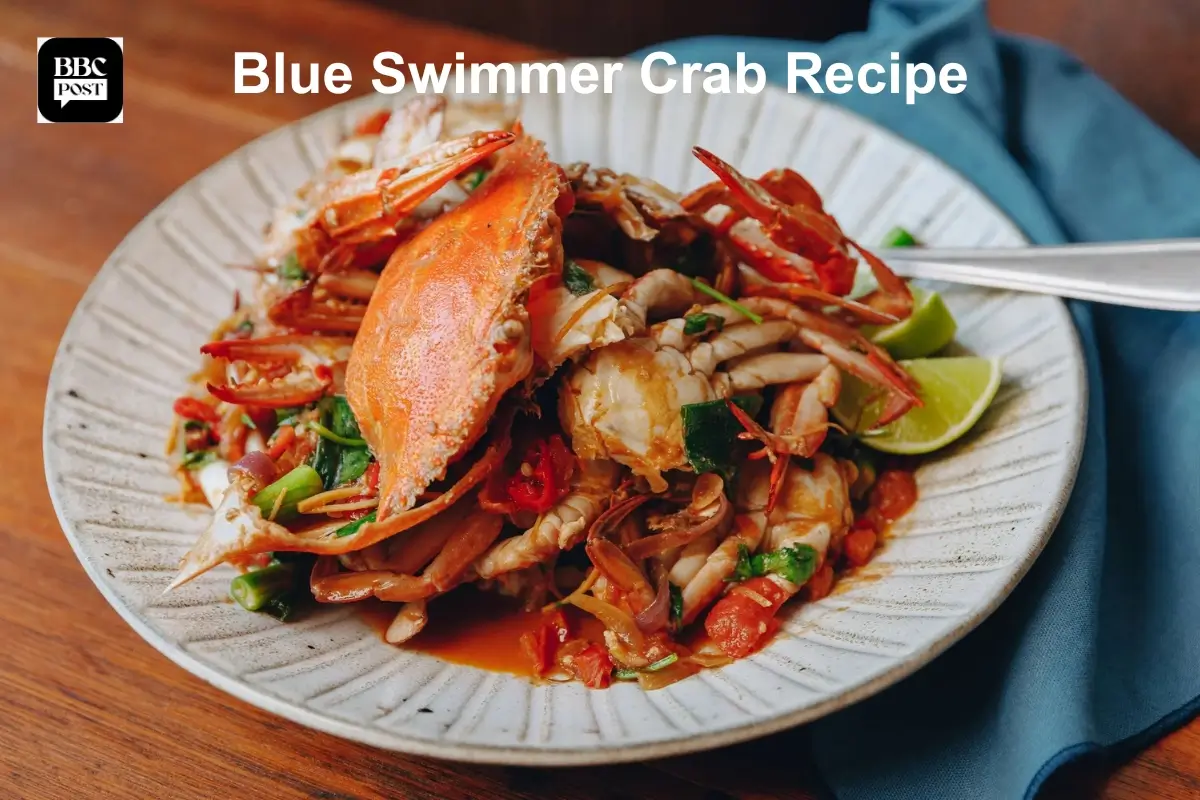
Singapore chilli Blue Swimmer Crab Recipe is one of Southeast Asia’s most iconic seafood dishes, famous for its rich tomato-based sauce, gentle chilli warmth and deeply savoury finish. When prepared with Australian blue swimmer crab, the dish becomes lighter, sweeter and particularly well suited to summer cooking and relaxed coastal dining. Blue swimmer crab offers a delicate texture that allows the sauce to enhance rather than overpower the natural flavour of the seafood.
In Australia, blue swimmer crab is widely available across Western Australia, South Australia, Victoria and New South Wales, making it an accessible option for home cooks who want to prepare a restaurant-quality seafood dish without the cost or heaviness of mud crab. This version follows the core principles of Singapore chilli crab while adapting the ingredients and techniques to Australian kitchens and produce.
This guide goes beyond a simple recipe. It explains ingredient choices, crab selection, preparation techniques, heat control, doneness cues, common mistakes and serving traditions so you understand not just how to cook the dish, but why each step matters.
Why blue swimmer crab works for Singapore chilli crab
Blue swimmer crab has a naturally sweet, clean flavour and a finer texture than mud crab. These qualities make it particularly well suited to tomato-based sauces that rely on balance rather than intensity.
Its main advantages include:
- Sweet, delicate flesh that absorbs sauce quickly
- Faster cooking time, reducing the risk of overcooking
- A lighter mouthfeel that suits warm-weather meals
- Greater availability and affordability in Australia
Because blue swimmer crabs are lean, precise timing and proper heat are essential. When handled correctly, the meat remains tender and juicy while carrying the full flavour of the chilli tomato sauce.
Understanding Singapore chilli crab flavours
Despite its name, Singapore chilli crab is not designed to be aggressively spicy. Traditional versions focus on harmony, allowing sweetness, acidity, savouriness and mild heat to work together.
The defining flavour elements are:
- Fresh tomato for natural sweetness and acidity
- Long red chilli for warmth rather than sharp heat
- Garlic and ginger for aromatic depth
- Kecap manis for savoury richness and gentle sweetness
- Crab juices released during cooking that enrich the sauce
The sauce should be glossy and spoonable, coating the crab without becoming thick or sticky. When done correctly, it settles into the cracks of the shell and flavours every bite.
Choosing the right blue swimmer crab
Freshness is critical when cooking crab. Blue swimmer crab should always smell clean and ocean-fresh. Any strong ammonia or sour smell indicates spoilage and the crab should not be used.
When buying crab, it helps to understand what you’re getting:
- Live crabs should be active, with intact shells and strong claws
- Raw cleaned crab should be firm, moist and stored on ice
- Pre-cooked crab is suitable but must only be reheated briefly
Two large blue swimmer crabs usually weigh around 1 to 1.2 kilograms total and comfortably serve two people as a main dish or three people as part of a shared seafood meal.
Humane handling and preparation
This recipe assumes the use of fresh raw cleaned crab or live crab that has been humanely dispatched and cleaned. If using live crab, humane dispatch should always be done before cleaning.
Proper preparation serves both flavour and practicality. The legs and claws are twisted off first, making the crab easier to handle in the wok. The shells are then gently cracked using the blunt side of a knife or a mallet. This step is essential not just for eating convenience, but because it allows the sauce to penetrate the shell and reach the meat.
The crab bodies are cut into halves or quarters depending on size. Care should be taken not to shatter the shell, as intact pieces help protect the meat from direct heat during stir-frying. Once prepared, the crab should rest briefly at room temperature so it cooks evenly.
Why high heat and peanut oil matter
Singapore chilli crab is traditionally cooked in a very hot wok. Peanut oil is preferred because it has a high smoke point and a neutral flavour that does not interfere with the aromatics or the crab.
The wok should be heated until the oil just begins to smoke. This ensures:
- The crab sears rather than stews
- The shell develops colour and flavour
- Natural crab juices are released into the pan
Starting with a hot wok is one of the most important steps in the recipe.
Cooking the crab and building the sauce
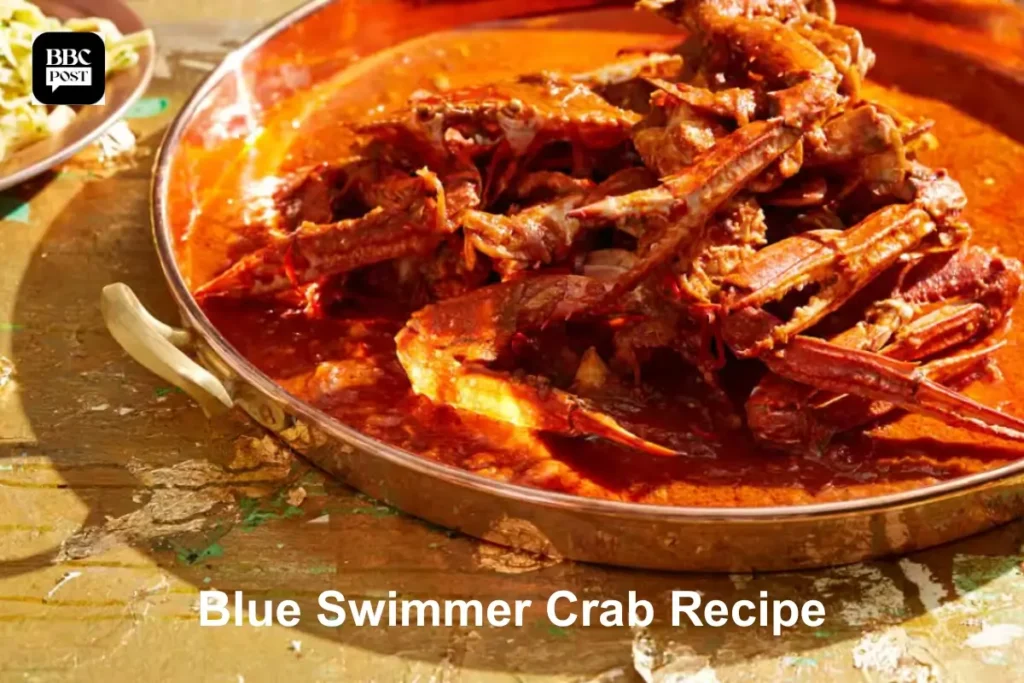
The crab is added to the hot oil first and stir-fried vigorously. This initial stage colours the shell and lays the foundation for the sauce. As the crab cooks, the shell turns a bright orange-red and releases briny juices that combine with the oil.
Aromatics are added next, including red onion, garlic, ginger, chilli and spring onion. These should be cooked quickly, just until fragrant. Browning garlic or ginger can introduce bitterness, so this stage should take no more than a minute.
Chopped tomatoes follow, along with Chinese rice wine, brown sugar and kecap manis. As the tomatoes soften, they break down into a thick, glossy sauce. The rice wine adds depth, the sugar balances acidity, and the kecap manis contributes savoury sweetness and colour without heaviness.
If the sauce thickens too quickly, a small splash of water can be added to loosen it without diluting flavour.
Cooking time, texture and doneness
Blue swimmer crab cooks very quickly, and overcooking is the most common mistake. From the moment the crab enters the wok, total cooking time should not exceed ten minutes.
Perfectly cooked crab shows clear signs:
- The flesh turns opaque white
- The meat pulls away easily from the shell
- The texture is moist and tender, not stringy
Undercooked crab appears translucent and gelatinous, while overcooked crab becomes dry and fibrous. Residual heat continues cooking the crab after the wok is removed from heat, so stopping slightly early prevents dryness.
Common mistakes to avoid
Several small errors can affect the final result:
- Cooking on low heat, which causes the crab to stew
- Over-reducing the sauce until it becomes sticky and sweet
- Burning garlic or ginger
- Adding crab too late after the sauce is already thick
- Overcooking pre-cooked crab instead of simply reheating
Avoiding these mistakes ensures the crab remains the focus of the dish.
Serving Singapore chilli blue swimmer crab
This dish is traditionally served as a shared centrepiece. Fresh coriander is scattered over the top just before serving, adding colour and brightness that cuts through the richness of the sauce.
Classic accompaniments include
- Steamed jasmine rice to absorb the sauce
- Fried or steamed mantou buns
- Crusty bread as a practical Australian alternative
Singapore chilli crab is meant to be eaten with your hands. Cracking claws, pulling apart legs and picking meat from the shell is part of the experience and encourages slow, social eating.
Nutrition and suitability
Blue swimmer crab is naturally high in protein, low in fat and rich in minerals such as zinc and selenium. Despite the richness of the sauce, the dish feels light because the crab itself is lean and the sauce relies on tomato rather than cream or butter. This makes it particularly suitable for summer meals.
Authenticity and Australian adaptation
This recipe is a Singapore-style chilli crab, adapted for Australian kitchens. Traditional Singapore versions sometimes include fermented chilli paste or egg stirred into the sauce. This version keeps the flavour profile familiar while using ingredients that are widely available in Australia and suited to blue swimmer crab’s delicate texture.
Storage and food safety
Singapore chilli blue swimmer crab is best eaten immediately. If leftovers are unavoidable, they should be cooled quickly and refrigerated in an airtight container.
Safe handling guidelines include:
- Refrigerating within two hours of cooking
- Consuming within 24 hours
- Reheating gently on the stovetop with a splash of water
Microwaving is not recommended, as it toughens the meat and alters the sauce texture.
Final thoughts
Singapore chilli blue swimmer crab is a dish built on freshness, timing and balance rather than complexity. When cooked with care, it delivers sweetness, warmth and savoury depth without heaviness. By choosing fresh Australian blue swimmer crab, controlling heat and respecting the cooking time, home cooks can confidently recreate this iconic dish with outstanding results.
What is the best way to cook blue swimmer crabs?
The best way to cook blue swimmer crabs is quickly and simply, using high heat to protect their delicate meat. Popular Australian methods include stir-frying in garlic butter, steaming, boiling in well-salted water, or cooking in a chilli-tomato sauce. Blue swimmer crab cooks fast, so avoiding overcooking is key to keeping the flesh sweet and tender.
How do Australians eat blue swimmer crab?
In Australia, blue swimmer crab is usually eaten by hand rather than with cutlery. The legs and claws are twisted off and cracked, while the body meat is picked from the shell. Crabs are often served in the middle of the table with lemon wedges, bread or chips, and plenty of napkins, making it a relaxed, shared seafood experience.
FAQs
Are blue swimmer crabs edible?
Yes, blue swimmer crabs are completely edible and are one of Australia’s most popular crabs. They are prized for their sweet, delicate flesh and are commonly sold fresh, cooked or cleaned at Australian fishmongers. When fresh and properly handled, they are safe and delicious to eat.
What do blue swimmer crabs taste like?
Blue swimmer crab has a mild, sweet flavour with a clean ocean taste. The meat is lighter and more delicate than mud crab, making it ideal for simple cooking methods and light sauces that enhance rather than overpower its natural sweetness.
What part of a blue crab should you not eat?
The parts of a blue swimmer crab that should not be eaten include the gills, often called “dead man’s fingers”, and the internal organs found under the top shell. These are removed during cleaning, leaving only the body, leg and claw meat for eating.
How many blue swimmer crabs should you eat per person?
As a general guide, allow one large blue swimmer crab per person for a main meal, or half to three-quarters of a crab per person when serving as part of a shared seafood platter. Appetite and side dishes will influence how much is needed.
Do you rinse blue swimmer crabs before cooking?
Yes, blue swimmer crabs should be rinsed briefly under cold running water after cleaning to remove any remaining grit or debris. They should not be soaked, as this can wash away flavour and affect the texture of the meat.
How many blue crabs per person for a seafood meal?
For a seafood meal featuring blue swimmer crab as the highlight, plan for one large crab per adult. If the meal includes other seafood such as prawns or fish, half a crab per person is usually sufficient.

