

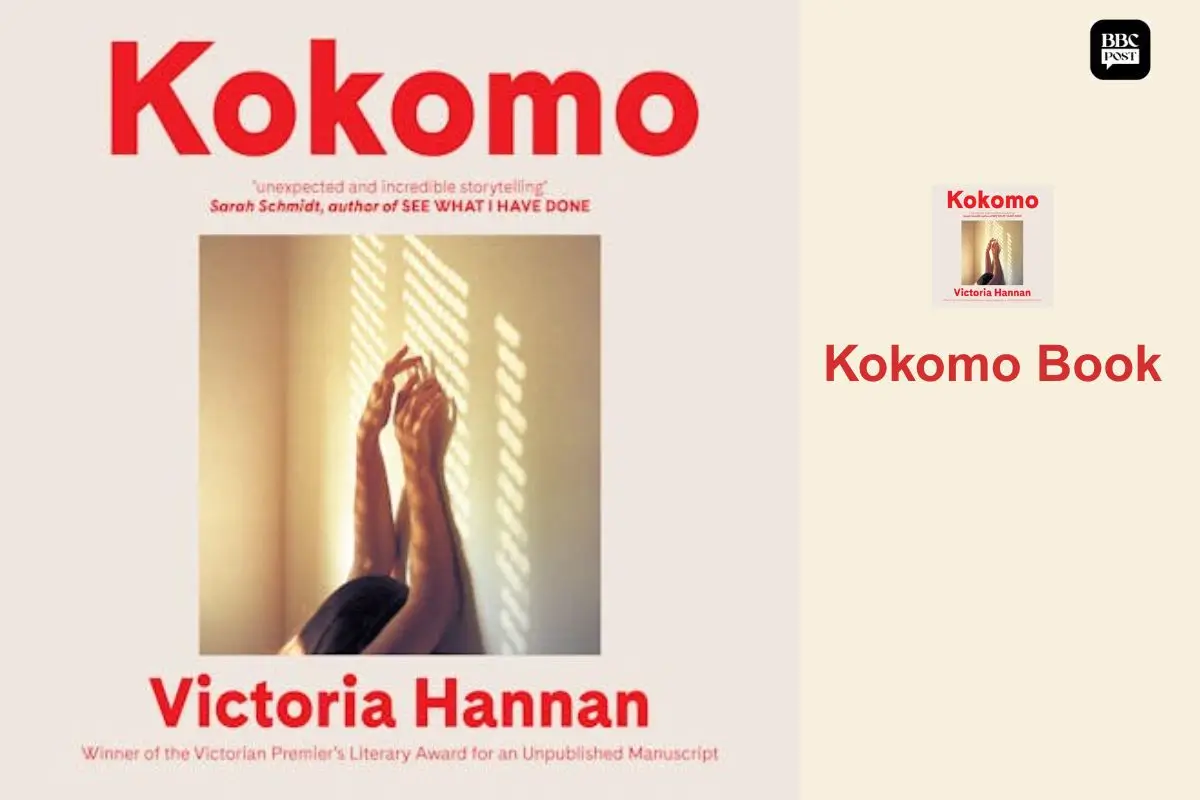
Australian author Victoria Hannan’s first book, Kokomo, was released by Hachette Australia in Australia. The 2019 Victorian Premier’s Literary Award for an Unpublished work, which is often linked to the rise of important new Australian literary voices, brought national notice to the work before the book ever hit the stores.
Kokomo makes it clear from away that it doesn’t care about dramatic turns or neat endings. Rather, it is a book about emotional reality, long-standing compromises, and the subtle ways families manage to endure without finding a solution. It is really a tale about mothers and daughters, expectations and concealment, disappointment and yearning, and the delusion of escape.
Australian reception and publication history
In July 2020, Kokomo became available as an e-book and audiobook. In April 2022, a paperback version was published. It falls under the category of modern and contemporary Australian literature, emphasising relationships and family. The paperback version was published with a suggested retail price of $22.99 in Australia and has the ISBN 9780733648373. The audiobook version, ISBN 9780733643347, was published for $34.99. The eBook version, ISBN 9780733643330, cost $11.99.
Positive reviews of the book were given by Australian media sites. It was a much awaited debut that lived up to the hype, according to The Guardian Australia. Readings complimented the writing’s excellence and emotional control, while ArtsHub emphasised how well it balanced laughter and suffering. The publisher presented the book as a tale about secrets and love and how those forces can both unite and divide people, describing it as delicate and furious, devastating and humorous.
A startling introduction that splits readers
The opening sequence of Kokomo is one of its most talked-about features. A straightforward, explicit sexual experience that is vividly portrayed opens the book. This was disconcerting to many readers, who believed that it did not accurately reflect the remainder of the pages, which are mostly moody, subdued, and controlled. The decision to start the book in this manner was strongly disapproved of by several readers, who said that they would have liked the plot to start with flashback sequences instead of the opening few pages as written.
According to others, the novel’s central theme—that appearances are deceiving—is reflected in the introduction, which they viewed as intentional. Mina, the main character, and Jack, a coworker she has been publicly infatuated with for a long time, are introduced in this scene. The promise of intimacy is dashed and the story is completely redirected when an urgent phone call from Australia unexpectedly interrupts what seems to be a moment of connection.
The novel’s later sex scenes are succinct and straightforward. Some readers thought they were added to give the book a bit of edge since they believed their bluntness did not mesh well with the rest of the book. Although highlighting the difference between desire and sincere love may have been the goal, not all readers found this strategy effective. Others, on the other hand, thought these moments captured the roughness of adult desire and valued their rawness. This dispute is now acknowledged as a component of the book’s reception.
Mina’s life in London prior to her return home
Mina has been employed in advertising in London for around seven years. Her life seems steady on the surface. She is independent, has a job, and is just starting a new relationship. However, the story implies that rather than a sign of contentment, this steadiness is a cover for emotional wandering. Because of Mina’s distance from Australia, unsolved family conflicts have been ignored instead of being handled.
This emotional terrain includes her attraction to Jack. Jack serves as a moment of revelation for Mina rather than a conventional romantic arc, and he symbolises opportunity and diversion rather than depth.
Returning to Melbourne and making the essential phone call
Mina’s closest friend in Melbourne makes the phone call that upends her life. The news is startling and unexpected. For the first time in eleven or twelve years, Mina’s mother, Elaine, who has been withdrawn and mostly confined to her home for over ten years, has abruptly left the house.
Mina has never understood the reason for her mother’s withdrawal from society. Elaine never gave an explanation, and the family eventually accepted her quiet. In response to this abrupt shift, Mina leaves her job, her love, and her life in London and moves back to Melbourne.
Her return is neither nostalgic nor consoling. It has been formed by years of silent history and is tense and emotionally fraught.
Elaine’s protracted seclusion and denial of any explanation
Kokomo’s emotional core is in Elaine’s disengagement from the outside world. Her life has been limited to her house for years. When she eventually departs, she won’t provide an explanation for why she first withheld herself.
In the book, this quiet turns becomes a distinguishing feature. It irritates Mina and makes her reevaluate her preconceived notions about her mother. The final reason for Elaine’s seclusion was deemed anticlimactic by several readers, who also thought it did not fully make sense. Others noted that actual lives never provide clear explanations or satisfactory solutions, and they valued this approach’s realism.
The book portrays Elaine’s loneliness as the result of long-term emotional compromise and repressed longing rather than making a spectacular revelation.
Structure of narratives and changing viewpoints
Kokomo is divided into two separate halves. Because the first half is recounted from Mina’s point of view, readers may perceive Elaine as Mina does: reduced, emotionally aloof, and stuck in a time capsule. Elaine’s point of view takes over in the second half.
Many people consider this change of viewpoint to be one of the novel’s strongest points. Elaine is shown to be a very complicated person who is moulded by remorse, yearning, and self-control when her inner world is exposed. Events that were previously interpreted via Mina’s perspective are reframed, emphasising how silence and misunderstandings skew perceptions over time.
The deft way that Mina and Elaine’s tales intersected, revisiting and changing similar memories via perspective, was widely commended by readers.
Elaine’s house as a mental prison
Although Elaine’s home serves as a makeshift jail, the book makes it apparent that she is not just physically confined there. Her retreat is a reflection of a deep-seated desire for a new life that she was never allowed to publicly pursue.
Compromise evolved into resignation over decades, and resignation solidified into retreat. Elaine’s loneliness is shown as the result of a series of emotional confinement and postponed need rather than as a sudden collapse. Her conflicts are left unresolved in the story, which neither condones nor denounces her choices.
Daughters, mothers, and inherited expectations
Kokomo is really a book about moms and daughters. Silence, disappointment, and expectations limit Mina and Elaine’s love for one another. Their relationship is characterised by loyalty without emotional clarity, caring coupled with bitterness, and avoidance rather than confrontation.
The notion that secrets do not necessarily lead to family disintegration is among the novel’s most stunning concepts. Relationships may endure because of them at times. This implies that love may coexist with emotional distance and casts doubt on the notion that honesty is always restorative.
Jack, passion, and narrative control
Jack has a small but significant part in the book. He stands for projection, yearning, and the propensity to mistake closeness for attention. Significantly, many commended Hannan in particular for not criticising Mina’s choices about Jack or Elaine’s final choice to tell her tale. Readers cited this restraint as one of the reasons the book remained captivating and hard to put down, since it maintained a steady tempo.
Diversity, secondary personalities, and covert influence
As the narrative progresses, an important supporting character is introduced: a Chinese-Australian family who had been across the street from Elaine since before Mina was even conceived. Mina eventually comes to the realisation that this family has influenced her life and her mother’s decisions more than she ever realised.
Mina’s perception of her past is altered by the history between the two families. Australian response emphasised how, without the author speaking outside of her own experience, diversity is weaved throughout the book in a manner that seems authentic and representative of daily multicultural Australia. An earlier misidentification was corrected in a September 2020 publication, which made it clear that the neighbours are Chinese-Australian.
An entirely Melbourne book
Because it captures the emotional and suburban essence of the city, rather than because it makes mention to famous landmarks, Kokomo is sometimes referred to be a genuinely Melbourne book. The story is anchored by seasonal characteristics, such as late-summer gum blossoms or early-spring moist leaves and dewy grass. The novel’s feeling of location and authenticity are strengthened by quiet streets, confined houses, and daily routines.
Duality and the title’s meaning
Duality permeates every aspect of the book. Characters live a different life on the inside while presenting one version of themselves to the outside world. Throughout the narrative, there are contrasts between voice and quiet, freedom and imprisonment, and love and disillusionment.
The Beach Boys song “Kokomo,” which promises a dreamy tropical getaway, is referenced in the title. The song’s promise is deceptive since the book makes it clear that Kokomo is not the utopia it seems to be and is instead described as an industrial city in Indiana. This concept, which reflects fictitious promises of escape and imagined futures, turns into a major metaphor for the book.
Writing comedy, imagery, and style
Although Hannan’s writing is precise and disciplined, comedy and surprise are nevertheless allowed. Her use of strange and surprising imagery, including scenes that derail emotional intensity with stunning detail, to shake the reader out of complacency was praised by Australian reviewers. This strategy is best shown by scenes in which a prospective partner shows up to a costume party dressed as Hillary Clinton or in which a dog clumsily interrupts an emotional reunion.
Emotional suffering coexists with humorous moments, such as household settings and informal conversations about food and daily life. This harmony gives the book a more realistic feel while keeping it from being overpowering.
Moral quandaries and the attractiveness of book clubs
Because it poses obvious moral questions and encourages “What would you do?” discussions, Kokomo is often referred to as a great book group book. Readers are urged to think about whether love always necessitates the truth, what a kid owes a parent, and when quiet becomes detrimental.
These concerns are essential to the novel’s enduring influence and persist into the last page.
Why Kokomo persists
Kokomo stays away from tidy resolutions. In keeping with its dedication to emotional reality, its conclusion is left open-ended. After completion, the novel’s effect often increases as the weight of its decisions and the meaning of its title become clear.
Kokomo presents Victoria Hannan as a writer who is acutely aware of the intricacies of love, remorse, and familial relationships. She is often referred to as an Australian reaction to emotionally charged contemporary literature like Normal People, and other critics have compared her to Monkey Grip for a new generation.
By emphasising emotional truth above dramatic payoff, Kokomo lingers due of the unsolved issues rather than the events that transpire.
Conclusion
Victoria Hannan’s Kokomo is a book that lingers with readers because to its emotional honesty rather than its dramatic turns or neat conclusions. The novel illustrates how love may coexist with disappointment without ever entirely resolving it via the broken relationship between Mina and Elaine. It also conveys the silent harm caused by silence, anticipation, and postponed yearning.
Hannan challenges readers to reconsider hasty decisions and acknowledge the limitations of any one account of the past by alternating between the perspectives of mother and daughter. Because of the novel’s Melbourne locale, subtle humour, and frightening imagery, its topics are grounded in ordinary life and the emotional conflicts are familiar rather than heightened. Even the contentious beginning and frank sex scenes add to a larger discussion on image vs reality, desire versus connection, and the coping mechanisms individuals use to justify their actions.
In the end, Kokomo refuses to provide definitive answers. Rather, it challenges readers to sit with uncertainty and think about what they could do in comparable moral situations. In doing so, it establishes Kokomo as a contemplative, protracted examination of love, concealment, and the boundaries of escape and validates Victoria Hannan as a significant voice in modern Australian literature.
FAQs
What is Kokomo by Victoria Hannan about?
Kokomo is a contemporary Australian novel about a fractured mother–daughter relationship. It follows Mina, who returns from London to Melbourne after her reclusive mother unexpectedly leaves the house for the first time in over a decade. The story explores love, secrecy, longing and the emotional cost of silence within families.
Why does Kokomo begin with a sex scene?
The novel opens with an explicit sex scene to unsettle the reader and challenge expectations. Many readers believe it highlights the contrast between surface-level desire and deeper emotional connection, a theme that runs throughout the book, even though the opening divided opinion.
Who are the main characters in Kokomo?
The central characters are Mina, a woman living in London who returns home to Australia, and her mother Elaine, who has been reclusive for many years. Jack, Mina’s colleague and romantic interest, plays a smaller but important role in highlighting themes of desire and distraction.
Why was Elaine housebound for so many years?
Elaine’s long isolation is explained gradually and without dramatic revelation. The novel presents her withdrawal as the result of emotional compromise, suppressed desire and long-term resignation rather than a single defining event, which some readers found realistic and others found understated.
Is Kokomo set in Melbourne?
Yes. Kokomo is set in Melbourne and is often described as a thoroughly Melbourne novel. It captures the emotional texture of suburban life through seasonal detail, domestic routines and quiet neighbourhood settings rather than relying on famous landmarks.
What does the title Kokomo mean in the novel?
The title comes from the Beach Boys song “Kokomo”, which promises an idyllic escape. In the novel, this promise is revealed as misleading, turning the title into a metaphor for imagined futures, false escapes and the gap between expectation and reality.
Is Kokomo a good book club choice?
Yes. Kokomo is well suited to book clubs because it raises clear moral questions about family responsibility, honesty, love and silence. It encourages “What would you do?” discussions rather than offering definitive answers.
Why is Kokomo considered an important Australian debut?
Kokomo won the 2019 Victorian Premier’s Literary Award for an Unpublished Manuscript before publication and received strong reviews from Australian critics. Its emotional realism, confident structure and nuanced portrayal of family relationships established Victoria Hannan as a significant new voice in Australian fiction.

