

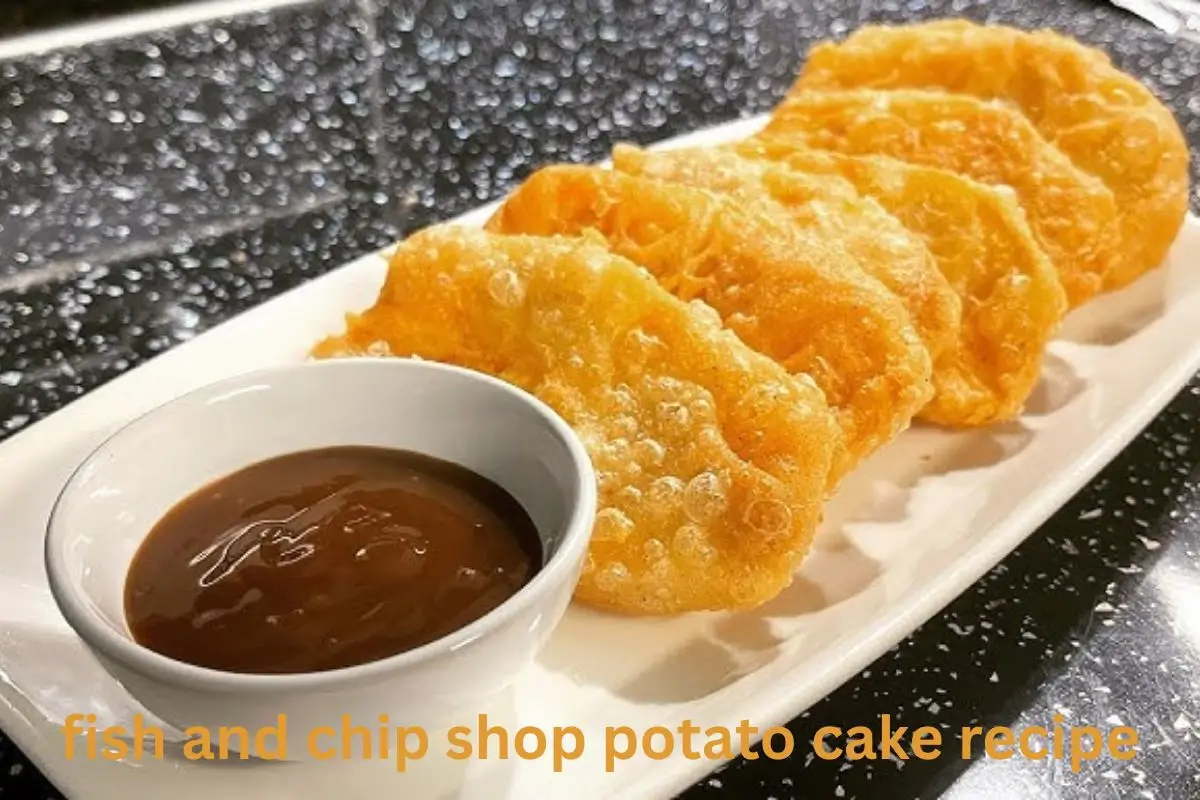
There are many things people miss about living in Australia. The laid-back lifestyle, the multicultural communities, the closeness to fresh produce and the food. And yes, the food always comes up first. Fish and chips in Australia are not just a meal, they are a ritual, and potato cakes sit right at the centre of that experience.
For Australians who moved overseas, especially to the United States or the UK, potato cakes are one of those foods that simply do not exist in the same way elsewhere. You can find fries, battered fish and even donuts, but nothing quite compares to a proper Aussie potato cake from a neighbourhood fish and chip shop.
This blog brings together personal memory, verified fish-and-chip-shop practices, community debate, historical context and a complete fish and chip shop potato cake recipe, based entirely on what Australians have experienced, cooked, argued about and remembered for decades.
Growing Up With Fish and Chips in Australia
Growing up in Melbourne and other parts of Australia meant having access to some of the freshest produce in the world. Fish came from nearby coasts, meat from surrounding rural areas, and vegetables were bought daily. Families cooked at home most nights, but every now and then there was a visit to the local fish and chip shop.
These shops were small, independent and often family-run. You placed your order at the counter and waited while it was cooked fresh. There were no heat lamps or pre-packed meals. Everything went into hot oil when you ordered it.
The food was wrapped in white butcher’s paper. You could eat it straight away by poking a hole in one end or take it home and unwrap a bundle of golden, fried goodness. Inside you would usually find battered fish, thick-cut chips, Aussie dim sims, jam-filled sugar donuts and, of course, potato cakes.
In suburbs like Moonee Ponds, places along Puckle Street near the train station became legendary. Some shops were famous not just for potato cakes but also for handmade jam donuts, with queues stretching out the door. These details matter because they explain why memories of potato cakes are so vivid and so specific.
Life Outside Australia and the Potato Cake Gap
For Australians who moved overseas, especially to the USA, potato cakes became something to dream about. There was nothing remotely similar available. Attempts to explain them often fell flat because people assumed they were just hash browns or potato fritters, which they are not.
Potato cakes are uniquely Australian. That absence is what drove many people to start experimenting at home, trying to recreate the potato cakes they remembered from childhood.
Potato Cake or Potato Scallop
The naming debate is well established. In Victoria, South Australia and Tasmania, they are potato cakes. In New South Wales and Queensland, potato scallops. In Western Australia, both names are used.
The name does not change the food. What matters is how the potato is prepared.
The Two Authentic Fish & Chip Shop Methods
One of the most important points often missed is this: there has never been just one correct way to make Aussie potato cakes. Multiple methods existed at the same time, and all were authentic.
Method One: Raw Sliced Potato Cakes
This is the method many fish and chip shops used and still use today.
The process was simple. Large potatoes were peeled, sliced into rounds, dipped into batter and deep fried. These potato cakes were:
- Not perfectly round
- Often irregular in shape
- A single slice of potato inside batter
Many people who worked in fish and chip shops confirm this was standard practice, particularly in Sydney, regional areas and busy shops.
Method Two: Layered or Pressed Potato Cakes
Another method, strongly remembered by many Melburnians, involved a more complex process.
Potatoes were sliced thinly, gently cooked or steamed, then layered or pressed into large round discs. These discs were chilled or frozen, battered and fried to order. When broken open, the inside showed clear layers of potato.
These potato cakes were:
- Large, often 4–5 inches wide
- Heavy in the paper
- Layered inside rather than a single slice
Some shops made these in-house. Others bought them from local manufacturers. These were not supermarket products but purpose-made for fish and chip shops.
Historical Confirmation: Multiple Styles Existed
Comments from former fish and chip shop workers confirm that:
- In the 1960s, some shops even made mashed or riced potato cakes, patted out and cut like scones
- In the 70s and 80s, layered and pressed potato cakes were common in some Melbourne suburbs
- Other shops always used sliced potatoes
All of these methods are historically accurate.
Why Texture Became the Defining Difference
Texture is what people argue about most.
Sliced potato cakes have:
- A firmer centre
- One solid piece of potato
- Risk of being undercooked if rushed
Layered or mashed styles have:
- A softer, structured interior
- A distinctive bite
- Visible potato layers
This explains why some Australians say modern potato cakes are “not the same anymore”.
Potatoes Used by Fish & Chip Shops
Fish and chip shops traditionally used high-starch potatoes such as:
- Sebago
- Russet
- Kennebec
These potatoes cook evenly and soften properly during frying. Waxy potatoes were avoided because they stay firm and can feel rubbery.
Batter: Simple and Practical
Traditional fish and chip shop batter was never fancy. Common variations included:
- Plain flour and icy water
- Self-raising flour and water
- Egg, cold water, flour and bicarbonate soda
- Half water, half milk for colour
Beer batter existed but was not universal.
The key rules were:
- Batter kept cold
- Mixed lightly
- Thin enough to coat, not smother
The Verified Secret: Double Frying
One of the most consistent points across comments and accounts is double frying.
Many shops:
- Fried potato cakes briefly to set the batter
- Cooled or refrigerated them
- Fried them again to order
This prevented raw centres and allowed fast service.
Freezing and Factory Supply
Freezing was common and practical. Potato cakes were often:
- Shaped
- Frozen
- Stored
- Fried to order
This explains why some potato cakes were perfectly round. They were moulded, not sliced from giant potatoes.
Community Tips That Actually Work
From decades of shared experience:
- Lightly flouring potatoes before batter helps adhesion
- Cold batter and hot oil are essential
- Overcrowding the fryer ruins texture
- Par-frying then finishing later improves consistency
Authentic Fish and Chip Shop Potato Cake Recipe
This fish and chip shop potato cake recipe reflects traditional, verified practice.
Use Sebago or Russet potatoes. Peel and slice into rounds about 2–3 mm thick. Soak in cold water for at least 15 minutes. Drain and dry completely.
For the batter, mix plain flour, cornflour, salt and a small amount of baking powder. Whisk in ice-cold water or soda water until thin but coating.
Heat neutral oil to about 180°C. Lightly dust potato slices in flour, dip into batter and fry in small batches until the batter sets and turns pale golden. Remove and drain.
For best results, cool briefly and fry again until deep golden. Drain on paper towel and season immediately.
Serve hot with fish, chips and tomato sauce, wrapped in paper.
Why Potato Cakes Changed Over Time
Potato cakes evolved because of:
- Food safety regulations
- Rising labour and oil costs
- Faster service expectations
Simpler methods replaced labour-intensive ones.
Why Aussies Still Care
Potato cakes matter because they represent:
- Childhood
- Community
- Local food culture
- A slower pace of life
That is why the debate never ends.
Aussie Potato Cakes
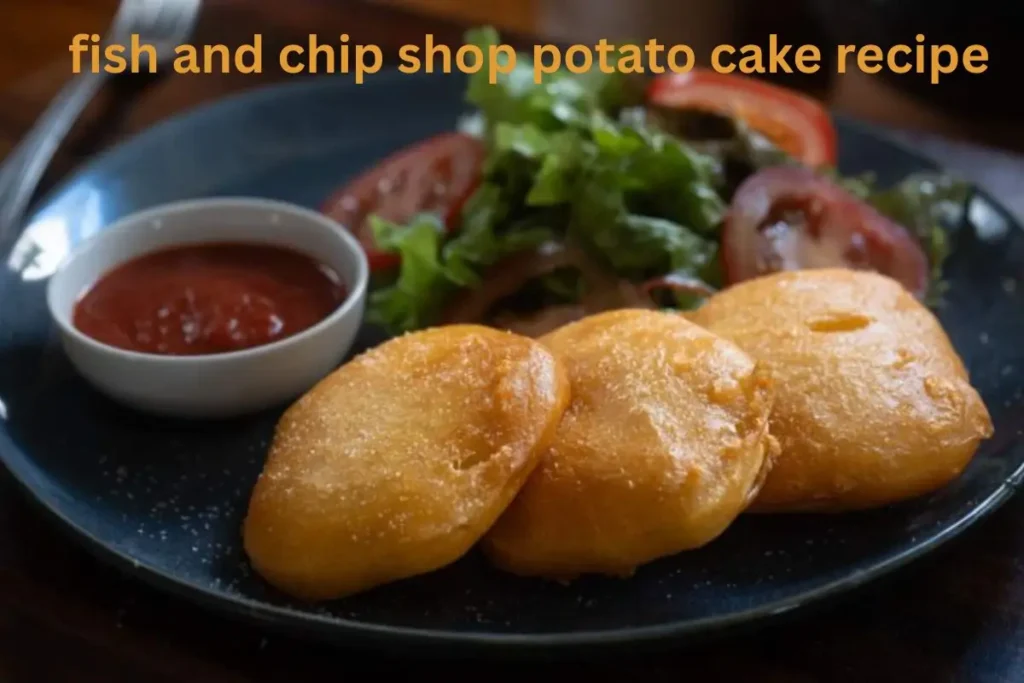
Perfecting the Fish & Chip Shop Potato Cake Recipe at Home
In Part 1, we explored the memories, debates and verified history behind Aussie potato cakes. We established an important truth: there has never been just one way to make a potato cake, and different fish and chip shops used different methods depending on era, workload and location.
Part 2 focuses on perfecting the fish and chip shop potato cake recipe at home, using techniques that align with how takeaway shops actually worked. This section brings together the most reliable methods, explains why some versions fail, and shows how to achieve the closest result to a real Aussie fish and chip shop potato cake.
What Makes a Potato Cake Taste “Like the Shop”
Before cooking, it helps to understand what people really mean when they say a potato cake tastes like the fish and chip shop.
A genuine takeaway-style potato cake has:
- A crisp batter that cracks slightly when bitten
- A soft, properly cooked potato centre
- No greasiness or oil soak
- A neutral flavour that pairs with fish, chips and sauce
- A texture that holds together but breaks apart easily
If any of these are missing, the result feels homemade rather than takeaway-style.
Choosing the Right Method at Home
Based on all verified information, there are three legitimate methods you can use at home. Each produces a slightly different result, and all have existed in real fish and chip shops.
Method One: Raw Sliced Potato (Most Common Today)
This method matches how many modern fish and chip shops work.
It is best if you want:
- Speed
- Minimal preparation
- A classic scallop-style potato cake
The key to success with this method is thin slicing, correct oil temperature and double frying.
Method Two: Layered Potato Cake (Old-School Melbourne Style)
This method suits those chasing:
- The large, heavy potato cakes remembered from childhood
- A layered interior
- A more structured texture
It takes more time but produces the most nostalgic result for many people.
Method Three: Mashed or Riced Potato Cakes (Historic Method)
This version existed in some shops, particularly in the 1960s.
It produces:
- A very soft interior
- A uniform shape
- A texture closer to pressed potato
This is authentic, but less common today.
Why Most Home Attempts Fail
Home cooks often get close, but miss one or two critical details.
The most common problems are:
- Using waxy potatoes instead of high-starch potatoes
- Batter that is too thick and bread-like
- Oil that is not hot enough
- Skipping the cooling or second fry step
- Frying too many potato cakes at once
Fish and chip shops avoided these mistakes by controlling temperature and timing constantly.
The Complete Fish & Chip Shop Potato Cake Recipe (Step-by-Step)
This is the most reliable and verified fish and chip shop potato cake recipe, suitable for home kitchens but faithful to takeaway practice.
Ingredients
Use:
- Sebago or Russet potatoes
- Plain flour
- Cornflour
- Baking powder
- Fine salt
- Ice-cold water or soda water
- Neutral oil such as canola
Preparing the Potatoes
Peel the potatoes and slice them evenly into rounds about two to three millimetres thick. Consistent thickness matters more than size. Soak the slices in cold water for at least fifteen minutes to remove surface starch. Drain thoroughly and pat completely dry. Moisture prevents the batter from sticking and causes oil absorption.
Making the Batter
In a bowl, combine plain flour, cornflour, salt and a small amount of baking powder. Gradually whisk in ice-cold water or soda water until the batter is thin enough to coat the back of a spoon. Do not overmix. Small lumps are acceptable and even desirable.
Keep the batter cold until ready to use.
Frying the Potato Cakes
Heat oil to approximately 180 degrees Celsius. Lightly dust each potato slice in plain flour, then dip into the batter, allowing excess to drip off.
Lower carefully into the oil and fry in small batches. Fry for two to three minutes until the batter sets and turns pale golden. Remove and drain briefly.
For the most authentic result, allow the potato cakes to cool slightly, then fry again for one to two minutes until deeply golden and crisp. Drain on a paper towel and season immediately with fine salt.
Why Double Frying Matters
Double frying is one of the biggest differences between shop-made and home-made potato cakes.
It:
- Ensures the potato is fully cooked
- Prevents soggy batter
- Creates a crisp shell that stays crunchy longer
Many shops par-fried potato cakes during quiet periods, then finished them to order.
Freezing and Make-Ahead Tips
Fish and chip shops often worked ahead, and you can too.
Potato cakes can be:
- Shaped or sliced
- Par-fried
- Cooled
- Frozen
They can then be fried straight from frozen, just like in a shop. This method improves consistency and texture.
Oil, Temperature and Timing
Fish and chip shops constantly monitored oil temperature.
Key points:
- Oil below 170°C causes greasiness
- Oil above 190°C burns batter before potato cooks
- Crowding the fryer drops temperature instantly
Always fry in small batches and allow oil to recover between rounds.
How to Serve Potato Cakes the Aussie Way
Potato cakes should always be:
- Served immediately
- Lightly salted while hot
- Eaten with fish and chips
For the full experience:
- Wrap in greaseproof or butcher’s paper
- Serve with tomato sauce or tartare
- Eat while still almost too hot to hold
Why the Debate Will Never End
Some Australians will always prefer sliced potato cakes. Others will swear by layered or pressed versions. Both are correct, because both existed.
What changed over time was not authenticity, but convenience.
Conclusion
The fish and chip shop potato cake recipe is more than just a way to cook potatoes. It represents a piece of Australian food culture that has been shared across generations, suburbs and states. Whether you grew up calling them potato cakes or potato scallops, the experience is the same: a crisp battered outside, a soft potato centre and the unmistakable flavour of a local fish and chip shop.
As this guide has shown, there has never been one single way to make a fish and chip shop potato cake recipe. Some shops used raw sliced potatoes, others layered or pressed them, and some even worked with mashed or riced potato mixtures. All of these methods are authentic because they were shaped by time, place and practicality. What truly defines a real fish and chip shop potato cake recipe is not the shape or the method, but the technique, the frying temperature, and the care taken during preparation.
Understanding the history behind the fish and chip shop potato cake recipe explains why so many Australians feel that potato cakes are not the same as they used to be. Changes in food regulations, rising costs and faster service expectations have altered how they are made, but the core idea remains unchanged. A proper fish and chip shop potato cake recipe still relies on high-starch potatoes, a simple cold batter, hot oil and, in many cases, a double-frying process to achieve the right texture.
By following a traditional fish and chip shop potato cake recipe at home, it is possible to recreate the closest version to what was once served wrapped in white butcher’s paper. From soaking and slicing the potatoes correctly to maintaining oil temperature and seasoning immediately after frying, every step plays a role in achieving an authentic result.
The reason the fish and chip shop potato cake recipe continues to be discussed, debated and recreated is simple. It is tied to memory, comfort and community. It reminds Australians of childhood meals, local shops and a time when food was made fresh and eaten hot without fuss.
In the end, the best fish and chip shop potato cake recipe is the one that captures that feeling. Crisp, simple and shared, it remains one of Australia’s most enduring takeaway classics.
FAQs
What is the easiest fish and chip shop potato cake recipe to make at home?
The easiest fish and chip shop potato cake recipe uses raw sliced potatoes dipped in a light batter and deep fried. Peel high-starch potatoes, slice them thinly, soak briefly in cold water, dry well, dip in a simple batter and fry in hot oil. This method is quick, requires very few ingredients and closely matches how many Australian fish and chip shops prepare potato cakes.
What makes an authentic fish and chip shop potato cake recipe in Australia?
An authentic fish and chip shop potato cake recipe in Australia relies on high-starch potatoes, a simple cold batter and correctly heated oil. The potato cake should be crisp on the outside, soft inside and never greasy. Many traditional shops also use a double-frying method, which helps achieve the classic takeaway texture.
What is the best fish and chip shop potato cake recipe for crispy results?
The best fish and chip shop potato cake recipe for crisp results focuses on technique rather than complexity. Thin potato slices, cold batter, oil heated to about 180°C and frying in small batches all help create crunchy battered potato cakes. Lightly dusting the potato slices in flour before battering also improves crispness.
What is a traditional Australian potato cake recipe?
A traditional Australian potato cake recipe involves slicing potatoes into rounds, dipping them in a light flour-based batter and deep frying until golden. In older Melbourne-style versions, thin potato slices were layered or pressed together before battering, creating thicker potato cakes with a softer, layered interior.
How do you make a simple potato cake recipe with basic ingredients?
A simple potato cake recipe can be made with potatoes, plain flour, water, salt and oil. Slice the potatoes, soak and dry them, mix flour with cold water to form a thin batter, dip the potato slices and fry until golden. This method produces classic battered potato cakes without complicated steps.
What are battered potato cakes and how are they different from chips?
Battered potato cakes are slices or portions of potato coated in batter and deep fried, while chips are cut into sticks and fried without batter. Battered potato cakes have a crisp outer shell and a soft interior, making them heavier and more filling than chips served at fish and chip shops.
Why do fish and chip shop potato cakes taste better than homemade ones?
Fish and chip shop potato cakes often taste better because shops carefully control oil temperature, batter consistency and frying time. Many shops also par-fry or double fry potato cakes, which improves texture and prevents oiliness. These small details make a noticeable difference in flavour and crunch.
What is a simple batter for potato cakes?
A simple batter for potato cakes is made using plain flour, cold water or soda water, a pinch of salt and sometimes a small amount of baking powder. The batter should be thin enough to coat the potato without becoming heavy. Keeping the batter cold helps produce a crisp finish when the potato cakes are fried.

