

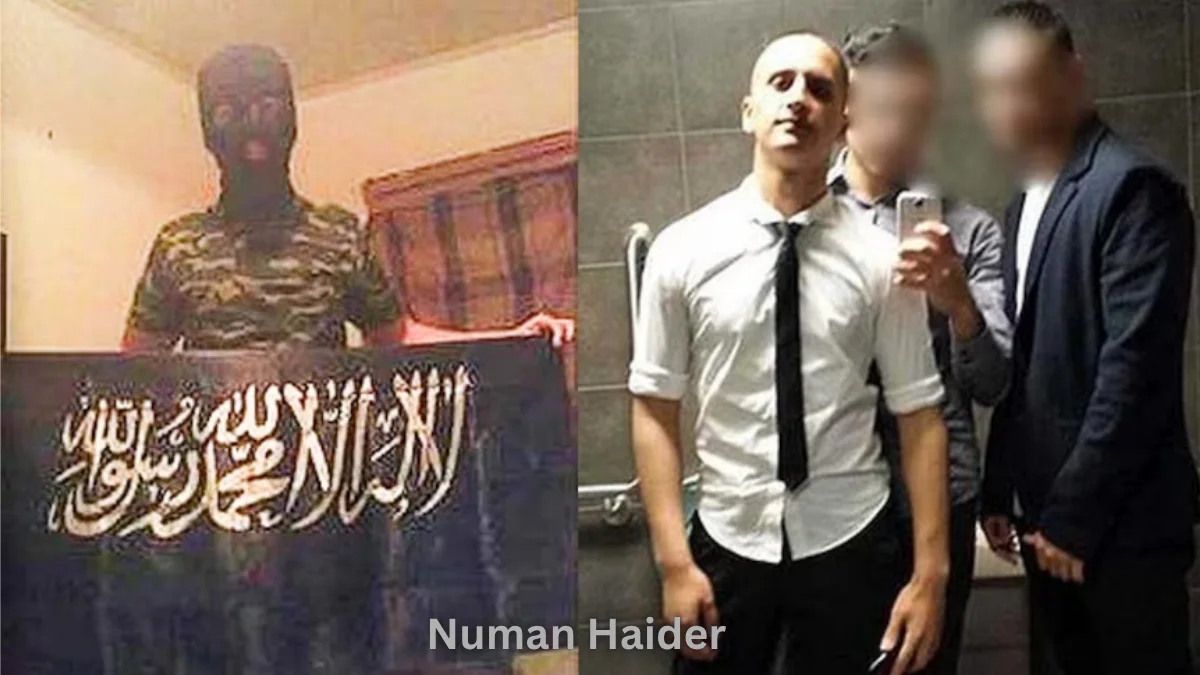
After a serious event in September 2014, the name Numan Haider became well-known all over Australia. After stabbing two counter-terrorism officers in the Melbourne suburb of Endeavour Hills, the 18-year-old was shot and killed. The event shocked the community and sparked a lot of talk about radicalization, safety, and social cohesion in Australia. Knowing who Numan Haider is and what led him to do what he did is an important part of understanding a chapter in Australia’s recent history.
This profile looks at what is known about Numan Haider’s life, what happened before the fight, and how it changed Australian society and security policy.
Overview and background
Numan Haider was 18 years old and from Afghanistan. He lived with his family in Narre Warren, a suburb in the southeast of Melbourne. Most of his friends and family said he was a quiet and shy young man before the incident. He was born in Afghanistan and moved to Australia when he was a child.
As a teenager in suburban Melbourne, his background didn’t seem all that interesting. He finished high school and was said to be taking a class at a local TAFE. But in the months leading up to September 2014, people close to him and authorities saw big changes in how he acted and what he believed.
Australian officials invalidated his passport barely a week before the incident, concerned that he was preparing to travel to the Middle East to join extremist groups such as the Islamic State (IS). During this time, the Australian Security Intelligence Organisation (ASIO) and the Australian Federal Police (AFP) became interested in what he was doing online and who he was hanging out with.
The Endeavour Hills incident
Numan Haider agreed to meet with two police officers—one from the AFP and one from Victoria Police—at the Endeavour Hills police station on the night of September 23, 2014. The meeting was part of an ongoing investigation into what he was doing.
Things happened quickly that night:
- Haider came to the police station’s parking lot for the meeting that had been set up.
- When he greeted the officers, he pulled out a knife and attacked both of them. One officer was stabbed in the arm, and the other had serious injuries to his head, neck, and stomach.
- The second officer pulled out his gun and shot Haider, killing him.
The assault demonstrated the serious risks that police officers confront when interacting with individuals who may be extremists due to its rapid and violent nature. A lot of people started talking about national security after it was immediately linked to terrorism.
Importance to Australians and impact on a national scale
In Australia, the Numan Haider case was monumental and will be remembered for a long time. It was one of the first major terror-related acts on Australian territory during the advent of IS, bringing a distant conflict into a local context.
For a lot of Australians, it changed how they thought about national security. The threat was no longer just an idea; it was a real possibility in suburban areas. This event led to a number of important changes:
- Increased Security Measures: The federal and state governments made it harder to commit terrorism and gave more money to security agencies.
- Community and Social Cohesion: It started a national discussion about why young people become radicalized. Community leaders, decision-makers, and families started to think about how to keep young Australians who are at risk from being influenced by extremist ideas online.
- Policing and Law Enforcement: The event showed how dangerous it is for police to do their jobs. It made people rethink how they deal with people they think might be extremists.
The case forced a tough conversation about how to balance security with personal freedoms and how important it is for people to get involved in their communities to fight extremism.
Timeline of notable events
The events of 2014 had a big impact on Numan Haider’s public image. The timeline is short but important.
- Early 2014: Friends and family say that Haider’s behavior is changing and that he is becoming more interested in extremist views of Islam.
- Mid-2014: ASIO and the AFP notice Haider because of what he does and who he hangs out with online. People see him waving an IS-style flag at a mall.
- September 2014 (week prior to incident): Haider’s Australian passport is canceled for security reasons in September 2014, a week before the incident. This stops him from going abroad.
- September 23, 2014: Haider meets two counter-terrorism officers at the Endeavour Hills police station. He attacks them with a knife and is shot dead.
- Late 2014 – Early 2015: A coronial inquest is held in late 2014 and early 2015 to look into how Haider died. The coroner decides that the police officer’s actions were justified as self-defense.
Media presence and public perception
Most of the information that is publicly available about Numan Haider comes from news reports, police statements, and court documents from the coronial inquest. There isn’t much personal information about his life before he became radicalized.
People’s opinions were, and still are, very different. Most Australians thought his actions were a pointless act of terror that justified the police response. The event made people even more in favor of stronger measures to fight terrorism.
Some parts of the Muslim community had a more complicated response. Community leaders all condemned the violence, but they were also worried that it could lead to backlash against the whole community. The case showed how hard it is to deal with extremism from the inside while also dealing with outside criticism and Islamophobia. Some people at the time wondered if Haider’s mental state was a big factor. This is a common line of inquiry in these kinds of cases, but there isn’t much public information about it.
FAQs for Australians
Was Numan Haider by himself?
Investigations found that Haider was the only one who attacked. But he was part of a group of people who held extreme views, and at the time, authorities were looking into his ties to a larger group.
What did the investigation find?
The main investigation was the coronial inquest into Haider’s death. The coroner said that the Victoria Police officer who shot Haider did so in self-defense and had no other choice. The attack was officially called a terrorist act.
How did this event change the way Australia fights terrorism?
The Numan Haider incident led to big changes. It led to the creation of new laws, such as ones that allow for closer monitoring of people who are suspected of wrongdoing, and it gave agencies like the AFP and ASIO more money and staff. It also accelerated the development of community-based anti-radicalization initiatives.
A balanced conclusion
The story of Numan Haider is both tragic and serves as a cautionary parable. It marked a pivotal moment when violent local incidents demonstrated how international extremist movements could impact Australia, prompting the nation to confront challenging questions regarding security, identity, and community. The events that transpired in Endeavour Hills demonstrated the potential dangers of online radicalization in the real world and highlighted the challenges faced by security agencies and communities in addressing such issues.
Ultimately, comprehending this profile extends beyond merely recounting the details of a crime. It involves identifying a pivotal moment that transformed Australia’s contemporary security environment and continues to influence efforts to establish a resilient and unified society. The path forward involves reinforcing community bonds and promoting transparent communication to prevent similar catastrophes from occurring.

