

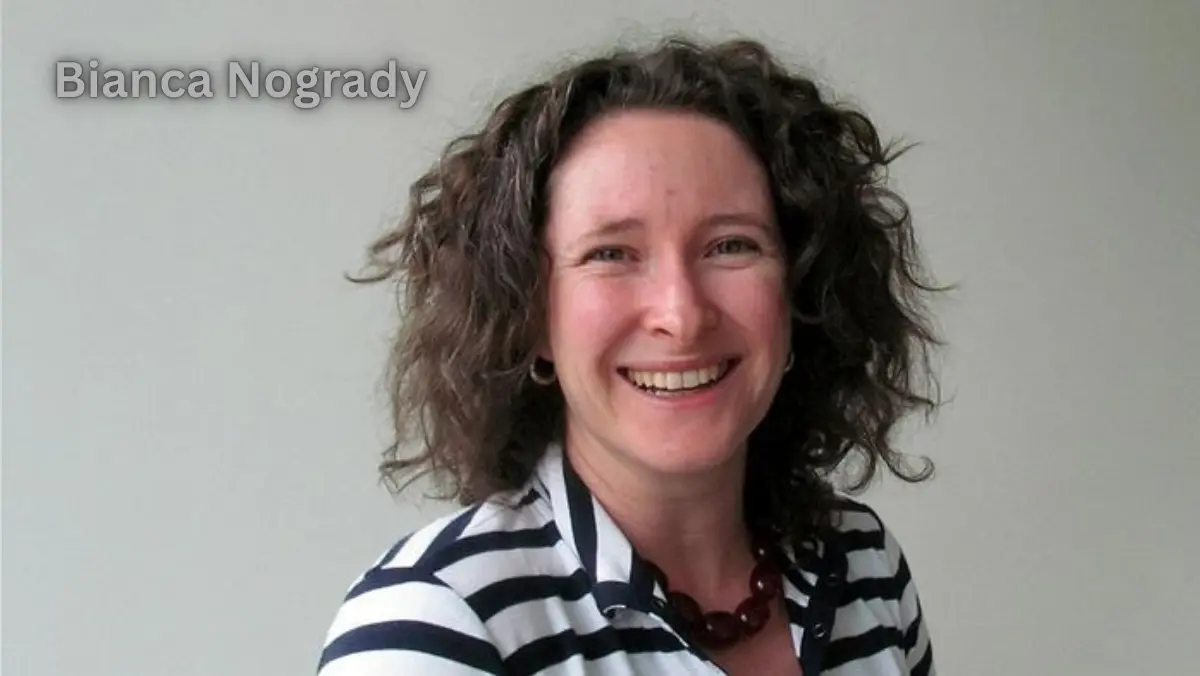
In an age of overwhelming information, it’s more important than ever to find a reliable source to explain complicated medical and scientific topics. Bianca Nogrady is a trusted voice for many Australians. Nogrady is a freelance science journalist, author, and broadcaster who writers clear, evidence-based articles on a wide range of topics, including climate change and public health crises. Her work cuts through the noise and gives people the background they need to make sense of the world around them.
This article looks at the life and work of Bianca Nogrady, an important person in Australian science journalism. We will talk about her contributions, how she reports in an ethical way, and how her work helps Australians make sense of complicated information.
Bianca Nogrady’s life story and career timeline
Bianca Nogrady started her career in science by getting a degree in science from the Australian National University. She then switched to journalism. This scientific background has been a key part of her career, helping her understand and explain complex topics to a wide range of people.
As a freelance journalist, she has written for a long list of magazines and newspapers in Australia and around the world. You can often find her byline in the ABC, The Guardian, Nature, and the Australian Financial Review.
Important career steps:
- Early Career: Moved from a background in science to freelance journalism, where he quickly found a niche in reporting on health and science.
- Broadcaster and Speaker: Became a regular voice on ABC Radio National programs, talking about health and science issues.
- Author: Wrote a number of books that dealt with important health and scientific issues in depth.
- Recognition for an award: She has won many awards for her excellent work in journalism, including for her work in science and medical journalism in Australia.
Contributions to science and medical journalism in Australia
Nogrady has had a significant impact on how health news is covered in Australia. She has always given detailed reports on new medical discoveries, health policy, and diseases that are starting to spread. She is an important resource for the public because she can explain complicated biological processes or the details of a clinical trial.
Her articles have been a reliable source of information during major public health events, without the sensationalism that can make health news less clear. She puts evidence and expert agreement first, which helps make the public conversation about health and medicine more informed.
Important books and long-form writing
Bianca Nogrady has written and co-written several important books that go into great detail about scientific topics, in addition to her articles.
- The End: The Human Experience of Death: This book, which she wrote with her father, Dr. Peter Nogrady, looks at the process of dying from biological, psychological, and sociological points of view. The book takes a compassionate and scientific approach to a universal human experience.
- How We Can Get to a Low-Carbon Future: Climate Change This book gives a clear and useful overview of climate science and the ways we can fix the problem. It shows how she can take a huge, complicated subject and turn it into useful information.
Her ability to compose lengthy novels that combine elements of history, science, and real-life events to create books that are both engaging and useful to read is demonstrated by these books.
Reporting on pandemics and communicating with the public about public health
Nogrady’s role as an effective communicator became increasingly vital during global health emergencies such as the COVID-19 pandemic. She was a leader in Australian health reporting, explaining epidemiology, vaccine science, and public health measures to a worried public.
Her reporting focused on:
- Explaining the science: Clearly explaining how viruses spread, how vaccines work, and what words like “herd immunity” really mean.
- Myth-busting: Confronting erroneous information and misinformation through the use of evidence and data is what we mean when we talk about “busting myths.”
- Policy context: Refers to the process of writing about decisions made by the government and health authorities and providing an explanation of the scientific reasoning behind those decisions.
Her calm, evidence-based approach helped counter the fear and confusion and confusion that often come with pandemics. This shows how important good science journalism is.
How it affects news about the environment and climate
Bianca Nogrady is also well known for her environmental journalism. She addresses climate change not solely as a future concern, but as an immediate crisis affecting both ecosystems and the economy. Her research routinely connects global climate science to issues in Australia, such as bushfires, coral bleaching in the Great Barrier Reef, and water security.
Her work shifts the conversation away from political noise and towards practical solutions by highlighting what scientists actually agree on. She often explores fresh developments in renewable energy, sustainable farming, and conservation, offering an honest look at both the challenges and the possibilities ahead.
A strong ethical approach and unwavering commitment to accuracy
People know that Nogrady’s writing is highly accurate and follows the rules of journalism very precisely. In science journalism, where mistakes can have significant impacts, this commitment is especially crucial. People know her for doing a lot of research, talking to experts, and using primary sources to make sure her claims are true.
Her audience trusts her because of her moral stance.Readers can be sure that a Bianca Nogrady article has been carefully checked and is based on the most up-to-date scientific knowledge. This trust is essential for effective science communication and is a major reason why she is well-respected in the Australian media.
How her efforts benefit individuals in Australia
Bianca Nogrady’s journalism serves a number of important purposes for everyday Australians:
Clear explanations: She turns technical terms and complicated data into language that makes sense.
- Myth-busting: She directly debunks online pseudoscience and misinformation.
- Regional relevance: She frequently relates global scientific challenges to their impact on Australian communities, thereby enhancing the relevance and tangible connection of the narratives.
- Empowerment: By providing readers with accurate information, she enables them to make informed decisions regarding their health and the environment around them.
How to assess scientific news reports
One way for people to learn to think critically about science news is to follow the work of journalists like Bianca Nogrady. Here are some things you can do to help you judge the information you come across:
- Look at the source: Is the source of the information a trusted news outlet, scientific journal, or government health agency? Be careful with blogs or social media accounts that don’t have clear credentials.
- Find proof: Does the article reference research, cite field experts, or provide links to original studies? Claims must be substantiated by evidence.
- Be cautious of dramatic or exaggerated language: If you hear “miracle cure,” “breakthrough,” or “secret,” be careful. In most cases, the scientific method is a long process that builds upon itself.
- Know the difference between correlation and causation: If two things happen at the same time, it doesn’t mean that one caused the other. Good science reporting is careful about this difference.
- Look for agreement: One study is only one part of the whole. Look for reports that show what most scientists agree on.
Frequently asked questions about Bianca Nogrady
What does Bianca Nogrady write about?
Medicine, public health, climate change, environmental science, and technology are just a few of the many topics covered by Bianca Nogrady, a science journalist.
Where can I find her writing or listen to it?
Many well-known publications, such as Nature, The Guardian, ABC Science, and Australian Geographic, have published her work. She has also been a regular host and contributor to ABC Radio National.
Is Bianca Nogrady a scientist?
She has a Bachelor of Science degree, which she uses to help her work as a specialist science journalist.
Conclusion
Bianca Nogrady is one of Australia’s most respected science journalists. She has spent her whole career trying to make science easy to understand, useful, and relevant through her articles, books, and broadcasts. Her clear, ethical, and evidence-based reporting is a huge help to Australians as they deal with the problems of our time. Her work shows how good journalism can teach people, make them think, and make society more scientifically literate.

